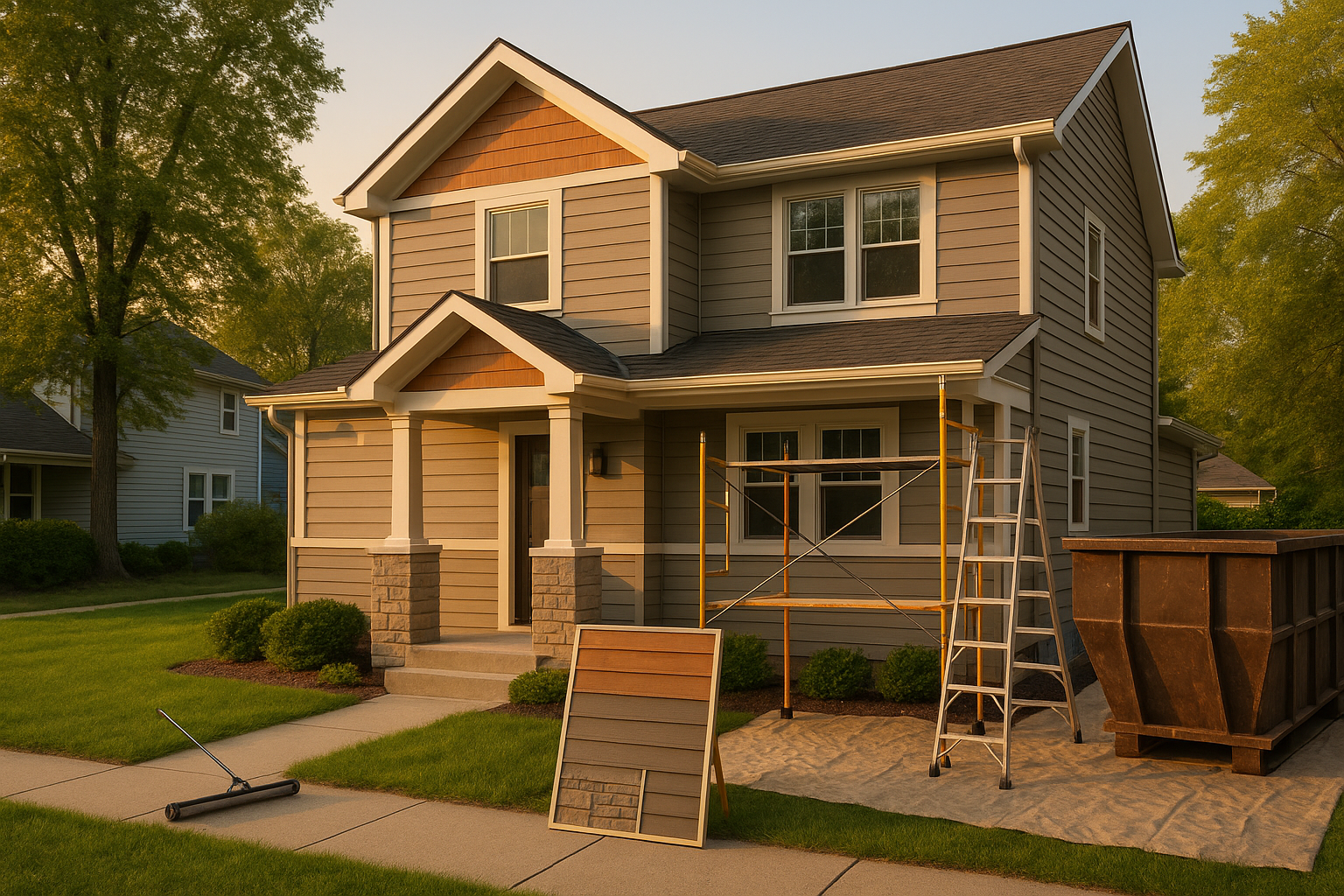
If you’re researching siding replacement cost in Indianapolis, you’re right to look for real numbers and a clear scope. RoofPros is a local specialist that plans first, specifies quality materials, and installs with careful detailing for Indy’s freeze–thaw, hail, wind, humidity, and UV. This guide breaks down typical price ranges, what drives costs up or down, and how to read a transparent siding quote—so you can budget with confidence and avoid surprises.
What homeowners in Indianapolis typically spend
Across the Indianapolis metro, we commonly see these installed ranges for full siding replacement. Factors below will push you toward the low or high end of each band.
- Vinyl: $6–$12 per sq ft installed (≈ $600–$1,200 per square; 1 square = 100 sq ft)
- Insulated vinyl: $8–$15 per sq ft (≈ $800–$1,500 per square)
- Fiber cement (e.g., James Hardie): $9–$16 per sq ft (≈ $900–$1,600 per square)
- Engineered wood (e.g., LP SmartSide): $8–$14 per sq ft (≈ $800–$1,400 per square)
- Wood (cedar): $10–$18 per sq ft (≈ $1,000–$1,800 per square)
- Metal (steel or aluminum): $10–$17 per sq ft (≈ $1,000–$1,700 per square)
- Accent stone/brick veneer: typically higher per sq ft, used selectively for wainscots or entry features
For a typical Indianapolis home with roughly 1,500–2,200 sq ft of wall surface, the average cost to reside a house in Indianapolis often falls between $10,000 and $35,000. Where your project lands depends on material, tear‑off and repairs, story height, trim/soffit scope, and design complexity.
Siding installation cost per square in Indianapolis
If your quotes reference “squares,” here’s a fast cheat sheet:
- Standard vinyl: $600–$1,200 per square
- Insulated or higher‑gauge vinyl: $800–$1,500 per square
- Fiber cement (James Hardie profiles): $900–$1,600 per square
- Engineered wood (LP SmartSide): $800–$1,400 per square
- Steel or aluminum: $1,000–$1,700 per square
What drives siding replacement cost in Indy
Local pricing reflects both material choice and the realities of Indy homes and weather. Key drivers include:
- Material and profile: Panel thickness, insulation backer, exposure width, and specialty textures all affect cost. Insulated or heavier‑gauge panels typically add $1.50–$3.50 per sq ft over standard vinyl.
- Story height and access: Two‑story homes, steep grades, and complex rooflines often add 10–20% for staging, safety, and production time.
- Removal and disposal: Plan roughly $0.75–$1.50 per sq ft of existing siding. Multiple layers, asbestos, or lead‑paint abatement increase cost and timeline. Hidden damage is priced after tear‑off.
- Wall repairs and sheathing: Older Indy houses may need sheathing or framing fixes, especially around window sills, rim joists, or areas with past leaks.
- Weather‑resistive barrier and flashing: Budget $0.50–$1.25 per sq ft for premium house wrap, seam tape, window flashing, and head/drip caps to manage water at penetrations.
- Trim, soffit, and fascia: Wider corner/trim boards, decorative profiles, and color‑matched accessories commonly add $1,000–$4,000. Soffit/fascia refreshes run $1,500–$5,000 depending on material and ventilation upgrades.
- Openings and details: More windows, deck connections, roof‑to‑wall transitions, and penetrations (lights, vents, hose bibs) require extra flashing and labor.
- Season and schedule: Winter installs are feasible with cold‑weather methods, but productivity and sealant cure times can affect scheduling.
- Permits and admin: Like‑for‑like siding swaps may not require permits in some jurisdictions, but plan $0–$300 for permitting/administration and HOA coordination.
Why detailing matters in Indianapolis
Freeze–thaw cycles, hail, and straight‑line winds mean impact resistance and drainage paths are not optional. Proper house wrap lapping, taped seams, pan/head flashing at windows, kick‑out flashing at roof‑to‑wall joints, and correctly gapped/fastened panels preserve warranties and prevent water intrusion.
Material comparisons for Indianapolis weather
Choosing the right product is part durability, part maintenance, and part curb appeal. Here’s how common options stack up locally.
Vinyl siding
- Typical range: $6–$12 per sq ft installed
- Why choose it: Budget‑friendly, many colors, low maintenance
- Notes for Indy: Opt for thicker panels and reinforced profiles to help with wind uplift and reduce waviness in summer heat.
Insulated vinyl siding
- Typical range: $8–$15 per sq ft
- Why choose it: Added rigidity, improved comfort and noise dampening
- Notes for Indy: The foam backer helps resist impacts from hail and stabilizes courses during temperature swings.
Fiber cement (e.g., James Hardie)
- Typical range: $9–$16 per sq ft
- Why choose it: Excellent dimensional stability, strong curb appeal, fire resistance
- Notes for Indy: Requires meticulous flashing and painting schedule adherence; heavier boards mean careful handling and staging.
Engineered wood (e.g., LP SmartSide)
- Typical range: $8–$14 per sq ft
- Why choose it: Warm wood look with engineered durability, lighter than fiber cement
- Notes for Indy: Pay attention to end‑seal and clearances; good performance when detailed per manufacturer instructions.
Metal (steel/aluminum)
- Typical range: $10–$17 per sq ft
- Why choose it: High impact resistance, crisp modern lines, colorfast finishes
- Notes for Indy: Great for hail‑prone pockets; check trim packages for clean terminations at brick transitions.
Cedar or natural wood
- Typical range: $10–$18 per sq ft
- Why choose it: Classic look and repairable in small sections
- Notes for Indy: Plan on finish maintenance cycles; careful ventilation and clearances reduce moisture‑related movement.
How to read a clear RoofPros quote
A premium installation starts with a precise, line‑item scope. A RoofPros estimate spells out:
- Materials: siding profile, exposure, thickness/gauge, color/finish, accessories
- Labor: base install rate and any premiums for height/complexity
- Removal and disposal: existing siding layers, landfill or recycling fees
- Weather‑resistive system: house wrap, seam tape, window/door flashing, head/drip caps
- Trim and corners: boards, J‑channels, starter strips, color‑matched caulks
- Soffit and fascia: material, ventilation strategy, and linear footage
- Accessories: light blocks, vents, dryer hood, hose bib blocks, mounting plates
- Repairs allowance: sheathing/plywood/OSB and unit pricing for discovered issues
- Site protection and cleanup: landscaping protection, magnets, daily sweep
- Permits/HOA: documentation, submittals, and admin fees if required
- Warranty terms: manufacturer material coverage plus workmanship in writing
This level of detail addresses common concerns—what’s different about a cheaper quote, how hidden costs are handled after tear‑off, and how we keep your jobsite clean.
Repair vs. full replacement
- When repair may be sensible: isolated impact damage, a few melted panels near a grill, or a single wall with fading. Color matching can be challenging on older materials, so expect visible differences.
- When replacement is smarter: widespread hail pitting or cracking, wave/buckle from improper nailing, sheathing rot, or outdated products with limited color/trim support.
- Insurance and storm events: After hail or wind, we document damage methodically for carrier review and recommend materials with better impact resistance going forward.
Permits, HOAs, and historic districts
- Permitting: Many like‑for‑like siding projects proceed without a building permit, but rules vary across Indianapolis and surrounding suburbs. We verify current requirements and factor $0–$300 for permits/admin when applicable.
- HOAs: Some neighborhoods restrict color palettes or materials; add review time to your schedule and confirm approved trim profiles.
- Historic overlays: Areas like Irvington and Meridian‑Kessler can require specific exposures, textures, or wood‑look details. Expect additional submittals and potential design tweaks.
Project timeline and planning
- Typical duration: 3–7 working days on most single‑family homes once work begins; add time for elaborate trim/soffit packages or weather.
- Seasonality: Winter installations are feasible with cold‑rated sealants, adjusted cure times, and sequencing for shorter daylight windows.
- Lead times: Popular colors and premium trim can extend ordering windows. Early planning secures materials and keeps schedules tight.
FAQs: Cost and process in Indianapolis
What is the average cost to replace siding on a house in Indianapolis?
For a typical home with 1,500–2,200 sq ft of wall area, expect $10,000–$35,000 depending on material, tear‑off, story height, and trim/soffit scope.
How much does vinyl vs. fiber cement vs. engineered wood cost locally?
Approximate installed ranges: vinyl $6–$12/sq ft, insulated vinyl $8–$15, fiber cement $9–$16, engineered wood $8–$14, metal $10–$17, wood $10–$18.
How many square feet of siding does a typical 1,800–2,200 sq ft home have?
A common Indy two‑story or larger ranch often has 1,500–2,200 sq ft of wall surface, but dormers, gables, and brick transitions can shift this up or down.
Is it cheaper to reside over existing siding?
Sometimes, but full tear‑off lets us correct flashing, repair sheathing, and deliver a flatter finish. Over‑siding can trap moisture or telegraph old waves.
What factors increase siding replacement costs here?
Material upgrades, two‑story staging, complex rooflines, removal/disposal, sheathing repairs, premium house wrap/flashing, soffit/fascia, and accessory details.
Do I need a permit to replace siding in Indianapolis?
Like‑for‑like swaps may not need one; we confirm current rules for your address and handle any paperwork and HOA submissions if required.
Will new siding improve energy efficiency?
Insulated siding can improve comfort and reduce drafts; the bigger efficiency win often comes from a continuous weather‑resistive barrier with airtight flashing.
How long does siding replacement take?
Most projects complete in 3–7 working days after start, weather and scope permitting.
What’s included in a RoofPros estimate, and what’s an upgrade?
Your quote itemizes materials, labor, removal, wrap/tape/flashing, trim/corners/starter, soffit/fascia, accessories, repairs, site protection, permits/HOA, and warranty. Upgrades (e.g., wider trim, decorative profiles, accent materials) are clearly labeled.
Can siding be replaced in winter in Indianapolis without quality issues?
Yes—with cold‑rated products, attention to substrate dryness, and proper sequencing. We may adjust sealant choices and fastener schedules for temperature.
How do you protect landscaping and handle debris?
We use ground covers, ladder pads, magnetic sweeps, and daily cleanup. Protection steps are listed in your scope so expectations are clear.
Do you offer financing or phased options?
We can discuss financing options and phased scopes (e.g., front elevations first, remaining sides later) to match your budget.
Related resources
- Planning exterior upgrades? See our local guide to roof budgets: Roof replacement cost in Indianapolis.
- Coordinating gutters with new siding trim profiles? Review gutter replacement costs in Indianapolis.
- Explore more home‑exterior insights on the RoofPros blog.
Ready for clear numbers and a clean scope?
Let’s walk your home, confirm accurate wall measurements, and review materials side‑by‑side with sample sections. You’ll leave with a line‑item RoofPros quote, timeline, and a plan for permits/HOA if needed. Get a Free Deck Consultation. Start by requesting your on‑site siding assessment at / #quote, or learn more about our planning‑first approach on the RoofPros homepage.
RoofPros serves Indianapolis and nearby communities with specialist, detail‑driven exterior work. Expect careful prep, meticulous flashing, and premium finishes that hold up to Indy’s weather—without surprises in the scope or the site cleanup.
Ready for a free roof assessment?
We climb the roof, photograph the damage, and give you an honest read — no pressure, no upsell.