My buddy Dave lives in Avon, right over near White Lick Creek, and last spring he walked into his basement to find a puddle spreading across the floor. He checked the sump pump, the foundation walls, all the usual suspects—nothing. Turns out, his gutters were packed solid with a mess of maple helicopters and last fall's leftover leaves. Water had been pouring over the edges for weeks, soaking the ground right next to the foundation, and with our clay soil around here, that water had nowhere to go but into his basement. Dave isn't alone, either. I hear versions of that story all the time from folks in Indianapolis, Carmel, and Zionsville. So, how often should Indiana homeowners clean their gutters to avoid that kind of headache?
Why twice a year is the baseline for most Indiana homes
For the average lot in Avon, Fishers, or Greenwood, cleaning your gutters at least twice a year is the sweet spot. Once in late spring—after the maple helicopters and cottonwood fluff have done their thing—and again in late fall, after the big leaf drop. Helices from maples? They're like little winged ninjas, slipping through even small gaps, and cottonwood fluff mats up like felt around creek areas. If you live near a greenbelt or have a couple of mature oaks, you might already know that leaf season can drag on from October into November. Hendricks County sees some heavy tree cover, especially in older neighborhoods. That's why fall isn't just a quick sweep—it's a full clean-out.
But spring is just as important. I've seen homes along Rockville Road get a surprise second clog in May because of construction dust and shingle grit from newer subdivisions mixing with spring pollen. That gritty paste can set up like concrete in the bottom of a gutter. If you only ever clean in the fall, you're letting that gunk sit through summer storms, and that's how you get rust spots and sagging hangers.
The dead giveaways your gutters are overdue
You don't need to climb a ladder to know something's wrong. Look up at your roofline during a steady rain. See water spilling over the edges like a mini waterfall? That's a flashing neon sign. So are dark streaks on the siding just below the gutter, or the greenish "tiger stripes" that form when water runs where it shouldn't. A neighbor in Brownsburg pointed out his gutters were sagging in the middle—turns out, they'd been holding so much wet debris that the screws had pulled loose. Another one: plants. If you spot a little weed or even a seedling sprouting out of the gutter, that's a small ecosystem telling you it's been way too long.
And don't forget the downspouts. If water isn't gushing out the bottom during a rain, that elbow is probably clogged. Give the side a tap with your knuckles—if it sounds dense or dull, you've got a blockage. I once saw a downspout so packed that a family of carpenter ants had started to build a nest inside. No, thanks.
Gutter guards help, but they're not a magic shield
A lot of people think, "I have gutter guards, I'm done. Right?" Not exactly. Gutter guards—especially the micro-mesh kind—do a decent job of keeping out leaves and larger helicopter seeds. But the smaller stuff, like pine needles and that cottonwood fluff, can still stick to the top and form a layer that water can't get through. You'll need to at least rinse the guards or have someone check them once a year. I know a guy in Westfield who hadn't touched his guards in three years, and when we finally pulled them off, the gutter had a half-inch of fine silt that had washed through and settled. His downspout was barely draining. So, plan for a quick inspection and rinse each spring, and a more thorough check during your fall clean.
What happens when you ignore the gutters
Indiana clay soil doesn't mess around. When water overshoots a clogged gutter and dumps next to your foundation, it gets absorbed, but the clay holds it there like a sponge. That constant moisture can lead to basement leaks, even in homes that never had a problem before. I've seen it in Noblesville and Zionsville homes with otherwise dry basements. And it's not just the basement—all that water running down the fascia board can rot the wood behind your soffits. Once that starts, you're looking at repairs like replacing sections of fascia and soffit, which can get pricey. (We've got a whole post on that, by the way: check out our guide on soffit and fascia costs in Indianapolis.)
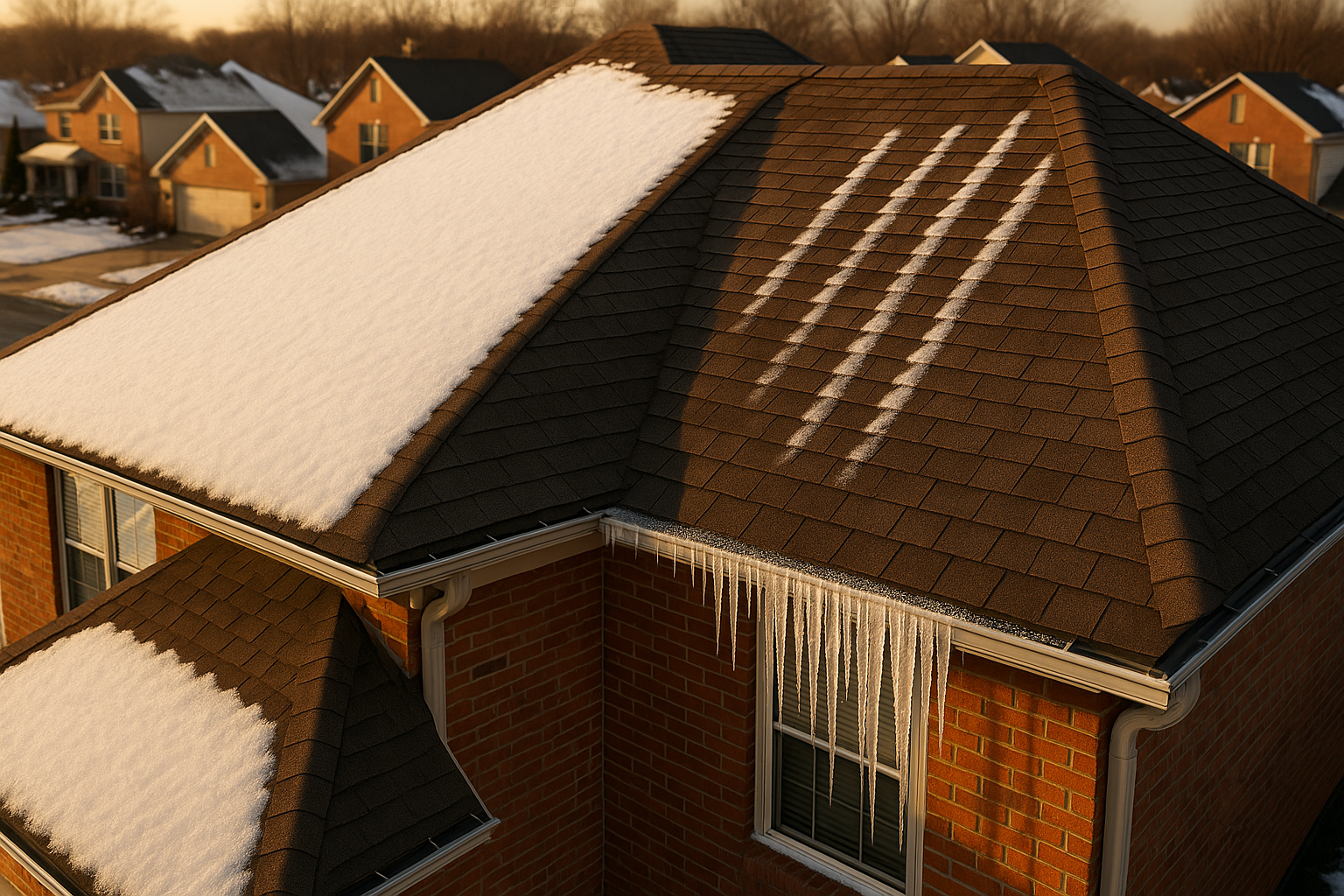
Then there's winter. When Indiana's freeze-thaw cycles kick in, a gutter full of wet leaves and ice becomes a dam. Ice dams can force water back under your shingles, leading to leaks inside. And if the weight of that ice pulls your gutters away from the house, you're looking at a repair in the spring that could've been avoided. Even if you maintain your roof well, clean gutters are a key part of the equation. (Take a look at our roof maintenance checklist for more seasonal tips.)
Downspouts: don't forget the exit strategy
It's not enough to have clean gutters if your downspouts are half-clogged or dumping water right next to the foundation. In Avon, where the soil is heavy clay, you need to get that water well away from the house. I always recommend downspout extensions that carry water at least five feet out. Splash blocks are fine, but they only work if the ground slopes away. For newer homes in Plainfield or Brownsburg, the lot grading might be okay, but older neighborhoods around Carmel sometimes need a little extra help. And if you have multiple roof valleys, ask a pro about adding splash guards at those corners—during a cloudburst, that's where gutters get overwhelmed first.
Flushing your downspouts with a hose at least once a year is smart, even if you think they're clear. You'd be surprised what can lodge in an elbow joint. Just run the hose from the top, have someone watch the bottom, and be ready for a muddy gush.
Build a seasonal rhythm around the Hoosier calendar
Here's the rhythm I tell folks to follow in Central Indiana:
- Late spring (May/June): After the helicopters and cottonwood fluff season, maybe add a rinse if you have gutter guards. Do a full cleaning if you see signs of buildup.
- Late fall (October/November): After most leaves are down, do the main clean-out before winter sets in. In Hendricks County, that window can stretch to early December if we have a late leaf drop.
- Storm check (anytime): After a severe thunderstorm with high winds—like the ones that roll through in July—look for shingle grit, twigs, or torn shingles in the gutters. A quick ladder-free visual from the ground is often enough.
If you live right along a creek or in a neighborhood with old, towering oaks (like some pockets of Zionsville or Fishers), you might need a third check in mid-summer, especially if you have a lot of pine needles. Homes near the White Lick Creek greenway in Avon can catch extra debris from wind corridors. You'll know it's time when you see the gutters starting to crown with material.
When to get a professional, and what to expect
Climbing a ladder to clean gutters isn't worth a fall, especially on a two-story home. Wet leaves are slippery, and one wrong move on a steep roof valley can land you in the ER. If you're not comfortable, call a pro. A good gutter cleaning service shouldn't just blow out the debris and leave. At RoofPros, when we do a cleaning in Avon or anywhere around Indy, we remove all the muck by hand and bag it (no mess in your landscaping), flush the downspouts, check for loose hangers or spikes, and do a quick visual on your fascia and roofline. We'll even snap a few photos so you can see what we saw, and we'll give you a clear list of anything we recommend—no pressure. We're not here to upsell you on new gutters if yours are fine. But if there's a minor fix that'll save you trouble later, we'll flag it.
The whole thing usually takes an hour or two for a typical home, and you'll have the peace of mind knowing your gutters are ready for the next big storm.
If you're not sure where you stand, just reach out and we'll take a look. You can grab a quick quote at RoofPros online, and we'll come out to Avon, Brownsburg, Plainfield, or wherever you are on the west side. We'll give you a documented inspection and a straight-up plan. No fluff.
Ready for a free roof assessment?
We climb the roof, photograph the damage, and give you an honest read — no pressure, no upsell.