My neighbor Dave is a careful guy. He mows his lawn regularly, changes his furnace filters, the whole nine yards. So when a water stain bloomed on his upstairs ceiling one March morning, he was baffled. His roof was only 10 years old. What he didn't know was that over the winter, ice had crept under a few shingles near the eaves. A tiny gap in the flashing let meltwater seep in, drip by drip. A simple springtime check could have caught it. That's where a roof maintenance checklist for Indiana homeowners comes in. Our weather throws a lot at your roof—freeze-thaw cycles, spring thunderstorms, blazing summer heat, and fall leaves that pile up like nobody's business. If you live in Fishers, Carmel, or anywhere around Indy, this guide will walk you through what to look for, season by season. And most of it you can do with your feet firmly on the ground.
Why a Roof Maintenance Checklist Makes Sense in Indiana
Look, Indiana isn't easy on roofs. In Hamilton County alone, we get those spring storms with 50 mph gusts and hail the size of quarters. Then summer brings humidity that can cook your attic if it's not vented right. Fall drops a blanket of leaves from all those mature oaks in neighborhoods like Sunblest or Avalon. And winter—don't get me started on the freeze-thaw nonsense that pushes ice under shingles. I've heard more than one local roofer say that half the leaks they fix in April could've been stopped with a 15-minute ground check the previous October. The point is, a roof maintenance checklist tailored to Indiana isn't busywork. It's how you dodge a $2,000 repair bill by catching a lifted shingle or a clogged gutter early. And you don't need to be a handyman to do most of it.
Your Seasonal Roof Walk-Through (From the Ground)
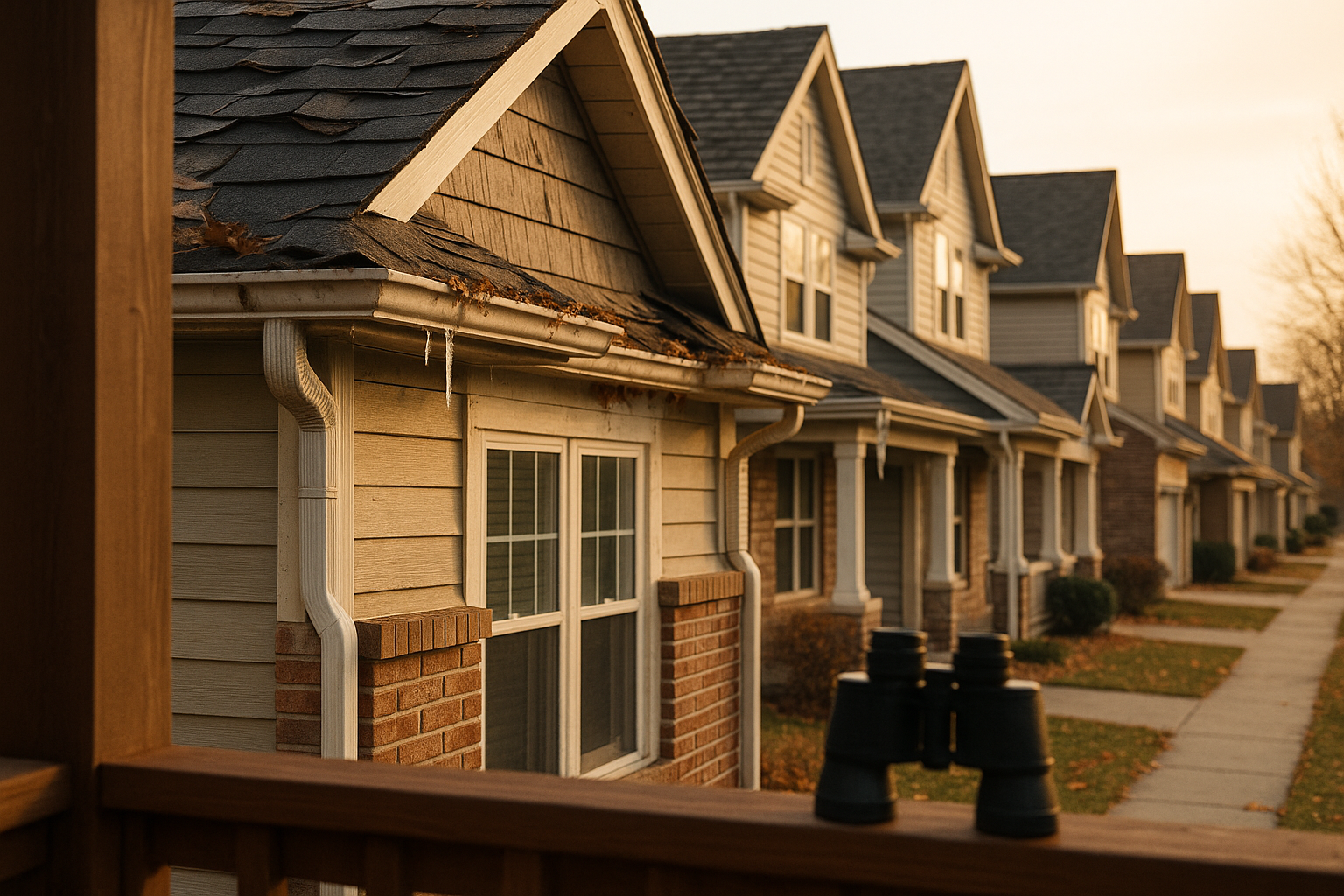
Please. Don't climb up there. Unless you've got a single-story ranch and the right safety gear, grab a pair of binoculars and do a ground-level inspection. (Fishers has a lot of two-story homes with steep pitches—those aren't for amateurs. If that's you, call a pro like RoofPros for a roof health check.) Here's what to eyeball through the year.
Spring: After the last big storm, look for missing or lifted shingles. Check the ground for granules—if your downspouts are spitting out a lot of those pebbly bits, your shingles are wearing thin. Also scan for dents on metal vents or gutters; those could be hail hits.
Summer: When the sun's beating down, go up into your attic on a hot day. If it feels like a sauna, your ventilation might be off. More on that in a minute. Outside, notice if any shingles look buckled or cracked from the heat. Architectural shingles handle this better than older 3-tab ones, but they're not invincible.
Fall: Before winter, clean those gutters. In Fishers, with all the maples, gutters can fill up in a weekend. Make sure downspouts drain at least 4 to 6 feet from your foundation. While you're at it, look at the roof edge: are there any shingles starting to curl? That's a sign they're losing their grip.
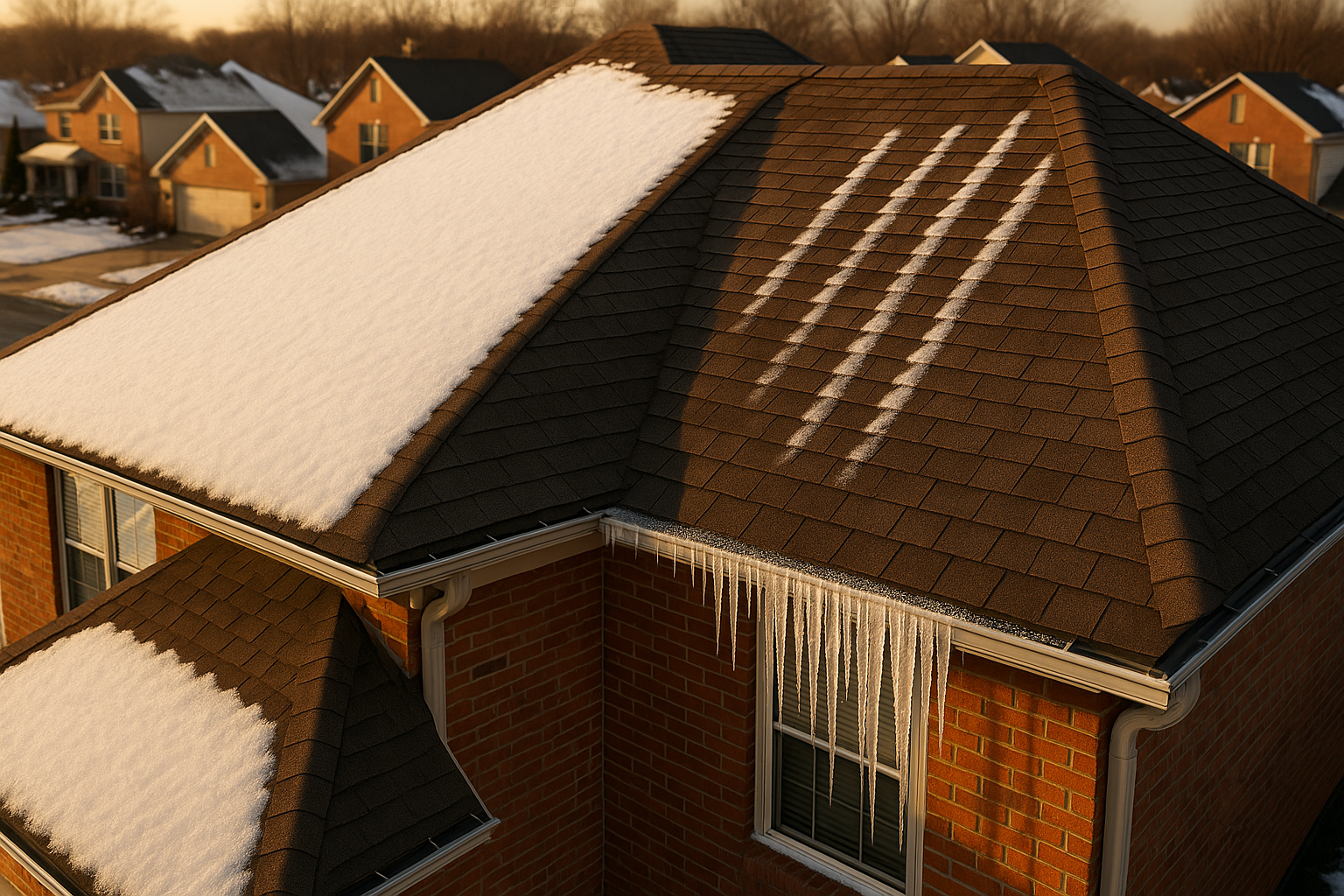
Winter: After a snow, watch for ice dams—cute name, ugly problem. If you see icicles hanging off your gutters but a bare patch of roof above, warm air is escaping and melting snow, which refreezes at the edge. This can force water under shingles. A well-ventilated attic stops this (check out our winter roof damage guide for the full scoop). And if we get a mid-winter thaw, sneak a look in the attic for any damp spots the next day.
Attic Clues and Ice Dam Prevention
Your attic talks if you listen. Next time it rains hard or we get a melt, go up there with a flashlight. Look for dark stains on the plywood, damp insulation, or—this one's sneaky—rusty nail tips poking through the sheathing. Rust means condensation, and condensation means moisture where it shouldn't be. A musty smell is another red flag.
Ice dams are an Indiana specialty, thanks to our freeze-thaw cycles. They happen when heat leaks from your house into the attic, warming the roof enough to melt snow. The water runs down until it hits the cold eaves and freezes again. Over time, that ice builds up and pushes under shingles. The fix? First, seal any air leaks from your top floor into the attic. Second, make sure you've got enough insulation—aim for R-49 to R-60 in central Indiana. Third, check that your soffit vents aren't blocked by insulation; those baffles are there for a reason. If you're re-roofing, ask your contractor to add ice-and-water shield along the eaves and in valleys. It's code in a lot of places around here for good reason.
Gutters, Trees, and That Green Stuff
Gutters are the unsung heroes of roof maintenance. When they're clogged, water backs up and can rot your fascia boards or seep under the shingle edge. In Fishers, fall leaf drop is no joke. If you've got big trees near your house—oaks, maples, the usual suspects—schedule a gutter clean in late October and again in spring. Trim branches back so they're 8 to 10 feet from the roof. (I once talked to a guy in Carmel who skipped tree trimming for years. A branch scuffed his roof during a windstorm and wore a shingle bald spot where water eventually got in. D'oh.)
Speaking of green stuff: algae and moss love our humid summers, especially near Geist Reservoir. They look ugly, but more than that, moss holds moisture against shingles. Under no circumstances should you pressure-wash your roof. That strips the granules right off and voids most shingle warranties. Instead, use a soft wash or a cleaner recommended by the shingle maker. Some folks install zinc or copper strips at the ridge to prevent regrowth.
While you're poking around the gutters, peek at the soffit and fascia. Soft, peeling, or rodent-chewed sections mean trouble. If you spot holes or rot, you might need more than just a gutter fix—those are structural parts that keep your roof dry and secure. For a deeper dive, see our guide on soffit and fascia replacement signs.
Storm Damage: When to Act Fast
We get some rowdy storms here. Last summer, a microburst tore through Noblesville and left half the neighborhood with creased shingle tabs. If the wind hit 45 mph or higher, or you saw hail bigger than a dime, do a careful once-over. Hail dents on metal vents, gutter helmets, and even your mailbox can be clues. On the roof itself, look for dark spots where granules were knocked off—they stand out in soft morning light. Bruised shingles feel spongy underfoot (but again, don't go up there unless you're trained). Wind damage often shows as shingles that are folded over, torn, or completely missing.
If you spot damage, document everything with your phone before things get worse. Then call a local roofer you trust—not a storm chaser who shows up at your door. (We have a whole article on avoiding storm chaser scams, worth a read.) A good roofer will help you decide if you need a repair or a full replacement, and they'll work with your insurance adjuster.
When Maintenance Isn't Enough
Sometimes, a checklist tells you it's time to start fresh. If you see widespread granule loss, soft or sagging sections when you push on the attic decking, or leaks that keep coming back, don't throw good money after bad. Asphalt shingle roofs around here typically last 20-25 years, but severe weather can shorten that. If your roof is over 15 and starting to show its age, get a professional opinion.
I get the hesitation. You might think, "My roof is only 10 years old—maintenance can wait." Or, "I can handle this myself." But here's the thing: small problems grow. That missing shingle lets in water that rots the decking. That clogged gutter overflows and damages your siding. A pro inspection isn't a sales pitch—at least it shouldn't be. RoofPros does what we call a Planning-First Roof Health Check. You get a clear report, no pressure. If something needs fixing, we'll be straight with you. And if you're worried your HOA won't allow certain changes, we've worked with plenty of Fishers HOAs and can help with the paperwork.
So, grab your binoculars and start your seasonal walk-through. But if you'd rather have an experienced set of eyes take a look, schedule your Roof Health Check here. We're based in Fishers and serve homeowners from Zionsville to Greenfield. A little attention each season goes a long way toward keeping your roof over your head for years to come.
Ready for a free roof assessment?
We climb the roof, photograph the damage, and give you an honest read — no pressure, no upsell.