If you’re planning solar within the next 6–18 months, your roof needs to be ready before panels arrive. A solar‑ready roof is a complete system—structural, mechanical, and electrical—that supports future PV without rework, leaks, or warranty headaches. In Indianapolis, that also means building for hot summers, freeze–thaw winters, hail, and wind.
What “solar‑ready” means for Indianapolis homes
A solar‑ready roof installation aligns roof life, structure, and waterproofing with the expected 25+ year lifespan of solar equipment.
Align roof and panel lifespans
- If your roof has under 10–12 years left, replace or upgrade before solar. Tearing off a roof under a live array is expensive and disruptive.
- Indianapolis roofs face UV, humidity, hail, and freeze–thaw cycling; underlayments and flashings must be specified for those stresses.
Material choices that make solar easier
- Standing seam metal roof for solar: Seam‑clamp racking typically avoids penetrations, delivers long service life, and simplifies maintenance. Snow guards may be appropriate on longer eaves to manage winter slides.
- Architectural shingles for solar: Proven solution when paired with rafter‑based mounts, tested flashings, stainless/compatible fasteners, and high‑temperature underlayment. Choose Class 3–4 impact‑rated shingles to handle Indiana hail.
- Avoid brittle, near‑end‑of‑life materials or complex surfaces (heavy texture tiles) unless you’re prepared for specialized mounts and higher costs.
Local orientation and shading
- Reserve south or southwest roof planes for the array. In Broad Ripple, Meridian‑Kessler, Irvington, and other mature neighborhoods, account for shading from established trees both leaf‑on and leaf‑off.
Structure and waterproofing: details that prevent do‑overs
A solar‑ready roof must hold added dead load, resist wind uplift around racking, and protect every penetration long‑term.
Structural roof assessment for PV
- Verify decking condition, rafter/truss spacing, load paths, and fastener schedules. Reinforce weak sheathing or sister rafters where needed.
- Most PV adds roughly 2–4 psf. The bigger issue in Indy is wind uplift on mounts and racking—plan rafter hits and attachment spacing accordingly.
High‑temperature underlayment and ice protection
- Use a high‑temperature synthetic underlayment for solar‑adjacent areas; panels run hotter and trap heat.
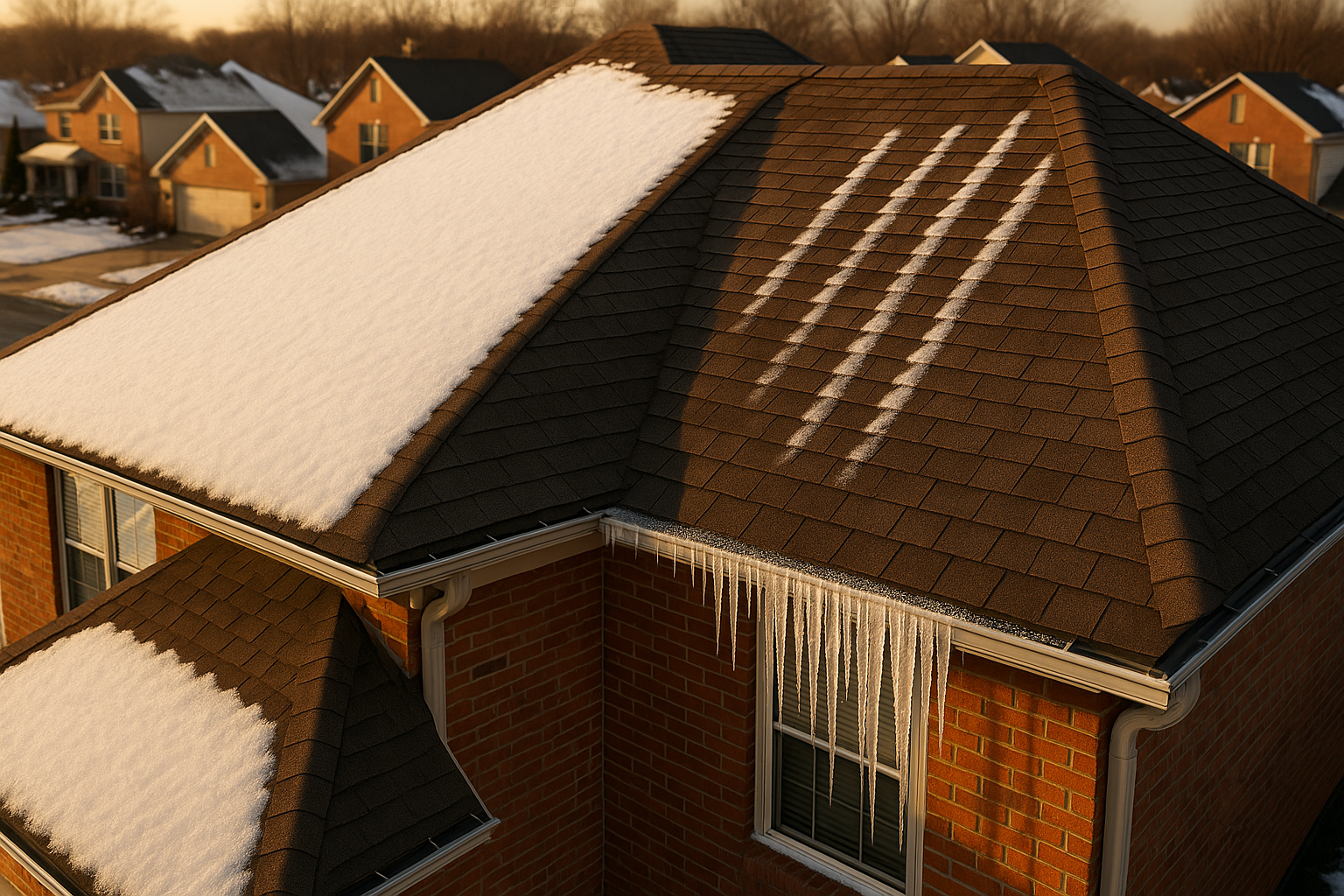
- Install ice and water shield at eaves and around planned mount rows to protect during freeze–thaw and spring storms.
Solar mounting points and flashing
- On shingle roofs: lay out rafter‑based mounts in straight rows, pre‑plan attachment spacing, and use tested butyl/aluminum flashings with raised caps. Stainless or coated fasteners only; no mixed‑metal corrosion.
- On standing seam metal: specify tested clamp systems matched to the seam profile to avoid penetrations. Torque and spacing should meet wind requirements.
Attic ventilation with solar arrays
- Confirm balanced intake (soffit) and exhaust (ridge) ventilation so panels don’t trap heat and invalidate shingle specs. In older Indy homes, add continuous soffit intake where possible and verify ridge venting.
Gutters and drainage
- After arrays go in, melting snow can concentrate runoff. Ensure gutters, downspouts, and leaf control handle the change to prevent ice dams near array edges. Learn more about why gutters matter for roof longevity: /blog/why-gutters-matter-roof-longevity/
Array layout planning: clear roof fields and cleaner installs later
Good layout reduces costs and avoids patchwork fixes the day panels arrive.
Vent and obstruction relocation for solar array
- Consolidate plumbing vents, bath exhausts, and flues away from prime array zones. Consider low‑profile vents or reroutes on south/southwest planes.
- Avoid skylights in the target array field or plan for even module rows around them.
Solar conduit and pass‑through planning
- Pre‑plan a labeled chase from attic to the service equipment area. Size for future PV conductors and optional battery circuits. A clean pass‑through shortens your PV installer’s scope and keeps penetrations controlled.
- If you’re in AES Indiana or Duke Energy territory, leave panel space and labeling per utility interconnection practices—your future installer will thank you.
Reserve setbacks and service aisles
- Maintain NEC fire setbacks and a service corridor for module and roof maintenance. Document dimensions in your roof packet for the future PV team.
Weather readiness for Indiana’s hail, wind, and snow
- Select shingles with Class 3–4 impact ratings or robust metal assemblies. Confirm wind‑uplift compliance for racking and mounts.
- On metal roofs, add snow guards as needed over walkways and patios.
- Use compatible sealants and gaskets rated for temperature swings and high humidity.
Warranties, permits, and documentation that keep projects smooth
Clear paperwork lowers risk and protects resale value.
Roof warranty with solar panels
- Choose materials whose warranties remain valid with PV mounts. Keep all mount specifications, attachment photos, and underlayment details in a project file.
- For a deeper look at coverage limits and fine print, see our roof warranty guide: /blog/roof-warranty-guide-whats-actually-covered/
Marion County permitting and inspections
- Most Indianapolis addresses require a Marion County roofing permit for replacement. Keep records of decking condition, fastener patterns, and any structural upgrades.
- A clean paper trail and photos of rafter hits and flashing details help your future interconnection application move faster.
Inspection timing
- Schedule a final Indianapolis roof inspection for solar readiness immediately after installation. Share the report and roof packet with your PV contractor.
RoofPros planning‑first process for solar‑ready roofing
We’re a specialist roofing contractor serving Indianapolis with a practical, scope‑first approach. Here’s how we prepare homes for a smooth PV install:
1) Planning‑first inspection - Structural review: decking, rafters/trusses, load paths. - Surface review: shingles or metal condition, ventilation, gutters, chimney/valley flashings. - Array field assessment: orientation, obstructions, shading (leaf‑on/leaf‑off), and fire setbacks.
2) Written scope with array‑ready specs - Documented mount rows/rafter hits, underlayment system (high‑temp + ice shield zones), ventilation improvements, and any vent relocations. - Conduit/pass‑through plan and labeled pathway to service equipment.
3) Material options with pros/cons - Metal vs asphalt roof for solar: candid tradeoffs on lifespan, penetrations, cost, and maintenance.
4) Schedule and next steps - Clear timeline, permit path, and deliverables, including a photographic roof packet for your records and your solar installer.
If you’re weighing timing, here’s guidance on the best time of year to replace a roof in Indiana: /blog/best-time-of-year-to-replace-roof-indiana/
For a homeowner‑friendly inspection checklist before you call solar, start here: /blog/roof-inspection-checklist-homeowners/
Common misconceptions, answered
- “I can add solar to any existing roof.” You can, but older or marginal roofs risk leaks and mid‑life tear‑offs that cost more than replacing ahead of PV.
- “My 10‑year‑old roof is fine.” Many roofs have less than 15 years left at that age. Verify remaining life, ventilation, and underlayment before adding 25‑year panels.
- “Solar mounts will make my roof leak.” Rafter‑based mounts with tested flashings and proper sealants are durable when installed and documented correctly.
- “Solar will void my roof warranty.” Choose compatible materials and keep a clear record of mount methods—manufacturer and workmanship coverage can remain intact.
- “Metal roofs can’t take solar.” Standing seam metal is often ideal with non‑penetrating seam clamps.
- “I’ll let the solar company handle the roof.” PV installers aren’t roof specialists. Prepare the roof first to avoid rework and finger‑pointing later.
FAQ: solar‑ready roofing in Indianapolis
What makes a roof truly solar‑ready vs. just new?
A solar‑ready roof is planned for PV from the start—structural verification, high‑temp underlayment, defined mount zones, vent relocations, conduit paths, and documentation.
Do I need to replace my roof before installing solar panels?
If your roof has under 10–12 years left, replace before PV. Aligning lifespans prevents costly tear‑offs under live arrays.
Which roof material is best for solar in Indiana?
Standing seam metal (long life, clamp‑on racking, minimal penetrations) or architectural shingles with tested mounts. Your budget, home style, and maintenance preferences guide the choice.
How are mounts attached and flashed to prevent leaks?
Rafter‑based mounts with butyl/aluminum flashings, raised caps, and stainless/compatible fasteners. On metal, use seam‑specific clamps to avoid penetrations.
What permits are required in Indianapolis?
Most replacements need a Marion County roofing permit. Keep inspection records, photos, and scope documents to streamline future PV interconnection.
How much load do panels add, and will my structure need reinforcement?
Typically 2–4 psf, but wind uplift governs mount spacing. We verify decking, rafters/trusses, and fasteners and recommend reinforcements where needed.
Can you relocate vents to improve array layout?
Yes. Consolidating or rerouting vents away from south/southwest planes increases array size and simplifies racking layout.
When is the best time to replace a roof before going solar?
Spring and fall often balance temperatures for adhesives and sealants. See our seasonal guidance: /blog/best-time-of-year-to-replace-roof-indiana/
Do roof costs qualify for incentives?
In general, roof‑only costs do not qualify for federal solar credits. Consult a tax professional about Indiana exemptions related to solar equipment.
Next steps in Indianapolis
RoofPros will assess your current roof, specify a solar‑ready scope, and deliver a clear, written plan that your future PV installer can build on. Prefer to align timelines with your solar contractor? We can coordinate layout, rafter hits, and conduit routing so the install goes cleanly.
Ready to see your options and a precise scope for your home? Get a Free Deck Consultation and request a solar‑ready roof assessment and written quote today at /#quote. Or start at our homepage for more services: /
Ready for a free roof assessment?
We climb the roof, photograph the damage, and give you an honest read — no pressure, no upsell.