Last spring my neighbor Dan waved me over to his driveway, staring up at his roof with that tired look every homeowner knows. A fresh chunk of shingle granules had clogged his downspout again. Two roofers told him the whole thing had maybe three years left—tops. He'd already replaced it right after he bought the place in 2009. Now here he was, barely fifteen years in, shopping for another roof. "I'm done with asphalt," he said. "But my cousin in Carmel says a metal roof sounds like a drum set during a storm, and my brother-in-law in Zionsville swears hail will dent it like a golf ball. What's actually true?"
Dan's not alone. Around Noblesville and the whole Indy metro, homeowners are bumping into the same question: in our freeze-thaw, hail-smacking, humid summers, is it smarter to pay less now for shingles and replace them again in a couple decades, or pay more once for a metal roof that might outlast the mortgage? The short answer isn't just a number—it's a story about how roofs really behave here.
Real-World Lifespan in Central Indiana
Let's cut through the sales pitch. An architectural asphalt roof in Hamilton County, installed right and vented properly, will typically give you 15 to 25 years. Some hit 30 if the stars align, but the older 3‑tab shingles you see on 90s-era homes in Fishers and Noblesville often croak closer to 12–18. Why? Blame our weather cocktail: winter freezes that crack sealant strips, spring hail that sands off granules, and 90-degree attic heat that bakes shingles from beneath. By year 20, you’re playing whack‑a‑mole with curling edges and lost patches.
Standing seam metal, on the other hand—if you pick the right stuff and trust an installer who sweats the details—easily clears 50 years around here. I’ve talked to roofing inspectors in Westfield who’ve seen galvanized steel panels still shedding water after 45 winters, and newer Galvalume with PVDF coatings that look almost new after 20. The freeze‑thaw that breaks down asphalt doesn’t bother well‑anchored metal panels. They expand and contract a bit, sure, but good clips and fastener slots let them move without breaking seals. The metal roof lifespan in Indiana isn’t a myth; it’s just about picking corrosion‑resistant substrate like Galvalume or Kynar‑finished steel.
How Our Weather Chews Up Shingles (and Bounces Off Metal)
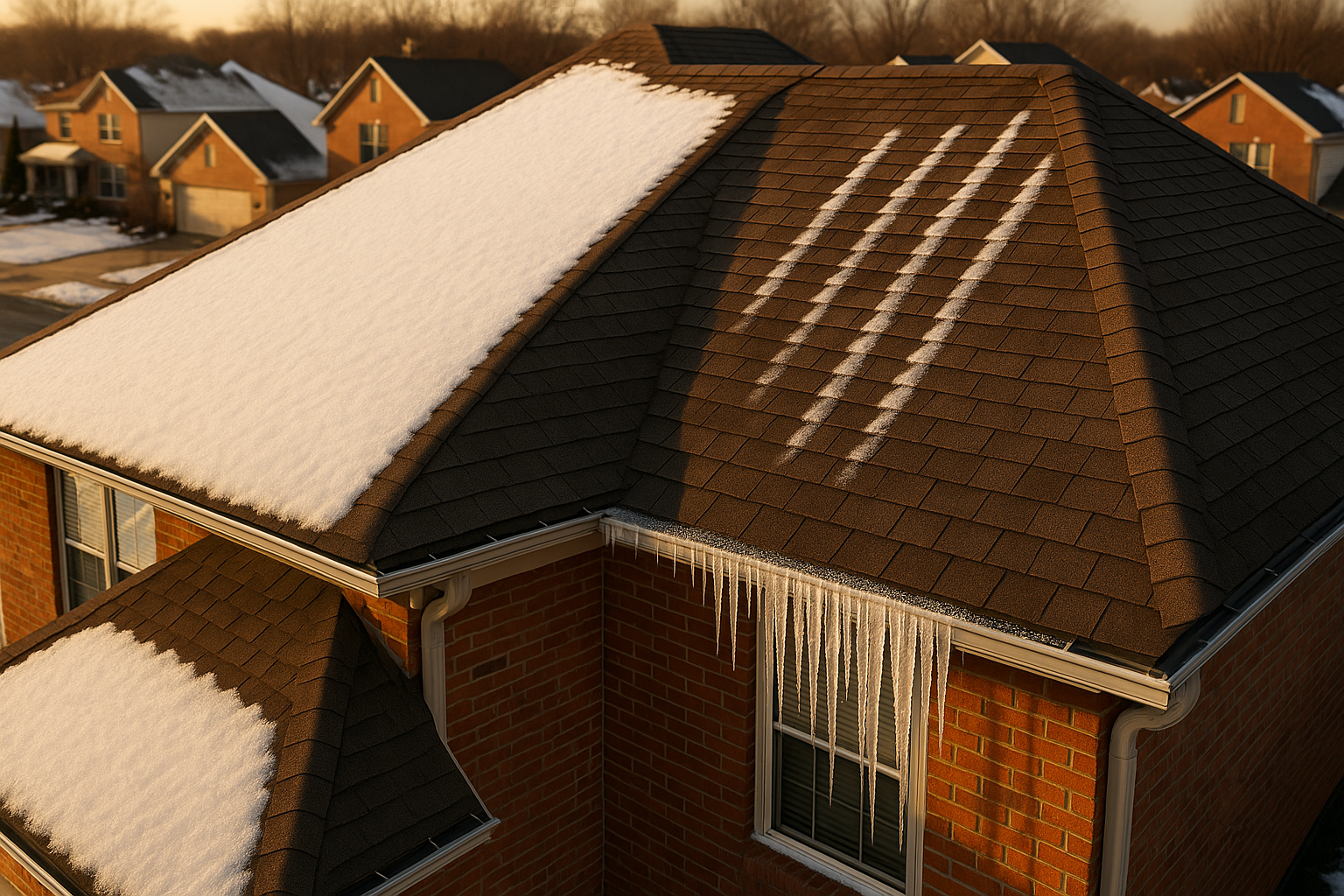
Whenever a spring storm rolls across Brownsburg or Avon, two things happen: wind grabs shingle corners that are already losing their fiberglass mat strength, and hail peppers the surface. Even if the roof doesn’t leak immediately, granule loss thins the UV shield. Come July, that dark asphalt soaks up sun and cooks your topside. In winter, melted snow re‑freezes at the eaves and creeps under the shingle edges—the same freeze‑thaw cycle that crumbles our driveway edges. No wonder you spot granule piles in gutters by year 10.
Metal roofs laugh at most of this. A standing seam metal roof in Noblesville with concealed clips isn’t fighting the wind; it’s letting air slip over without prying lips. And while Class 4 impact‑rated shingles exist, metal panels commonly earn that rating without losing protective coating—no granules to shed, no cracks to chase. Hail can leave small cosmetic dings, but unless you’re staring from four feet away in the right light, you won’t see them. If you’re worried about wind‑resistant roofing in Hamilton County, metal is legitimately one of the best options.
Noise, Lightning, and Other Campfire Stories
Let’s bury the noise myth right now: my dad’s metal‑roofed workshop in Greenwood sounds exactly like the asphalt‑roofed house next door during a storm. Why? Because they both have solid sheathing and modern underlayments. The old tin roofs on barns? Different beast—no deck, no insulation. On a home with an attic and drywall, you’ll hear rain a touch more, maybe, but it’s a soft hum, not a marching band. The metal roof noise myth is just that.
Lightning doesn’t care what’s on your roof, either. It strikes the tallest object around—your chimney, a tree, a nearby pole. Metal doesn’t attract it. If the house is grounded properly, a strike might actually be safer on metal because it conducts the charge to the ground evenly. So ignore the “metal rods from the sky” stories you hear at barbecue joints in Avon.
Hail—we covered that. But here’s a twist: a metal roof won’t rust quickly in Indiana if you stick to rust‑resistant metal roofing. Galvalume coating and high‑end Kynar 500 finishes are spec’d for decades of color and corrosion protection, even with our wet springs and soggy leaves sitting in valleys. Just clean debris off like you would with any roof.
Money Talk: Upfront Sting, Long‑Term Chill
Yes, you’ll pay more for standing seam today. For a typical Noblesville ranch, you might be looking at two to three times the price of a mid‑grade architectural shingle. But if you plan to stay in the house—or even just resell during the next decade—the lifecycle math flips. Replace asphalt twice in 50 years, and you’re paying double labor, double dump fees, double mornings with a crew tromping around your flowerbeds. Add in the energy savings from a cool metal roof reflecting summer sun and you can shave 10–20% off your attic’s absorbed heat, which means a cooler second floor and less strain on the A/C. Cool metal roofing energy savings aren’t a gimmick; they’re measurable when combined with good attic ventilation. (Speaking of that, balanced intake and exhaust is non‑negotiable no matter what roof you pick. Soffit vents feeding a ridge vent will keep under‑roof temps safer and shingles or panels happier.)
When you run the numbers over 40 years, a metal roof often beats shingles in cost per year. Roof warranties in Indiana tell part of the story: skip the marketing fluff and look at the fine print. A typical architectural shingle “lifetime” warranty is heavily pro‑rated after a decade, covering a fraction of costs. Metal substrate warranties often run 30–40 years with much less depreciation, and the finish warranty on a premium Kynar coat covers color fade and chalk for decades. Workmanship? That’s on your installer—choose someone local who isn’t a storm chaser. (We’ve got a guide on spotting storm‑chasing roof scams if you want a quick gut‑check.)
Making Metal Look Like Home, Not a Pole Barn
Half the HOAs in Noblesville, Carmel, and Fishers approve metal roofs now, especially standing seam in muted tones like charcoal, slate gray, or dark bronze. It’s a clean, upscale look. If you want something that mimics shake or slate but handles ice and hail without cracking, metal shingles—not standing seam, but panels stamped to look like cedar—are a solid middle ground. I’ve seen a few in Zionsville and Westfield and honestly, from the street, you’d never guess they weren’t real unless you tapped them.
Snow slides? Yeah, they happen. But snow guards for metal roofs are inexpensive brackets that keep sheets from avalanching onto the front stoop. Every winter I see homes along SR-37 dealing with ice dams at the eaves; good eave detailing and underlayment solve that either way. If you’re worried about your garage door or walkway, mention snow guards right from the quote. They’re not complicated.
When Shingles Still Make Sense
This doesn’t mean go metal or go home. If you’re planning to sell in three years, a quality architectural shingle, properly flashed and ventilated, will look fresh at closing and cost way less now. And for a young family stretching every dollar, putting a nice dimensional shingle on their Greenwood starter home and knowing they’ll revisit it later is totally reasonable. Just don’t go bottom‑barrel 3‑tab and skip ventilation—you’ll regret it in six winters.
In those cases, I’d still tell you to get a roof inspection and talk through what to look for in a contractor. Some simple tips can max out the lifespan of whatever you put up there.
So, What’s Your Roof’s True Age?
The fastest way to cut the noise is to have someone walk the roof with you—check remaining granule thickness at the eaves, look for nail pops on metal or brittle valleys on shingles, and measure attic temps. A roof replacement in Noblesville should start with that, not a generic brochure.
If you’re sitting on an original roof from the early 2000s and wondering whether a one‑and‑done metal option fits your budget and your street’s style, let’s grab a ladder and talk specifics. We’ll compare good‑better‑best options for your home, not a national average, and price them plainly. Grab a slot for a free assessment—no push, just real numbers for the roof over your head.
Ready for a free roof assessment?
We climb the roof, photograph the damage, and give you an honest read — no pressure, no upsell.