If recent storms have you eyeing the shingles or placing a bucket under a ceiling stain, you’re not alone. Central Indiana’s freeze–thaw cycles, spring hail, and summer wind put constant stress on roofing systems. This guide walks through the most reliable signs your roof is nearing the end of its service life, what can still be repaired, how local weather plays in, and how RoofPros delivers a clear, planning‑first assessment so you can decide with confidence.
Repair or replace? A simple framework for Indianapolis homes
A full replacement isn’t always the right answer. Use these benchmarks to separate routine fixes from true end‑of‑life conditions:
- Age and ventilation: Many asphalt shingle roofs in Indianapolis reach end‑of‑life between 15–25 years depending on shingle quality and attic ventilation. A well‑ventilated system lasts longer; a hot, under‑vented attic accelerates curl and crack.
- Extent of damage: Localized issues (a few missing shingles, a single chimney flashing leak) are often repairable. Widespread shingle failure across multiple slopes or repeated leaks after storms point toward replacement.
- Moisture intrusion: Stains on ceilings/walls, damp insulation, or moldy sheathing signal water is moving through the system—repairs may only delay a larger fix if the deck is compromised.
- Decking and structure: Spongy sheathing, visible daylight in the attic, sagging valleys or ridgelines are structural red flags—prioritize replacement.
- Cost of ownership: If the roof is past mid‑life and you’re making frequent repairs after every wind event, replacement can be the lower long‑term cost compared to ongoing patchwork.
Visual red flags to watch for on Indy roofs
Missing, curled, or cracked shingles
Central Indiana windstorms commonly lift tabs and remove shingles along eaves and rakes. Curled, cupped, or cracked shingles across several areas indicate heat/UV aging or poor ventilation. If more than a slope or two shows this pattern, plan for replacement rather than piecemeal repairs.
Heavy granule loss and “bald” spots
After rain, do you find black granules in downspouts or gutters? Consistent granule shedding exposes the asphalt base, speeding UV damage. Bald patches or dark blotches where granules are gone are late‑life indicators.
Damaged roof flashing and wall transitions
Rusted, loose, or lifted step flashing at brick chimneys and sidewalls is a common leak source in older Indy homes. Sealant alone is a stopgap; if flashing is failing throughout, a system‑level fix is prudent.
Hail and wind impacts common along I‑65/I‑70
Hail can bruise shingles, crush granules, and create soft “pockmarks.” Wind may crease tabs, especially on older three‑tabs. These issues might not leak immediately but shorten lifespan. After a notable storm, a documented inspection helps you decide on repair vs. replacement and supports potential insurance claims.
Active leaks and interior symptoms
Water stains, peeling paint, or musty odors after a storm reveal pathways for moisture. Don’t ignore small stains; they often trace back to larger membrane or flashing breakdowns.
Daylight in the attic or spongy decking
If you can see outdoor light through the roof deck, or the deck feels soft underfoot, the sheathing is deteriorating. That’s a replacement‑level problem, not a patch.
Sagging ridgelines or valleys
A roof plane that appears wavy or a ridge that dips suggests underlying sheathing or framing issues—address sooner to protect structure and insulation.
Biological growth: algae vs. moss
North‑facing slopes in shaded Indy neighborhoods (Meridian‑Kessler, Broad Ripple, Irvington) often show dark algae streaks—mostly cosmetic. Moss, however, holds moisture and can lift shingles. Avoid pressure‑washing; it strips granules. A replacement with algae‑resistant shingles may be the better long‑term fix if growth is persistent.
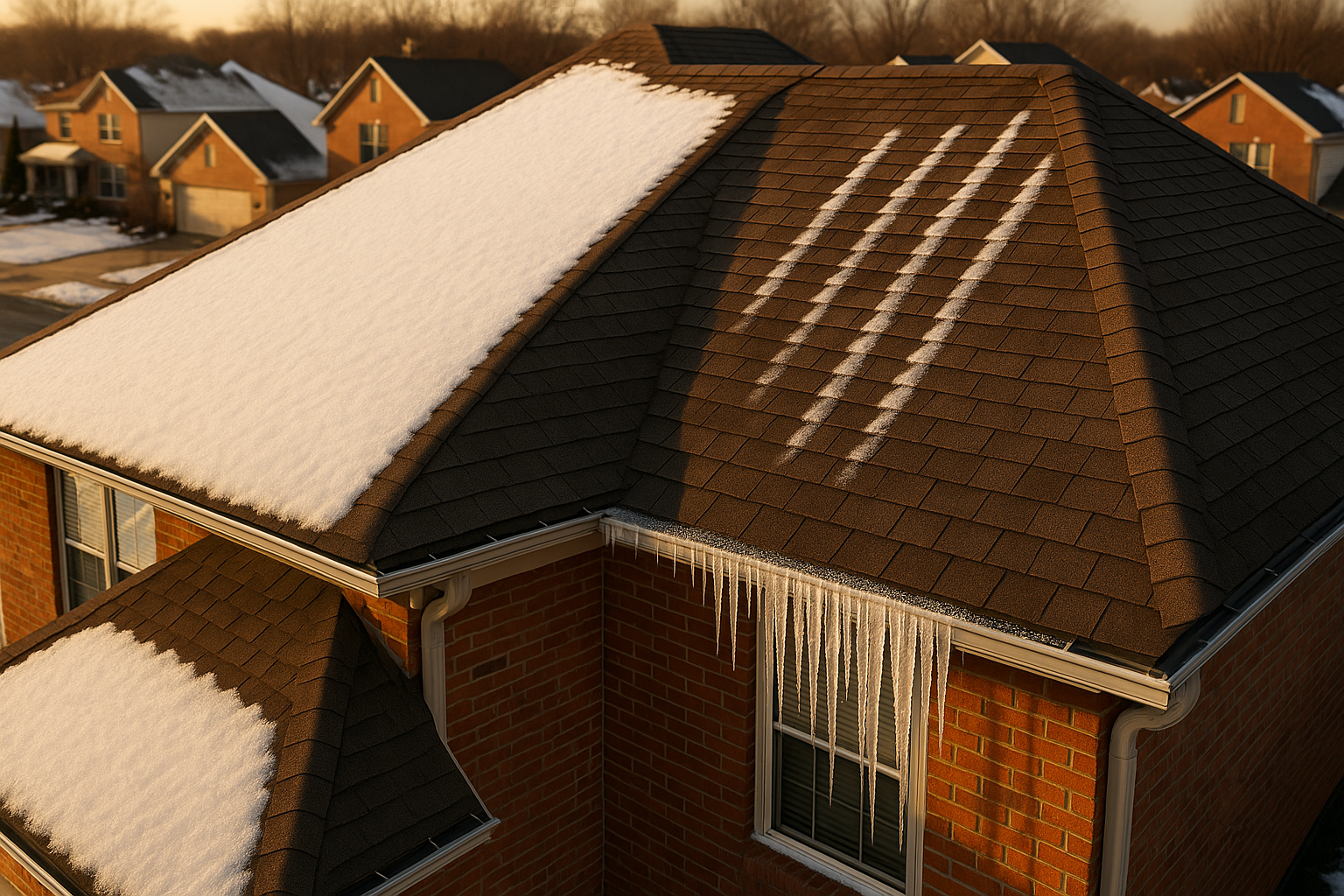
Ice dams and winter stresses
Shaded eaves can develop ice dams during cold snaps. If you’ve seen interior leaks near outside walls in winter, evaluate ventilation and insulation. Poor airflow shortens the roof’s life and can damage decking.
Why age and ventilation matter so much here
- Asphalt shingle lifespan in Indianapolis: Architectural shingles commonly last 18–25 years under proper ventilation; builder‑grade systems or hot attics can age out closer to 15–18 years.
- Ventilation basics: Balanced intake (continuous soffits) and exhaust (ridge vents) reduce attic heat and moisture. Without it, shingles curl early, fasteners rust, and winter condensation can rot sheathing.
- Trees and debris: Mature trees drop needles and leaves that trap moisture at eaves and in gutters, accelerating wear and backing up water during storms.
What a RoofPros inspection includes
Our planning‑first process is designed to remove the guesswork. A typical RoofPros assessment includes:
- Exterior survey with high‑resolution photos/video of shingles, penetrations, and flashing
- Attic evaluation for daylight, damp insulation, sheathing condition, and ventilation pathways
- Hail/wind impact check and moisture mapping around chimneys, skylights, and valleys
- Ventilation review with recommendations for balanced intake/exhaust
- Clear, written scope with repair‑or‑replace options, line‑item materials, and site‑protection plan
- Transparent timeline and what to expect day‑of (crew size, start/finish, cleanup and magnetic nail sweep)
You’ll receive plain‑language findings and photos so you can see exactly what we see—no pushy upsells, just facts and practical recommendations.
The repair‑vs‑replace decision: a quick checklist
Consider replacement when two or more of these apply:
- Roof age is 18–25+ years or unknown and past mid‑life
- Multiple slopes show missing, curled, or cracked shingles
- Heavy granule loss or bald spots are visible
- Leaks recur in different areas or decking feels soft
- Flashing failures occur at several transitions
- Wind/hail damage is widespread, not isolated
Repairs may be appropriate when:
- The roof is under ~15 years with otherwise sound shingles
- Damage is limited to a single area or a specific flashing detail
- There’s no evidence of deck rot, sponginess, or attic daylight
Material options that perform in Central Indiana
- Architectural asphalt shingles: The local standard for value, curb appeal, and reliable weathering. Impact‑resistant options add hail resilience and may reduce storm‑related repairs. Explore costs at Asphalt Shingle Roof Cost – Indianapolis.
- Standing seam metal: Superior longevity, excellent wind/snow shedding, and distinctive lines. Higher upfront cost with strong long‑term durability. Learn more at Metal Roof Cost – Indianapolis.
We’ll walk you through color, profile, ventilation, and flashing details that fit your home’s architecture and neighborhood guidelines.
What drives roof replacement cost in Indianapolis
Every home is different, but the biggest variables are roof size and complexity (pitch, dormers, valleys), number of layers to remove, decking condition, chimney/skylight flashing, and ventilation upgrades. Permits and HOA approvals in Marion County or surrounding communities can influence timeline and scope. For a deeper dive, see Roof Replacement Cost – Indianapolis.
Timing: The best seasons are spring through fall, but with proper adhesives, underlayments, and scheduling on clear days, winter replacements are feasible in Indiana. We plan around temperatures and forecast to protect materials and your home.
Insurance considerations after hail or wind
Homeowners insurance may cover sudden, accidental storm damage—not wear and tear. Documentation matters. A RoofPros storm‑damage inspection provides dated photos, slope‑by‑slope notes, and a written scope you can share with your carrier. We’ll answer your questions and coordinate timing; your insurer determines coverage and settlement.
FAQs: quick answers for Indy homeowners
What are the most reliable signs you need a new roof versus a repair?
Widespread shingle failure, heavy granule loss, repeated leaks, soft decking, attic daylight, and sagging lines usually point to replacement. Isolated flashing or a few missing shingles are often repairable.
How long do asphalt shingles typically last in Indianapolis?
About 18–25 years for architectural shingles with good ventilation; builder‑grade or poorly vented systems may age out closer to 15–18 years.
Can you replace a roof during cold Indiana winters?
Yes, with planning. We schedule work during dry, workable temperatures and use cold‑weather adhesives and underlayments. Some specialty products have minimum temperature requirements.
What does hail damage look like on shingles?
Look for circular granule loss, soft bruises that feel spongy, crushed mineral surface, and cracked or creased tabs—often most visible on slopes facing the storm.
Does homeowners insurance cover roof replacement after hail or wind?
Policies vary. Insurers typically cover sudden storm damage, not age‑related wear. Documentation from a professional inspection helps your claim review.
Why are my gutters full of black granules?
It’s a sign shingles are shedding their protective coat, often as they near end‑of‑life or after a hail/wind event.
How long does a roof replacement take on a typical Indianapolis home?
Most single‑family homes finish in 1–2 days, depending on size, pitch, weather, and decking repairs.
Ready for a clear plan and clean execution?
If you’re noticing leaks, missing shingles after wind, or just an aging roof, schedule a professional assessment. RoofPros will document the condition, review ventilation, and provide a clear, written scope—repair or replace—with materials and timelines matched to Indianapolis weather and neighborhood expectations.
Prefer to discuss exterior priorities together? Get a Free Deck Consultation. Use our planning‑first process to map your project and budget. When you’re ready, request your roof assessment and written estimate at Request Your Estimate.
Ready for a free roof assessment?
We climb the roof, photograph the damage, and give you an honest read — no pressure, no upsell.