When the roof edge looks tired—or worse, when gutters sag, paint peels, or critters find a way in—the fix is rarely just cosmetic. On Indianapolis homes, healthy soffits and fascia protect the roof structure, keep gutters secure, and provide the attic with steady intake air. This local guide explains what to check, material choices that hold up in our four seasons, how repairs tie into ventilation and gutters, and the planning-first process RoofPros uses for a clean, durable result.
What soffits and fascia do on an Indy home
- Shield roof edges and rafter tails from rain, snow, and wind-driven moisture.
- Support the gutter system so water is carried away from siding and foundations.
- Provide attic intake ventilation—balanced with ridge or roof vents—to control moisture and heat.
- Finish the roofline for a straight, premium look.
Ventilation basics at the eaves
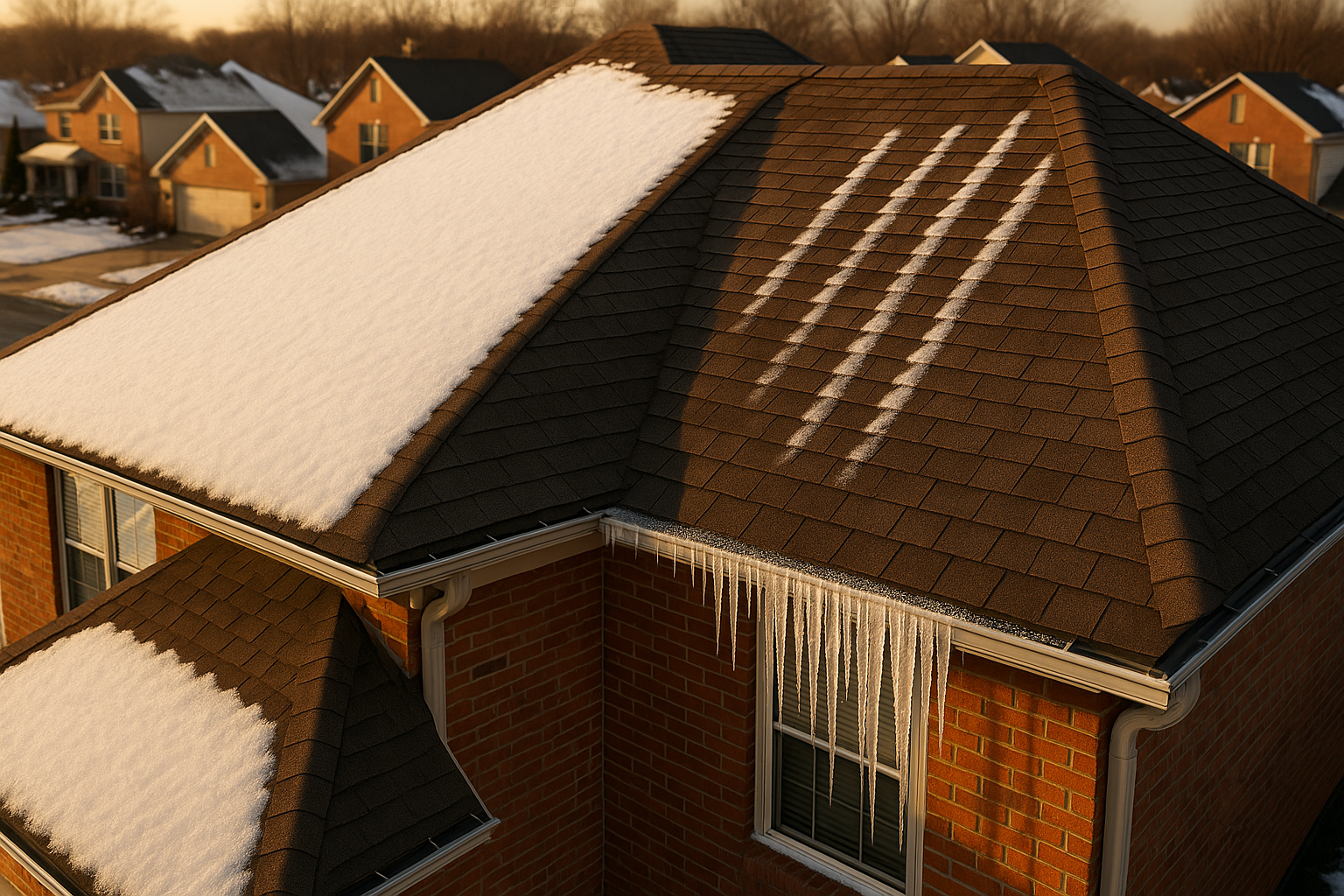
Balanced airflow depends on unobstructed soffit intake. Options include continuous vented soffit panels or discrete round/rectangular vents. Above the insulation, baffles should hold a clear channel from the soffit into the attic. Blocked soffit vents lead to condensation, mildew, and ice-dam risk. If your home shows darkened roof sheathing near the eaves or stale attic air, improving intake is one of the highest‑value upgrades during soffit work.
Signs your eaves need attention
Indianapolis homeowners often call us after noticing: - Peeling or bubbling paint along the fascia - Soft, wavy, or out-of-line fascia boards - Sagging, rattling, or missing soffit panels - Gaps where animals or insects are entering - Attic moisture, mildew odor, or frost on nails in winter - Gutters pulling away, leaking at corners, or repeatedly clogging
Local factors make these issues more common: - Freeze–thaw cycles open paint films and seams, letting water into fascia boards - Spring thunderstorms and straight-line winds drive rain up under shingles and into eaves - Heavy autumn leaf fall in neighborhoods like Meridian‑Kessler, Broad Ripple, and Irvington clogs gutters and overflows onto fascia - Ice dams during cold snaps push water under shingles; poorly integrated drip edge and flashing worsen the problem - Squirrels, starlings, and raccoons exploit loose soffit panels to access attics
If you suspect multiple causes—ventilation, gutters, and materials—it’s smart to scope the project holistically rather than piecemeal.
Materials and finish options that work in Indianapolis
There’s no one “best” choice; your home’s architecture, maintenance preferences, and budget guide the decision.
Painted wood (classic, repairable)
- Pros: Authentic look on historic and mid‑century homes; easily patched or repainted; can be milled to match profiles
- Considerations: Requires regular painting; vulnerable to rot if gutters overflow or paint fails; best where owners commit to maintenance
Aluminum (durable, low maintenance)
- Pros: Rot‑proof, colorfast finishes, and excellent for fascia wraps that protect existing wood; pairs well with aluminum or steel gutters
- Considerations: Requires clean substrate; seams and corners must be well detailed to prevent water entry; higher upfront than repainting but often lower long‑term upkeep
Vinyl soffit (cost‑effective, ventilated options)
- Pros: Budget‑friendly; readily available with continuous venting; stable in freeze–thaw
- Considerations: Can flex in strong winds if not properly fastened; color selection may be more limited than aluminum; use quality panels to avoid sag
Composite/PVC fascia and trims (premium, rot‑resistant)
- Pros: Moisture‑proof, smooth finishes, and crisp corners; ideal for shaded or high‑exposure areas prone to rot
- Considerations: Higher material cost; needs compatible paint if a custom color is desired
Matching the look: We routinely color‑match new panels and trims to existing siding and gutters. For homes with existing aluminum‑wrapped fascia, replacing sections with the same profile and finish maintains curb appeal. Where wood is retained, painting gives a consistent look; where long‑term protection is the priority, aluminum wrapping over sound wood reduces future repaint cycles.
How gutters, flashing, and drip edge work together
A watertight eave is a system—components must overlap correctly to shed water: - Drip edge guides water off the roof into the gutter and protects the roof deck edge - Gutter apron bridges the gap between shingles and gutters to prevent backflow behind the fascia - Fascia flashing or wrap shields the fascia board from splash and wind‑driven rain - Proper gutter pitch and correctly spaced hidden hangers keep loads off the fascia and prevent pull‑away
Poorly pitched or undersized gutters accelerate fascia rot, especially under fall leaf loads. If you’re weighing gutter upgrades, this is the right time—labor overlaps and you avoid reopening finished work. For more on performance gutters and roof life, see Why gutters matter to roof longevity (/blog/why-gutters-matter-roof-longevity/).
Repair vs. replace: scoping the right fix
- Localized repair is reasonable when damage is contained, the substrate is dry, and ventilation is adequate.
- Full‑run replacement is smarter when rot is widespread, fascia alignment is off, soffit vents are blocked throughout, or profiles/colors don’t match well anymore.
- Always check for hidden issues: moisture in rafter tails, delaminated roof sheathing at the eaves, and signs of animal nesting.
A planning‑first scope avoids surprises: we probe wood, meter for moisture, and open small test areas if needed before writing the plan.
Our professional process for clean, durable results
1) Inspection and documentation - Exterior walk‑around and attic intake review; moisture readings at suspect areas - Photos and notes you can review at home—clear communication from the start
2) Careful removal - Take down affected soffit/fascia and only the gutter sections required for access - Protect landscaping, porches, and walkways; contain debris for tidy work zones
3) Structural corrections - Repair or sister rafter tails if softened by rot - Verify baffles for clear intake above insulation; add or adjust as needed
4) Rebuild and integrate - Install new fascia (wood, aluminum wrap, PVC/composite as specified) - Fit fascia flashing, drip edge, and gutter apron for correct water path - Install new or upgraded vented soffit with proper nailing and expansion gaps
5) Gutter rehanging and finishing - Rehang or replace sections with correct pitch and hidden hangers - Seal corners, miters, and fasteners; touch‑up paint or snap‑lock wraps
6) Final walkthrough - Confirm intake airflow, line straightness, color match, and cleanup - Provide photos and a written closeout summary you can keep with home records
Safety, seasonality, and scheduling in Indianapolis
Working at height around electrical service drops, brittle old panels, and slick surfaces is risky. If ladders, live lines, or animal activity are involved, it’s time to call a licensed, insured crew.
Timing: Most soffit and fascia repairs take 1–3 days depending on footage, access, and gutter work. Projects can be done year‑round in dry conditions. Spring and fall book quickly due to storms and leaf loads, but winter slots are often available—and can be ideal for tackling ice‑dam‑related repairs.
Pricing and insurance basics
Without getting into numbers, typical cost factors include: - Linear footage and story height - Material selection (painted wood vs aluminum wrap vs composite) - Extent of rot and any rafter‑tail repair - Gutter work, layout changes, and downspout adjustments - Painting or wrapping scope and color‑matching needs - Ventilation upgrades and debris disposal
Insurance: Sudden storm or wind damage—like wind‑torn soffit panels or hail‑damaged fascia—may qualify for coverage. Document with photos and get a written assessment from a pro. For guidance after severe weather, see our Indianapolis storm damage roofing guide (/blog/indianapolis-storm-damage-roofing-guide/).
Permits and HOA: For like‑for‑like exterior repairs, permitting is often minimal, but confirm with Indianapolis’ Department of Business and Neighborhood Services and your HOA for color or profile requirements.
Maintenance plan for long‑lasting eaves
- Clean gutters at least twice a year (more often under mature trees)
- Keep soffit vents clear; avoid blowing insulation into the intake path
- Trim back branches that drop debris or give animals roof access
- Inspect after major storms for loose panels, lifted drip edge, or sagging gutters
- Avoid pressure‑washing eaves; it can force water behind trims
- Watch for early signs: peeling paint, wasp nests, attic mustiness
For a broader home exterior checkup, start with our Roof Inspection Checklist for Homeowners (/blog/roof-inspection-checklist-homeowners/).
Answers to common questions
Can I just repaint the fascia instead of repairing it?
Repainting is fine when the wood is dry, solid, and square. If a screwdriver sinks into soft spots or gutters have pulled fasteners loose, address the substrate first—paint won’t fix rot or misalignment.
Do I have to replace all my gutters if the fascia is rotten?
Not always. We often detach and reset sections. If gutters are undersized, poorly pitched, or repeatedly leaking at seams, replacement during fascia work is efficient and prevents future damage.
Will the new soffit and fascia match my home’s color and style?
Yes—between aluminum finishes, vinyl colorways, paintable wood, and composite trims, we can closely match most homes. On aluminum‑wrapped fascia, we source matching profiles and colors for seamless sections.
Is winter a bad time for soffit and fascia work in Indianapolis?
Not necessarily. Many repairs proceed in winter during dry, above‑zero windows. Adhesives and sealants are chosen for ambient temperatures; we schedule around weather for quality.
How messy or disruptive is the repair process?
We protect landscaping, keep a tidy site, and haul debris daily. Expect some noise during removal and gutter work; most homes remain fully accessible throughout.
What if you find hidden rot—will the price jump unexpectedly?
We scope carefully up front and note contingencies in writing. If concealed damage appears, we document it with photos, review options, and get written approval before proceeding.
Is aluminum wrapping better than repainting wood fascia long‑term?
For many homes, yes. Wrapping sound wood with aluminum reduces repaint cycles and adds weather protection. Severely rotted wood should be repaired or replaced before wrapping.
Will improving soffit ventilation actually help my roof?
Yes. Adequate intake reduces attic moisture and heat, supporting shingle life and reducing ice‑dam risk when paired with balanced exhaust.
Do you perform soffit and fascia repairs in winter?
Yes, when weather allows safe, dry work. Lead times can be shorter in winter.
What’s the difference between drip edge and gutter apron, and do I need both?
Drip edge protects the roof deck edge and directs water off the fascia; gutter apron bridges the shingle edge into the gutter. Many assemblies benefit from both for reliable water shedding.
Plan your project with RoofPros
RoofPros brings a planning‑first process, clean communication, and materials suited to central Indiana’s climate. You’ll get a clear, photo‑rich scope, practical options (repair vs. replace), and a tidy, craftsmanship‑focused install.
Prefer to talk it through? Get a Free Deck Consultation—we’ll apply the same consultative session to your soffit and fascia scope, review materials and ventilation, and provide a direct, written quote. Ready to start? Request your no‑obligation visit here: /#quote. And if you’re comparing contractors, this guide can help: Choosing a roofing contractor in Indianapolis (/blog/choosing-roofing-contractor-indianapolis/).
Strong eaves make a strong roofline. With the right plan and details—vented intake, aligned gutters, and protected fascia—your Indianapolis home stays drier, quieter, and sharper for years to come.
Ready for a free roof assessment?
We climb the roof, photograph the damage, and give you an honest read — no pressure, no upsell.