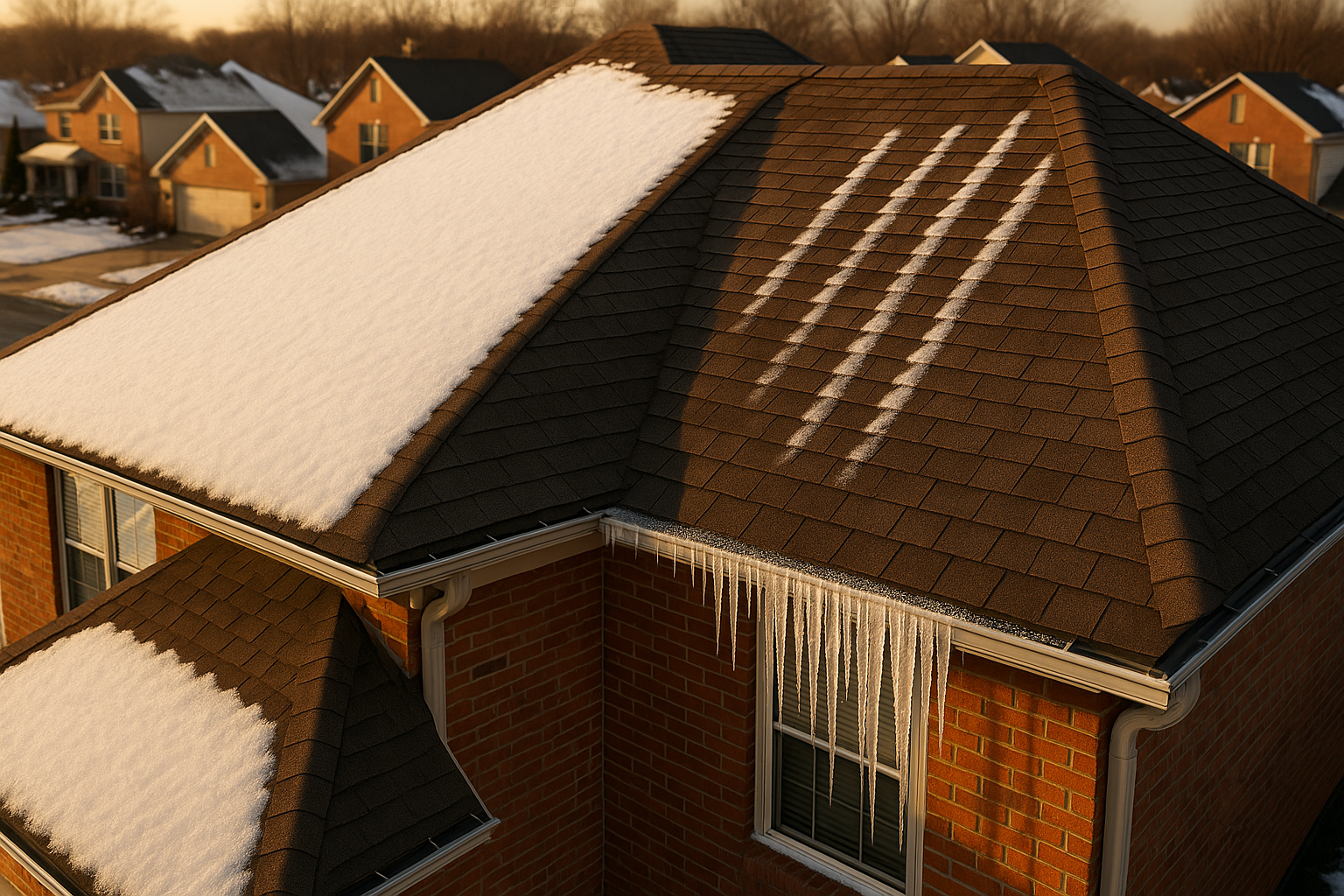
If you’re searching “hail damage roof what to do” right after a storm, start here. RoofPros is a planning-first Indianapolis roofing specialist. We focus on safety, documentation, and a clear scope before any repairs—so you get a precise plan, not pressure.
First 60 minutes after a hail storm: safety and quick checks
- Wait for the weather to clear and avoid climbing a wet roof.
- Check inside for active leaks. Use a flashlight to inspect ceilings, closets, and the attic, especially around vent pipes, chimneys, and skylights.
- Place a container under drips and move valuables away from wet areas. If water nears electrical fixtures, turn off power at the breaker for that circuit.
- If there’s an obvious opening and it’s safe from the ground, temporary roof tarping after hail can limit damage. Document conditions first. Save any receipts—policies often consider emergency mitigation.
Tip for Indy homes: many attics here are small and dark; move carefully, step only on joists, and consider waiting for a pro if footing is unclear.
Document before you make calls: what photos and notes matter
A strong photo log speeds decisions—both for you and any insurer.
- Note the storm date/time and keep any local NOAA or Indy TV weather screenshots. If your neighborhood is in Meridian-Kessler, Broad Ripple, or a suburb (Carmel, Fishers, Westfield, Greenwood, Plainfield), include your address and the time you observed hail.
- Photograph hail size next to a coin (quarter or nickel) on a flat surface. Don’t place it on the roof; use a deck, patio, or sidewalk.
- Take wide shots of each side of the home for context (front, back, left, right), then close-ups of soft metals: gutters, downspouts, window wraps, fascia, mailbox tops, and AC condenser fins. These show clear impact marks.
- Capture ground clues: granules collecting at downspouts or splash blocks, torn window screens, dented metal yard lights.
- If you safely access the attic, photograph any new water spots near vents or the ridge.
Hail damage photos for insurance are stronger when labeled by elevation and slope: “South slope—downspout dent,” “West elevation—AC fin dings,” etc. RoofPros also creates slope-by-slope notes that help claims move faster.
From-the-ground signs you can spot
- Dents or dings in aluminum gutters and downspouts
- Piles of shingle granules at downspouts
- Impacts on metal fascia, mailbox tops, and AC fins
- Tears in window screens
Roof-level indicators (leave to a pro)
- Asphalt-shingle bruises: soft, spongy spots that crush granules and expose dark asphalt
- Circular granule loss or “pock marks”
- Cracked or torn shingle tabs
- Dented vents, flashing, turtle vents, ridge vents, or caps
- Skylight lens/ring impacts and ridge-cap hits
In Indianapolis neighborhoods with mature trees, branches can mask gutter dents. Check soft metals closely even if shingles look okay from the street.
Does hail size matter? Yes—and so does wind and slope orientation
- Around 1-inch hail can mark soft metals (gutters, downspouts, vents).
- Roughly 1.25–1.5 inches and up may bruise many asphalt shingles, depending on shingle age, quality, and prior UV wear.
- Wind-driven storms here often punish south- and west-facing slopes more. Roofs with older, brittle shingles tend to show damage at smaller sizes.
Seasonal temperature swings in Central Indiana accelerate aging of bruised shingles. Even if you don’t see leaks now, crushed granules expose asphalt, increasing UV damage and shortening service life.
Call a local specialist first—not your insurer
Before opening a hail damage roof insurance claim, have a reputable Indianapolis roofer evaluate and document the scope. RoofPros:
- Performs a hail damage roof inspection with photos and slope-by-slope notes
- Estimates repair vs. replacement scope and advises if a claim is justified
- Helps you understand policy basics so you can decide next steps
Why this order helps: unnecessary claims waste time, while underreported damage leads to incomplete repairs. A thorough local report arms you with facts.
Insurance basics (plain language)
- Deductible: the portion you pay. Know the amount before filing.
- ACV vs. RCV roof claim: ACV (Actual Cash Value) pays depreciated value; RCV (Replacement Cost Value) may release withheld depreciation after work is completed and invoiced, per policy.
- Supplements: if code-required items or hidden damage are discovered (e.g., additional underlayment, flashing), your contractor submits documentation.
- Documentation matters: detailed photos, test squares, and measurements by slope help align on scope.
Meeting the adjuster
Schedule a time to “meet the adjuster roofing” appointment with your contractor present. RoofPros walks each slope and accessory with the adjuster so all elevations, penetrations (pipe boots), vents, flashing, and ridge components are reviewed together.
Temporary protection and realistic timelines
- Tarping/spot repairs: use only when safe and necessary to stop active leaks. Keep receipts for potential reimbursement according to your policy.
- Inspection window: 24–48 hours is typical for RoofPros after a major Indy event.
- Claim decision: varies by carrier and volume; detailed files help.
- Build time: once approved and materials are in, most average Indianapolis homes take 1–2 days, weather-permitting.
Permitting in Indianapolis can vary by scope; if decking or structural work is needed, RoofPros coordinates requirements with local authorities.
Repair vs. replacement: how we make the call together
We don’t guess—we test, measure, and plan. Factors we weigh:
- Shingle age and overall condition
- Number of bruises per test square and distribution across slopes
- Manufacturer discontinuation and color-match feasibility
- Accessory damage (vents, pipe boots, flashing, skylights)
- Total roof system approach (underlayment, ice/water barrier, ridge, ventilation)
When replacement is the right move, we discuss material options and cost ranges upfront. For deeper context, see our guides on roof replacement budgeting and material comparisons:
- Explore typical ranges in our Indianapolis roof replacement cost overview: /roof-replacement-cost-indianapolis/
- See pros/cons of common systems here: /blog/asphalt-vs-metal-roofing-indiana/
Material upgrades that pay off in storm country
- Class 3/4 impact-resistant shingles (a popular pick in Central Indiana)
- Robust underlayment and ice/water in critical valleys and eaves
- High-wind nailing patterns and proper fasteners for our seasonal gusts
- Select metal accents where appropriate for longevity at ridges or transitions
If you’re curious how long different systems last in our climate, you may also like: /blog/how-long-does-roof-last-indianapolis/
Don’t forget the rest of the exterior: gutters and siding
Hail often dents gutters and downspouts and can crack or pit siding. Coordinating these with the roof ensures a watertight, color-matched finish and efficient scheduling.
- K-style aluminum gutters show dings clearly—check inside and out.
- Downspout elbows and splash zones often reveal hidden hits.
- Siding may show chips, cracks, or oxidation scuffs after impacts.
Planning all trades together avoids mismatched colors and repeat trips. For budgeting help, see: /gutter-replacement-cost-indianapolis/
Common objections—answered with facts
- “I don’t see leaks—so there’s no real damage.” Leaks often come later. Bruises crush granules and expose asphalt to UV, accelerating failure.
- “The hail wasn’t that big.” Wind, shingle age, and slope direction change the impact. We’ve seen 1.25-inch hail bruise older shingles while newer ones fare better.
- “Filing a claim will automatically raise my premium.” Insurers weigh many factors; weather claims are often treated differently than at-fault events. Decide using your deductible, scope, and policy terms.
- “I’ll wait until next season.” Aging plus freeze/thaw cycles can make bruises worse and complicate approvals later due to wear.
- “A door-to-door roofer promised a free roof.” Be careful—storm chaser roofing warning: avoid high-pressure tactics or vague contingencies. Verify a local address, references, and a clear written scope.
- “I can DIY the inspection and repairs.” Ground photos help, but unsafe roof access and missed system details can cost more later. Use a qualified pro for a full assessment.
- “The adjuster denied it—there’s nothing else I can do.” You can request a reinspection. A detailed contractor report with test squares and slope-specific photos often clarifies borderline calls.
How to choose a contractor in Central Indiana
- Local license/registration and a verifiable Indianapolis-area address
- Clear written scope by slope, with materials and accessories listed
- Transparent pricing aligned to documented damage and code needs
- Straight talk on warranty terms (no vague promises)
- References and recent local projects you can drive by
- No high-pressure sales or signing before scope and process are explained
RoofPros leads with planning and clean communication. You’ll know what we’ll do, what it costs, and why it’s the right fix for your home.
Your next step
If hail just hit your Indianapolis home, let’s document the facts and build a practical plan. Schedule a local hail-damage roof inspection with RoofPros. Use our quick form—Get a Free Deck Consultation—to start the process, and we’ll follow up to confirm timing, inspection scope, and materials. Begin here: /#quote
Want more roof planning insights while you wait? Our blog covers lifespan, materials, and cost planning tailored to Central Indiana: /blog/
Ready for a free roof assessment?
We climb the roof, photograph the damage, and give you an honest read — no pressure, no upsell.