Dave runs a warehouse in Greenwood. Last July a storm rolled through—the kind with sideways rain—and the roof over his inventory started dripping like a coffee maker. He called a few roofers. One swore by TPO. Another said EPDM is the only way to go. Dave just wanted the leaks to stop and his money to last. If that sounds familiar, this breakdown is for you.
So, What Are TPO and EPDM Anyway?
Both are single-ply membranes that go on low-slope commercial flat roofs. Think big rubber sheets rolled out over insulation and sealed at the seams. TPO stands for thermoplastic polyolefin—it’s a white material you weld together with hot air. EPDM is ethylene propylene diene monomer, basically a synthetic black rubber that’s glued or taped at the seams. You’ll hear numbers like 45, 60, or 80 mil thrown around—that’s the thickness in thousandths of an inch. Most commercial roofs around here use 60 or 80 mil.
The Big Differences That Actually Matter
Not all flat roofs are created equal. Here’s where TPO and EPDM really split paths.
Seams: Hot-Air Welded vs. Taped
TPO seams get melted together with hot air. When an experienced crew does it right, the seam becomes stronger than the membrane itself—high peel and shear strength. EPDM seams rely on tape or liquid adhesives. They work, but they’re picky. A roofer told me once that an EPDM seam prepped on a dusty day or in high humidity might look fine today, but after a couple of Indiana freeze–thaw cycles, you could find it popping open. If you go EPDM, the crew better be obsessive about conditions.
Energy Bills: White Roof vs. Black Roof
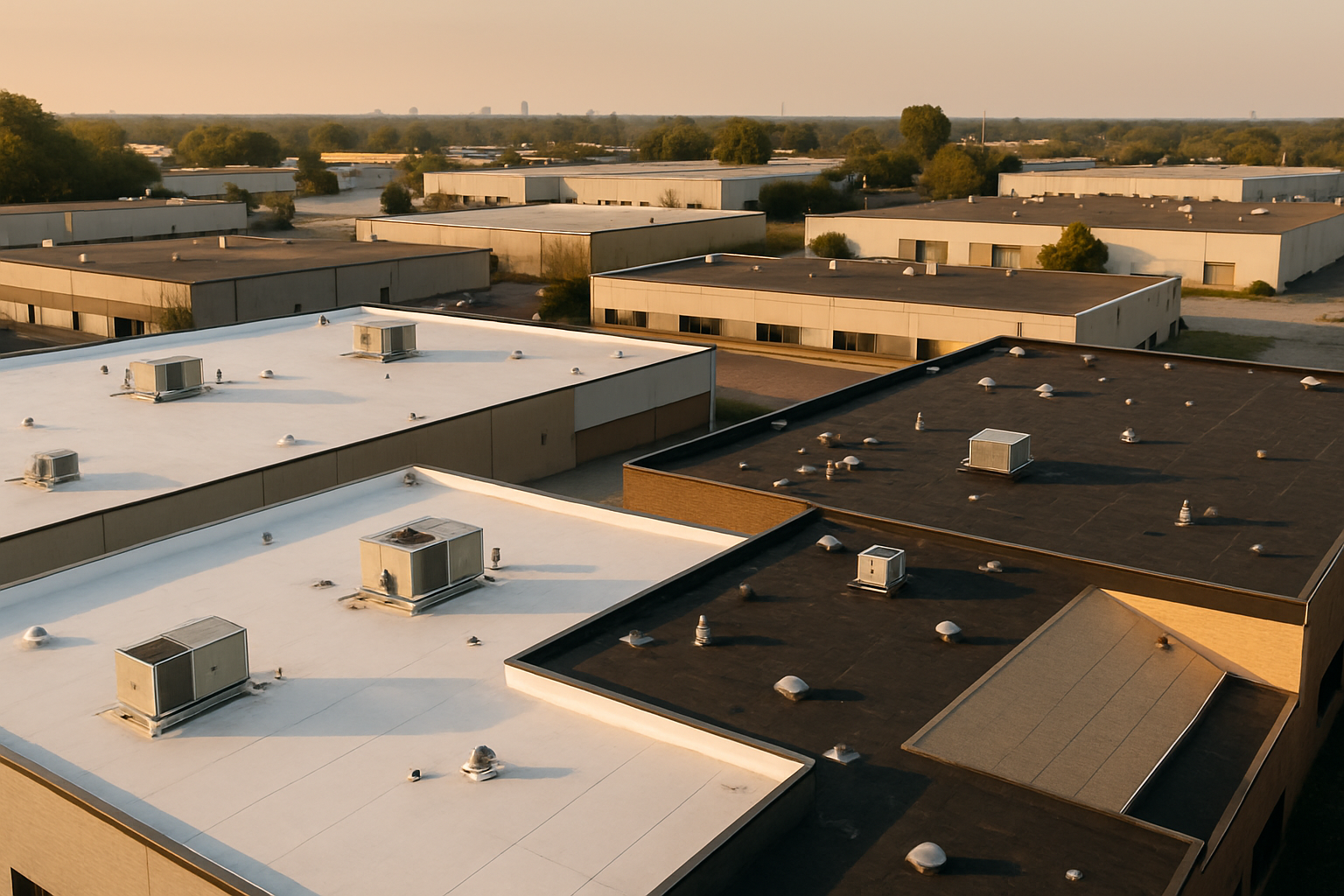
White TPO reflects sunlight like a mirror (we call it a cool roof), so your building doesn’t soak up as much solar heat in summer. In Indianapolis, where July and August can roast, that cuts cooling costs. EPDM is black and absorbs heat, which might sound nice in January, but for most commercial buildings—warehouses, retail, offices—the air conditioning savings in summer outweigh the minor heating boost in winter. A church in Fishers learned this the hard way; their old black roof baked the sanctuary all summer, and the AC couldn’t keep up. The switch to a white TPO roof made a difference you could feel.
Installation: What Happens in an Indiana Winter?
We know winter doesn’t pause construction, but cold weather does affect flat roof installs. EPDM adhesives have temperature limits—most won’t bond right below 40°F. TPO welding can be done in the cold, but only by crews who know what they’re doing. You need windbreaks, preheating, and a tight schedule. So yes, a winter install is possible, but it requires planning. A rushed winter job is a gamble you don’t want to take on a commercial roof.
Puncture Resistance and Foot Traffic
Around rooftop units, ladders, and service paths, people walk. TPO and EPDM both handle foot traffic if you go thick enough (80 mil here beats 60 mil), but you still want walkway pads to spread the weight. If your maintenance folks are up there weekly, don’t cheap out on protection. I’ve seen a new roof get punctured by a dropped screwdriver within a month. Pads are cheap insurance.
Ponding Water: The Bane of Flat Roofs
Indianapolis gets some brutal downpours. If your drains can’t keep up, water sits—and sitting water wears out any membrane faster. Neither TPO nor EPDM fixes bad drainage on its own. The real fix is in the design: tapered insulation, additional drains, or retrofitted scuppers. When we re-roof, we almost always address slope. If someone tells you a certain membrane will solve ponding, they’re skipping the real talk.
Re-Roof vs. Tear-Off: Can We Just Add Another Layer?
If the existing roof is still sound—after moisture scans and pull tests confirm it—you can overlay a new membrane. That saves disposal costs and downtime. But current energy codes often require higher insulation R-values on reroofs, so you might be adding thickness anyway. And if the old roof has wet insulation or a lot of blisters, tearing off is the only real option. We’ll give you an honest read, not a fast sale.
Cost and Warranty: Getting Real Numbers
Upfront, installed costs for TPO and EPDM often end up neck-and-neck. The total cost of ownership includes way more: energy bills over 20 years, maintenance calls, and how long until replacement. Both can come with 20- or 30-year manufacturer warranties if you go with 80 mil and a certified installer. Those warranties do cover real-world issues—but only if you hold up your end: semiannual inspections, prompt repairs after storms, keeping drains clean. A roof maintenance plan isn’t a sales pitch; it’s what keeps your warranty valid. We’ve seen claims denied because a clogged drain caused a pond and the owner didn’t have logs. Don’t skip that part.
So, Which One Makes Sense for Your Indianapolis Building?
It depends. A big, open warehouse roof with good sun exposure? TPO’s reflectivity and welded seams often win. A complex church roof with lots of penetrations and low visibility? EPDM can handle odd angles without as much custom welding. Footprint, wind exposure, interior use, energy goals—they all play in. We won’t toss a one-size answer at you. We’ll walk the roof, check your drainage, talk traffic patterns, then deliver a side-by-side scope with real numbers. If you need a fresh look, give us a call—we’ll schedule an assessment. And if you’re comparing contractors, make sure they’re licensed and insured for Indiana work (here’s what to look for). Permits can be tricky in Marion County, too (we break that down). If you’re in an emergency right now, we do 24-hour roof tarping to stop the bleeding. Ready to move? Get your commercial roof assessment and a TPO vs. EPDM quote.
Ready for a free roof assessment?
We climb the roof, photograph the damage, and give you an honest read — no pressure, no upsell.