Just last spring, my neighbor in Meridian-Kessler woke up to a dripping sound in the living room—water staining the ceiling right below the attic. A tree branch had slapped the roof during a midnight squall, tearing off a chunk of shingles and letting rain pour straight in. He grabbed a blue tarp from the garage, a staple gun, and a ladder from the shed, and tried to fix it himself. Long story short: the tarp blew off twice, the staples made new holes in the decking, and by the time a pro came out, the repair cost had doubled. Wish he’d known then what I’m about to share now—a smarter way to handle an emergency roof tarp in Indianapolis.
When you need an emergency roof tarp
An emergency roof tarp is just a temporary shield. It’s not a fix—it’s a stopgap that blocks water from wrecking your attic insulation, drywall, and decking until you can get permanent repairs scheduled. You need one the moment you spot an active leak, or even a spot that could leak if it rains again. Around here, that usually means after a heavy thunderstorm with straight-line winds, a hailstorm, or when a limb bounces off your shingles and leaves a gash.
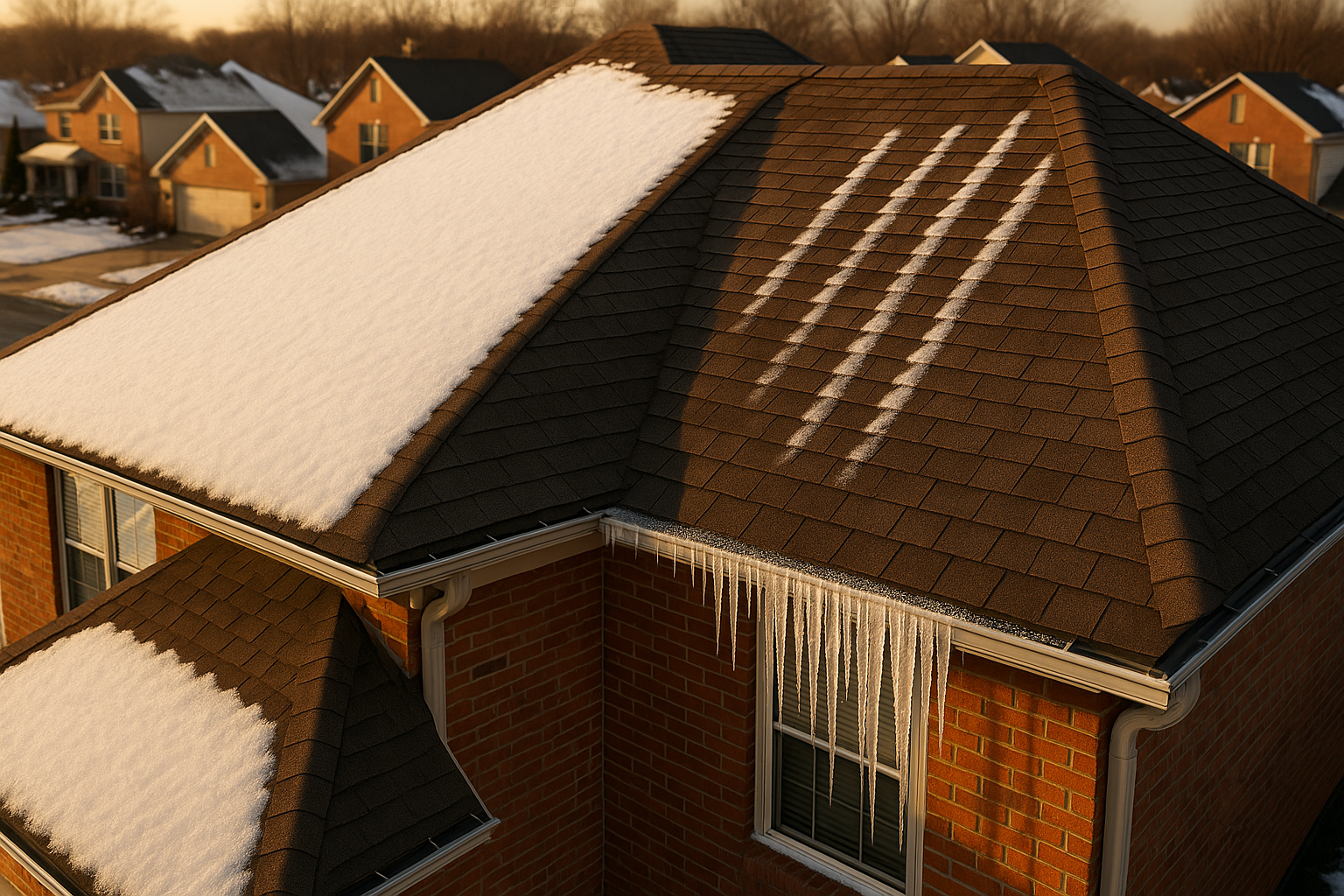
The signs aren’t subtle. Water dripping from a ceiling or a light fixture. A dark, spreading stain on the upstairs drywall. If you poke your head into the attic and see daylight shining through where it shouldn’t, that’s a job for a tarp—and fast. Even if the rain has stopped, moisture trapped in the decking can rot wood and breed mold, especially during our humid Indiana summers. So if you’ve got a chimney leak, a skylight that’s suddenly weeping, or a metal roof panel that’s peeled up at the seam, you need a temporary roof cover. They also call it a roof leak temporary fix, but honestly it’s more of a band-aid. And in winter, when ice dams force water under shingles, you might need a tarp even without storm damage.
How the pros tarp a roof right
DIY tarp jobs usually fail because homeowners don’t overlap enough, don’t run the tarp over the ridge, or use fasteners that become mini leak points. A professional roof tarp service near me—like what we do here at RoofPros—approaches it completely differently.
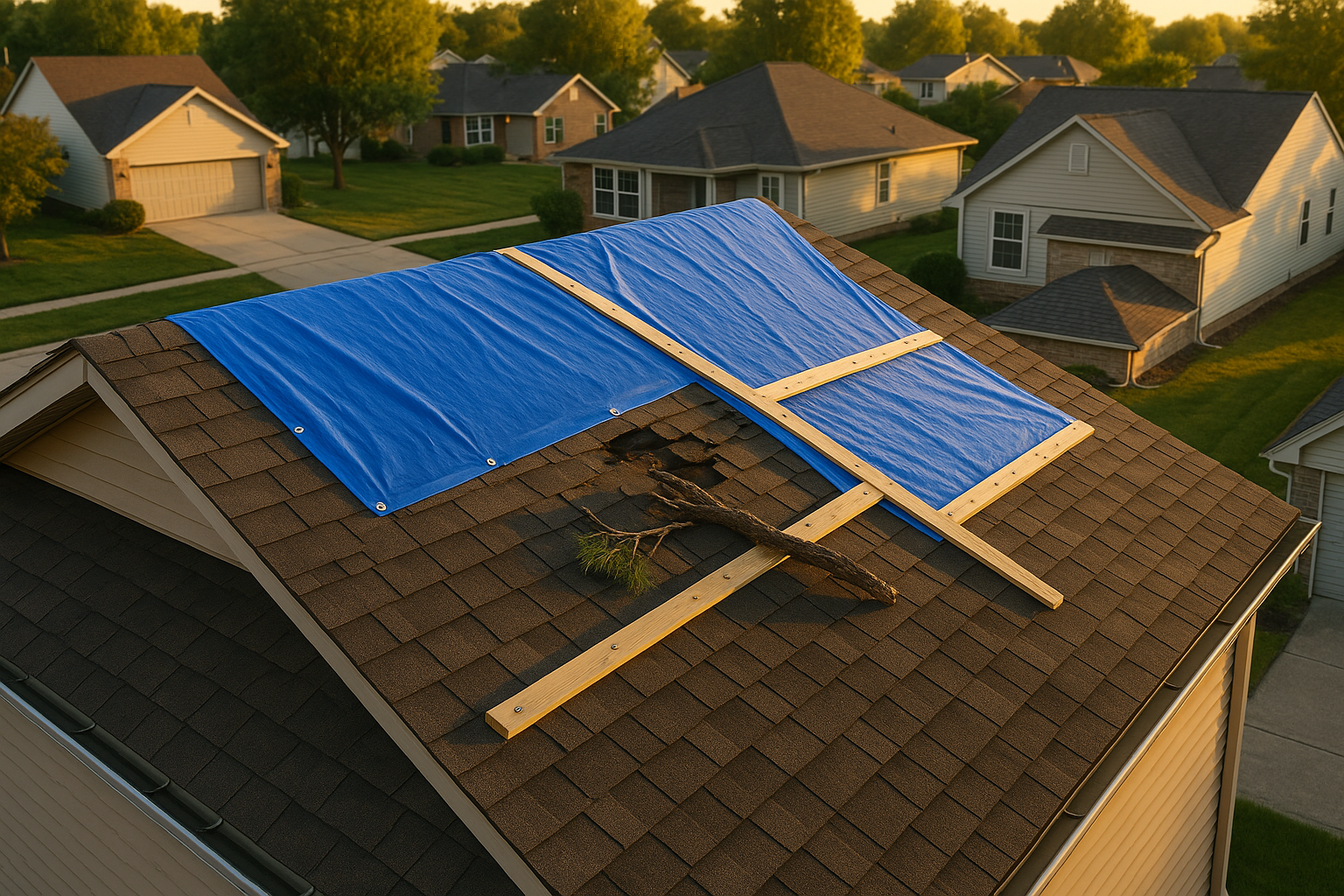
First, we don’t climb onto a wet, windswept roof in a thunderstorm. Safety comes first. In older Indianapolis neighborhoods, overhead electric service drops run right near the roofline, so we check clearances before anything else. Then, from the attic or using drone photos, we find exactly where the water’s coming in. We clear off debris, snapping photos for your records (and your insurance claim). The damaged area gets covered with a heavy-duty tarp—not the thin blue stuff from the home store, but UV-rated material that can handle Midwestern sun and gusty afternoons. We overlap at least three feet in every direction past the visible damage, run the tarp over the ridge if possible, and secure it with plastic cap nails and 2x4 battens screwed into the framing. The batten method spreads pressure and lets us tighten the tarp without ripping it, and by using washered screws, we don’t create new spots for water to sneak in.
Detail work around chimneys, skylights, and valleys
Wrapping around a chimney or skylight takes extra care. You can’t just drape the tarp and call it good—water loves to travel sideways. Our crews fold, overlap, and use compatible flashing tape to seal edges so water sheds toward the gutters, not into the house. Tile and metal roofs add a twist: we can’t nail into them without causing damage, so we often use weighted systems or non-penetrating attachments that hold the tarp in place without violating any warranties.
Does insurance cover emergency tarping?
Short answer: usually, yes. Most homeowners policies expect you to take reasonable steps to prevent further damage. That’s exactly what an emergency roof tarp does—buys you time while protecting your claim. But you’ve got to do it right. Before anything, snap wide and close-up photos of the damage. Get the date and time in there if you can. Keep every receipt, from the tarping service to the coffee you bought while waiting for the adjuster. Don’t toss the broken shingles or bent flashing until the adjuster has seen them. We once helped a family in Avon whose insurance fight dragged on for weeks because they’d already hauled the fallen limb to the curb and the tree didn’t have a “before” shot. Document everything. For more claim tips, check out our post on homeowners insurance roof claim tips in Indiana.
Now, will the tarp itself be reimbursed? In many cases, yes—it falls under emergency mitigation. Just be sure the tarping crew provides an itemized receipt that spells out the scope. And remember, in Indianapolis, emergency tarping usually doesn’t need a permit (structural repairs or full re-roof will, though). So you’re not breaking any rules by putting up a blue roof tarp as a stopgap.
After the tarp—what comes next
A tarp is temporary. In Indiana, a good UV-rated tarp might last a few weeks to a couple months, but with our freeze-thaw cycles and occasional windy days, you don’t want to push it. Once the rain has stopped and you’ve patched the immediate crisis, schedule a full inspection. We’ll check inside the attic for moisture, feel the decking for soft spots, and map out a permanent repair plan. Often, the damage extends beyond what you see—like when a wind-tear lifts shingles in a few places but doesn’t break through. A real fix means replacing the whole affected section, matching the materials, and making sure the flashing and underlayment are solid. For homes in Fishers or Zionsville with those big shade trees, we might also recommend a gutter cleaning tune-up to keep things flowing once the roof is whole again.
And while we’re up there, it’s smart to look at your siding, soffit, and fascia. Hail and wind don’t just pick on shingles; they dent aluminum siding, crack vinyl, and rip soffit panels loose. RoofPros is a general contractor, so we handle all of that—from a little soffit repair to a full exterior refresh. No need to juggle three different companies. One call, one team, one plan.
If you’re staring at a wet ceiling or you know your roof got smacked by the last storm, don’t wait. Grab your phone, snap a few photos, and hit the quote button on our site or call us. We’ll come out, tarp it up right, and give you a clear written scope for the permanent fix—no fluff, no upsells. Because around here, when the sky opens up, the only thing you should be thinking about is getting back to your morning coffee, not whether your living room will need a new ceiling.
Ready for a free roof assessment?
We climb the roof, photograph the damage, and give you an honest read — no pressure, no upsell.