If you’re searching for roof lifespan Indianapolis, you’re likely weighing how much life your roof has left—and what to do next. In Central Indiana, climate and installation details matter as much as the shingle brand on the wrapper. At RoofPros, our planning-first process helps homeowners get an honest, local read on remaining life, smart maintenance, and the right moment to repair or replace without pressure.
How Long Roofs Last in Indianapolis by Material
Published “lifetime” numbers are idealized. Real-world life in Indy is shaped by freeze–thaw cycles, hail, summer sun, and wind-driven rain. Here are practical ranges we see on well-installed roofs with basic maintenance.
3-tab asphalt shingles (budget category)
- Typical in Indy: 12–18 years
- Why: Thinner mats and lower wind/hail resistance age faster. Expect earlier granule loss and curling on south- and west-facing slopes.
Architectural (dimensional) asphalt shingles
- Typical in Indy: 18–28 years (some well-kept systems reach low 30s)
- Why: Heavier mats and better profiles handle wind and UV better than 3-tab. Algae-resistant options help appearance and reduce heat-holding grime.
Metal roofing (standing seam or high-quality steel shingles)
- Typical in Indy: 40–70 years
- Why: Exceptional resistance to UV, wind, and thermal cycling when properly detailed. Paint systems (Kynar/fluoropolymer) and concealed fasteners matter.
Cedar shake/shingle
- Typical in Indiana: 18–25 years
- Why: Beauty and insulation value, but humidity, algae, and wind-driven rain shorten life without attentive care. Breathable assemblies and regular cleaning help.
Flat/low-slope systems on porches and additions
- EPDM: 15–25 years
- TPO: 18–25 years
- Why: Ponding, UV exposure, and flashing details around edges and penetrations make or break these systems. Maintenance of seams and drains is critical.
Local Stressors That Shorten Roof Life
Indianapolis is a humid continental climate. The weather we love for four seasons is tough on roofs:
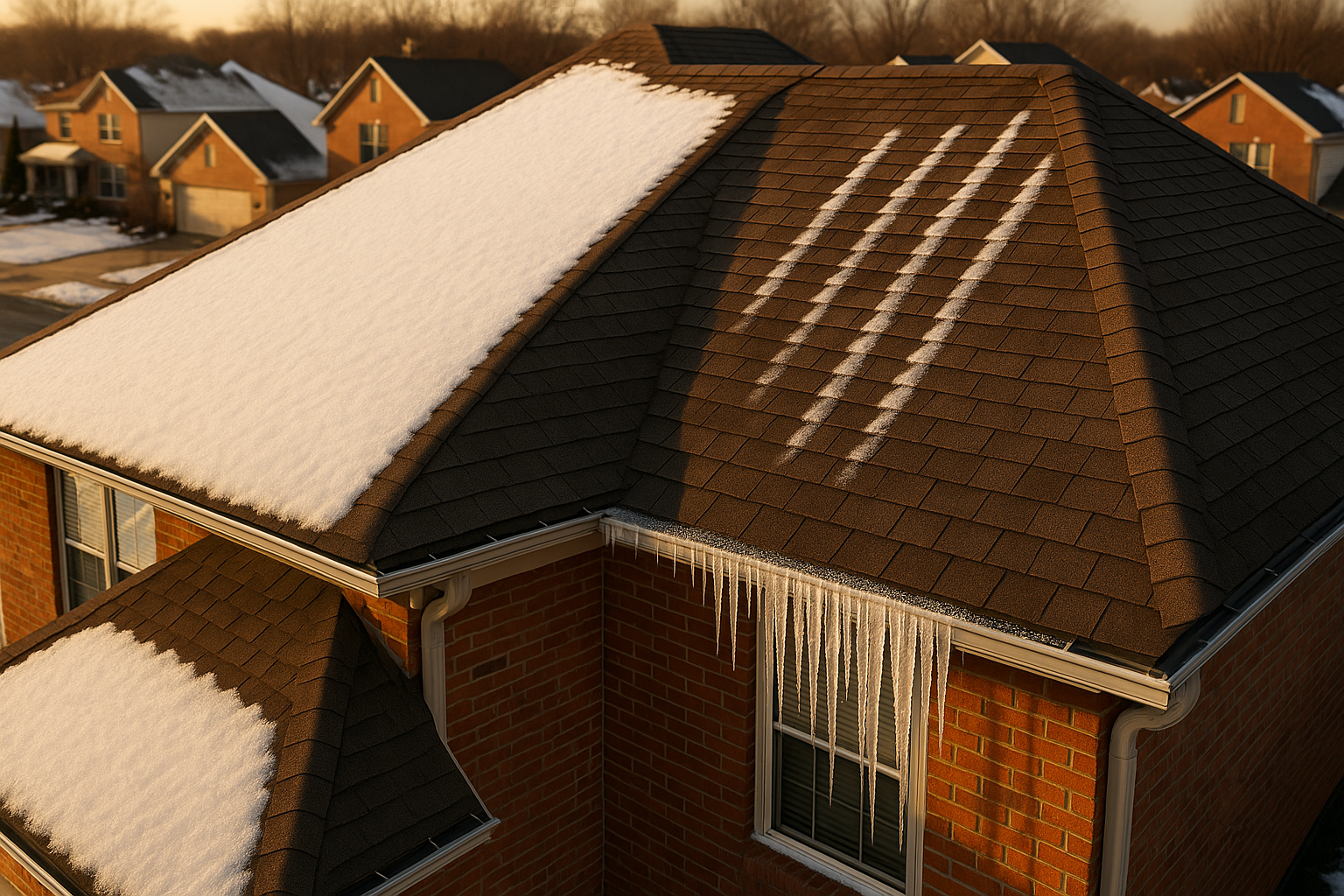
- Freeze–thaw cycles: Water in tiny shingle cracks expands, loosening granules and opening pathways for leaks—often visible after late-winter thaws.
- Spring hail: Even “small” hail can bruise asphalt mats, knocking off granules and accelerating UV damage. Softer metals may dent; quality paint systems protect from corrosion.
- Summer sun and UV: South- and west-facing slopes age faster; ridge caps take extra abuse.
- Thunderstorm wind and rain: Wind lifts tabs and stresses ridge/hip lines; wind-driven rain tests sidewall, chimney, and step flashing.
- Humidity and algae: North-facing slopes in tree-lined neighborhoods like Meridian-Kessler, Broad Ripple, and Irvington often streak. Algae itself is largely cosmetic but traps moisture and heat that age shingles.
- Debris and gutters: Fall leaf drop across mature-canopy streets clogs gutters, causing overflow at eaves and ice dams in winter.
Installation Quality and Components Matter
The same shingle can last five to seven years longer on a roof that’s detailed correctly. Key elements we verify on every RoofPros project:
- Nailing patterns: Proper fastener placement and count reduce blow-offs and nail pops.
- Underlayment: Synthetic underlayments resist wrinkling and moisture better than old felt; they’re a last defense if wind-driven rain gets under shingles.
- Ice and water barrier: High-temp membranes at eaves, valleys, around chimneys, and low-slope transitions help stop leaks from ice dams and wind-driven rain.
- Flashing systems: Step flashing at sidewalls, counterflashing at chimneys, and kick-out flashing at siding transitions prevent hidden rot in sheathing and walls.
- Ventilation balance: Continuous soffit intake plus ridge exhaust keeps attic temps and humidity in check, reducing shingle curling and winter ice dams.
- Attic insulation and air sealing: Right-sized insulation and sealed ceiling penetrations reduce heat loss that creates icicles and refreezing at eaves.
Orientation, Slope, and Shading
- Orientation: South and west slopes run hotter; expect faster granule loss and earlier ridge-cap wear.
- Slope: Low-slope areas shed water more slowly and need diligent underlayment and flashing.
- Shading: Shaded, damp sections grow algae and moss more readily—plan for gentle, non-damaging cleaning and better airflow.
A Simple Maintenance Schedule for Indianapolis Homes
You don’t need a subscription plan to protect your roof—just steady, seasonal care:
- Spring: Post-winter inspection for lifted tabs, nail pops, cracked ridge caps, and flashing gaps. Check for hail bruising after storms.
- Summer: Trim overhanging limbs; confirm attic ventilation is moving hot air out.
- Fall: Clean gutters and downspouts; consider leaf protection if your lot is dense with trees. Inspect valley debris and low-slope tie-ins.
- After any major storm: Document with photos and call for a local, qualified assessment before filing a claim (a smart step for any storm damage roof inspection in Indianapolis).
Properly cleaning algae/moss: Use manufacturer-approved cleaners at low pressure; avoid power-washing shingles, which removes protective granules.
Clear Signs a Roof Is Near End-of-Life
When several of these show up together, the clock is running:
- Widespread granule loss and bare spots
- Brittle, curled, or cracked shingles and frequent nail pops
- Ridge caps splitting or blowing off
- Rusted or separated flashing at walls, chimneys, and skylights
- Recurring leaks in different areas or daylight visible in the attic
- Multiple repairs after every storm
For photos and a deeper checklist, see our guide to the signs you need a new roof in Indiana.
Repair or Replace? A Practical Framework
Not every aging roof needs replacement today. Consider:
- Remaining life: If a repair can confidently buy 3–5 years, it may be worth it.
- Leak history: Recurring leaks in multiple areas often signal systemic age or ventilation issues.
- Sheathing condition: Soft spots or widespread delamination mean hidden moisture—a replacement with targeted decking repairs is safer.
- Ventilation: Upgrading intake/exhaust may extend life and reduce ice-dam risk.
- Warranty vs. reality: Manufacturer coverage often declines with age and may not cover workmanship or ventilation-related issues.
Budgeting: Plan a 12–24 month window before end-of-life so you can compare options without pressure. Cost varies by material, roof complexity, and any decking/flashings that need work. If you’re comparing materials, our local guides help: asphalt shingle roof costs in Indianapolis and metal roof costs in Indianapolis. For a broader overview, see roof replacement costs in Indianapolis.
Upgrades That Improve Lifespan in Indy
- Architectural shingles with algae resistance for north-facing slopes
- Class 3/4 impact-rated shingles for hail-prone areas (longevity plus reduced storm damage risk)
- High-temp ice/water shield in valleys and at eaves for ice-dam defense
- Standing-seam metal for maximum longevity and curb appeal
- Balanced ridge/soffit ventilation and air sealing to protect sheathing and shingles
Worried that metal looks “industrial” or noisy? Modern standing-seam roofs on residential decks with proper underlayments are quiet in rain and read as premium, not commercial.
Insurance, Storms, and Smart Timing
- Document hail/wind events promptly with clear, date-stamped photos.
- Get a qualified local inspection and photo report before filing a claim—this helps you understand whether damage is storm-related or age-related wear.
- Insurance typically covers sudden storm damage, not deterioration from age, algae, or poor ventilation.
- Don’t wait for a “big storm” to replace a failing roof. Water damage to decking, insulation, and drywall quickly erodes any savings.
The RoofPros Planning-First Process
You don’t need a pitch—you need a plan. Here’s how we make next steps easy and clear:
- On-site assessment focused on remaining life, risk areas, and ventilation
- Photo-documented report with straightforward findings and a clear scope
- Material options sized to your home and neighborhood style—from Broad Ripple to Brownsburg—with pros/cons and maintenance notes
- Craftsmanship-first installation details: underlayments, flashings, ventilation, and clean jobsite management
- No-pressure recommendations and a timeline you control
Ready to understand your roof’s true condition and plan confidently? Request your local roof lifespan and planning assessment—start here. Get a Free Deck Consultation.
Indianapolis Roof Lifespan FAQs
What is the average roof lifespan in Indianapolis by material?
- 3-tab asphalt: 12–18 years
- Architectural asphalt: 18–28 years (low 30s with excellent care)
- Metal: 40–70 years
- Cedar: 18–25 years
- EPDM/TPO: 15–25 years
How do freeze–thaw cycles and hail affect shingles here?
Freeze–thaw opens micro-cracks and loosens granules. Hail bruises shingle mats, accelerating UV breakdown. The combination shortens service life, particularly on sun-exposed slopes and ridge caps.
Do impact-rated (Class 3/4) shingles last longer or just resist hail better?
They primarily resist hail and wind-driven debris better, which helps preserve granules and extend practical life compared to non-impact shingles after storms.
How often should I have my roof inspected in Central Indiana?
Twice yearly—spring and fall—and after major storms. This cadence catches small issues (nail pops, flashing gaps, gutter clogs) before they become leaks.
How much ventilation does my attic need to protect my roof?
Aim for balanced intake and exhaust. A common target is roughly 1 sq. ft. of net free ventilation per 300 sq. ft. of attic with a balanced split, adjusted for house design and baffles. We verify real airflow, not just numbers.
Can algae streaks shorten roof lifespan or are they just cosmetic?
Mostly cosmetic, but they trap heat and moisture that can accelerate aging. Algae-resistant shingles and gentle cleanings help.
When is repair a smart choice versus full replacement?
Choose repair when the roof is otherwise sound with isolated issues and at least several years of life remaining. Opt for replacement when problems are widespread, the deck is compromised, or ventilation is fundamentally poor.
How long does a metal roof realistically last in Indianapolis?
With quality materials and details, 40–70 years is realistic. Fastener systems, paint chemistry, and flashing quality drive outcomes.
Do I need ice and water shield on my home in Indianapolis?
Yes—at minimum along eaves and valleys. Our freeze–thaw cycles and ice-dam risk make high-temp membranes a wise investment.
What’s the best season to replace a roof in Indiana?
Late spring through early fall offers ideal temperatures, but with proper planning and materials, winter projects are feasible—especially with ice/water protection and attentive sequencing.
Still comparing options? Browse more insights on our blog, or if you’re ready for clear numbers and a step-by-step plan, request your assessment here.
Ready for a free roof assessment?
We climb the roof, photograph the damage, and give you an honest read — no pressure, no upsell.