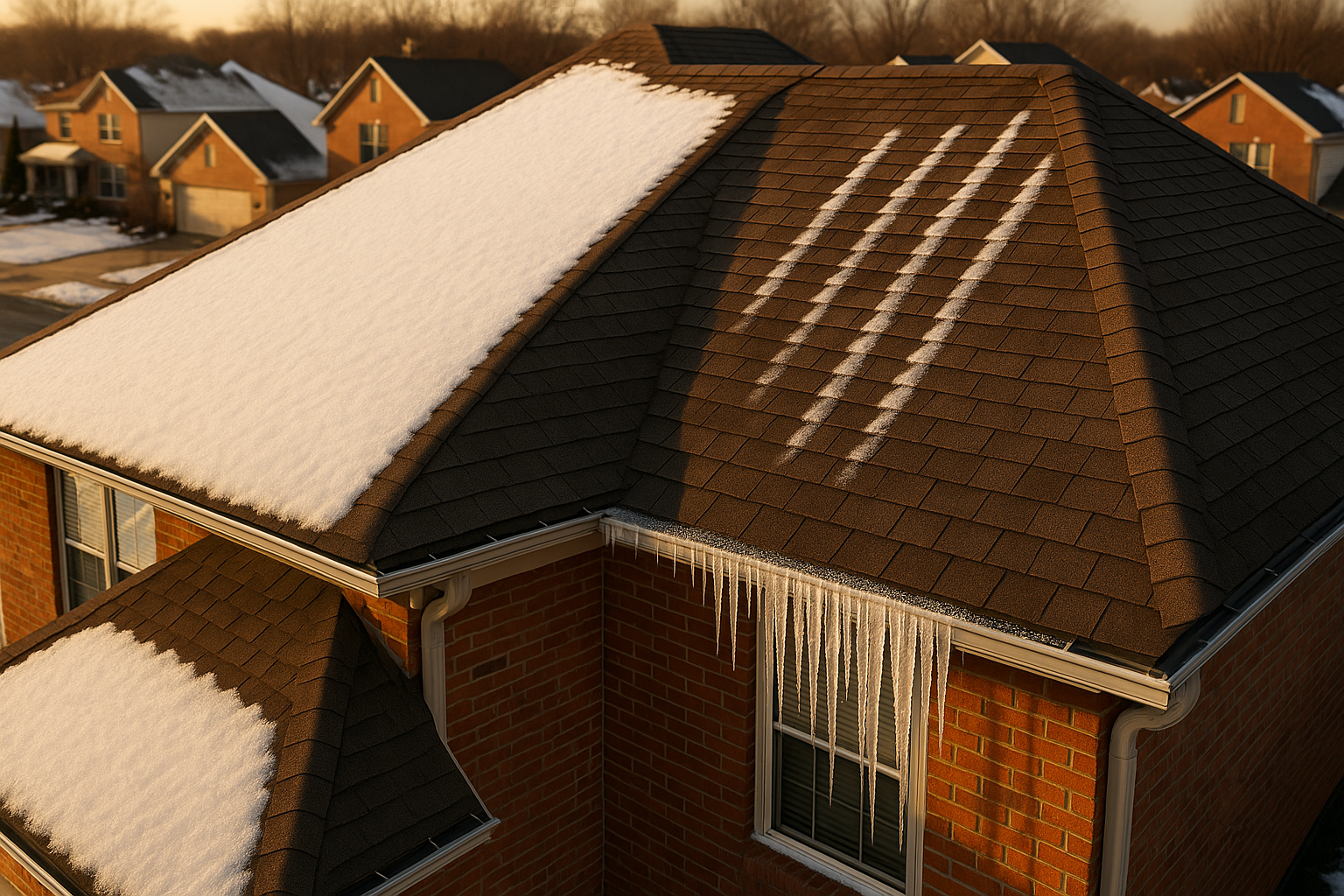
I'll never forget the night my neighbor called me last winter. It was 2 a.m., and water was dripping through his living room ceiling. He'd ignored the warning signs all fall—some curled shingles, a few granules in the gutter. By the time the snow melted and refroze, an ice dam shoved water under his shingles. He ended up needing a full replacement, plus drywall work. If he'd known what to look for, he could've avoided the whole mess. So let's talk about the signs you need a new roof, especially before another brutal Indiana winter hits. You might live in Broad Ripple, Meridian-Kessler, or out in Brownsburg—our weather doesn't discriminate. Here's what to keep an eye on.
The Telltale Signs Your Roof is Giving You
Your Roof is Older Than You Think
Most 3-tab asphalt shingles around here last about 15-20 years, while architectural shingles can go 20-30+ if installed right. But with Indiana's freeze-thaw cycles and those summer thunderstorms, even a 20-year-old architectural roof might be on borrowed time. If you're not sure how old your roof is—maybe you bought the house in Avon in 2010 and never asked—you can check the permit or ask a pro for an honest roof inspection. Age alone isn't a death sentence, but combined with other signs? It's a clear indicator you need a new roof. When it's time, check out our guide on asphalt shingle replacement to understand your options.
Your Gutters Are Full of Granules
Those tiny sand-like bits aren't just ugly—they're the protective layer of your shingles washing away. A little granule loss is normal after install, but when your gutters look like a beach, the UV rays are cooking the asphalt underneath. I had a client in Fishers last spring who hadn't cleaned his gutters in two years. The downspout splash block was piled with granules. We got up there and the shingles were balding fast. If you see lots of granules, it's a classic sign you need a new roof sooner than later.
Shingles That Are Curling, Cupping, or Cracking
Take a look at your roof from the ground—edges curling up like a stale potato chip? Or maybe the corners are cupping, holding water? That's a red flag. Heat and age cause warping, and once they're curled, wind-driven rain gets right under them. In older neighborhoods like Meridian-Kessler, where mature trees slow drying, I've seen cracking accelerate. Once you start seeing this, patching one or two won't help—the rest are likely just as brittle.
Missing Shingles Keep Happening After Storms
Indiana gets its share of straight-line winds, hail, and the occasional tornado warning. If shingles go missing after every storm, the seal strip that holds them down has failed. A friend in Greenwood had one shingle blow off in a 50-mph gust, then three more a month later. When the wind uplift creases the tabs or they break at the nail line, you're not fixing it with a tube of tar. This is one of the strongest signs you need a new roof, especially if you're in a newer subdivision where homes were built in the early 2000s and the original shingles are aging out together. Talking to a local roofing contractor who knows Indy weather can help you decide if it's time.
Hail Bruising You Can Feel and See
Hail can leave bruises that look like dimples, with crushed granules and exposed asphalt. You might not see a leak right away, but that bruise weakens the shingle's waterproofing. After the big hail storm that hit Carmel and Westfield two summers back, I saw dozens of roofs with melon-sized soft spots. A quick roof inspection can tell you if those bruises are deep enough to warrant an insurance claim. Don't wait for a leak—water works slowly. By then, you're dealing with decking damage too.
Water Stains on Ceilings or Damp Insulation in the Attic
This one's a panic trigger, right? Brown rings on your living room ceiling, peeling paint, or the smell of wet insulation in the attic. An active leak doesn't mean the whole roof is toast, but if it's coming from multiple spots or near flashings, it's a sign the system is failing. I remember a family in Zionsville who found frost in their attic in January—turns out warm air was leaking through, melting snow, then refreezing into an ice dam. That kind of moisture problem points to a roof that can't handle our winters. A repair might buy time, but a replacement with proper ventilation? That's the long-term fix.
Sagging Planes or a Spongy Feel When You Walk
This is the one nobody wants to hear. If your roof deck sags or feels bouncy, it's usually from years of moisture breaking down the wood. You might see nail pops pushing shingles up, or the ridge line dipping. In older homes around Indianapolis, we sometimes find multiple layers of shingles hiding rot. Don't ignore this—it's a safety issue, and it definitely means you need a new roof plus some decking repair. Waiting only makes it more expensive.
Flashing That's Rusting, Cracked, or Pulled Loose
Flashing is the metal that seals around chimneys, skylights, and where roofs meet walls. After 15-20 years, it can rust through or the sealant dries out. I once saw a chimney flashing in Noblesville that had lifted just a quarter inch—enough to funnel rain into the attic every time the wind blew from the west. If your flashing is failing, even if the shingles look okay, a leak is likely. And flashing repairs are tricky—often it's smarter to replace the whole roof at once, since new shingles will integrate better with fresh flashing.
Bald Spots in the Valleys (and Maybe Moss, Too)
Valleys carry a ton of water. They're the first place granules wear off and the mat shows through. If you see shiny spots or exposed fiberglass up there, the roof's protection is gone. Add moss growth—which holds moisture like a sponge—and you've got a recipe for rot. Light algae stains are just cosmetic, but moss is destructive. In shady areas of Westfield or Brownsburg with lots of trees, moss can lift shingles and let water sit. Cleaning moss off a deteriorating roof is a temporary fix; when the valleys are fried, it's definitely a sign you need a new roof.
But What If I Just Patch It? (And Other Stuff That Worries Homeowners)
I get it. A full roof replacement in Indianapolis isn't cheap, and you might be thinking, "Can't we just patch the leak?" Sometimes you can, if the damage is isolated and the rest of the roof is in good shape. But if you're seeing multiple signs—say, granules plus curling plus a leak—patching becomes a money pit. You'll be chasing repairs every year. And insurance? Yeah, hail or wind damage might be covered, but you need a thorough inspection and documentation. (RoofPros can help with that, no pressure.)
Worried about a winter install? Indiana roofers work in cold weather just fine, as long as it's not actively snowing. We've put roofs on in Zionsville in December—shingles just need a little extra time to seal. And the mess? A good crew protects your landscaping, uses magnets for nails, and cleans up every day. You won't find a stray nail in your kid's bike tire.
The ventilation question comes up a lot: "Do I really need ridge vents and soffit intake?" In our humid summers, balanced airflow keeps your attic cooler and extends shingle life. It's not an upsell—it's code and common sense. A new roof should include it. And if you're worried about resale, a fresh roof with transferable warranties actually bumps your home's value. Buyers in Carmel and Fishers love seeing a newer roof on the inspection report. Curious about the best time to replace? Check out our thoughts on timing a roof replacement in Indiana.
Ready to Sleep Through the Next Storm?
If any of these signs sound familiar, the next step is easy: get a professional roof inspection. Not from some storm chaser who knocks after hail, but from a local team that knows Indianapolis neighborhoods inside-out. RoofPros serves everywhere from Greenwood to Zionsville, and we'll give you a straightforward scope, material options, and a timeline that makes sense for your house. No scare tactics, no hidden surprises—just a clear plan.
Fill out the form at our quote page or give us a call. We'll come out, check things over, and tell you honestly whether you need repairs or a full replacement. Before the snow flies, let's make sure your roof is doing its job.
Ready for a free roof assessment?
We climb the roof, photograph the damage, and give you an honest read — no pressure, no upsell.