Last fall, my neighbor Mike spent a Saturday morning up on a ladder, scooping gloppy, wet leaves out of his gutters. He's not afraid of heights, but the ladder wobbled on the uneven ground, and his two-story colonial in Westfield didn't make it any easier. He later told me, "I'm getting too old for this, but I'm also tired of water pouring over the edges and washing out my mulch beds." Sound familiar? If you're weighing the cost of gutter guards against the hassle (and danger) of cleaning them yourself, you're asking the same question a lot of Indiana homeowners are: are gutter guards worth it?
Let's cut through the marketing noise and give you an honest answer based on what we've seen around Westfield, Carmel, Fishers, and the rest of Hamilton County.
What Gutter Guards Actually Do (and Don't)
Gutter guards are basically a filter for your gutters. They keep out most leaves, twigs, seed pods, and other debris that cause clogs. That means less water spilling over the sides, less risk of foundation issues, and way less time on a ladder.
But—and this is important—they're not a magic fix that makes maintenance disappear. Even with guards, you'll still need to occasionally rinse off the fine stuff that builds up on top, like pollen, cottonwood fluff, or grit from asphalt shingles. Once or twice a year, you might have to brush them lightly or spray with a hose. For most people, that's a whole lot better than deep-cleaning open gutters three times a year.
The Real Costs of Gutter Cleaning vs. Guards
If you're like many homeowners, you're paying someone else to clean your gutters. In Central Indiana, a single cleaning visit runs about $175–$300, depending on your home height and how clogged things are. With our tree coverage, most homes need cleaning two or three times a year. That's $350–$900 annually, every single year.
Now look at gutter guard costs. For a basic perforated aluminum guard installed, you're looking at around $8–$15 per linear foot. A premium stainless steel micro-mesh system—the kind that actually stops those pesky maple helicopters—runs $12–$25 per foot. On a typical home with 160–200 feet of gutter, that's an upfront investment of $1,440–$5,000.
Do the math: if you're spending $500 a year on cleanings, a $2,500 micro-mesh guard system pays for itself in five years. On a heavily treed lot where cleanings cost more, the payback could be as quick as two or three years. After that, it's money in your pocket—and you're not risking a fall.
Which Gutter Guard Type Works Best in Indiana?
Not all guards are equal, and what works in Arizona won't cut it in Westfield. We have a unique debris cocktail: spring pollen, cottonwood fluff, maple "whirlybirds" (samaras), oak tassels, and in some neighborhoods, pine needles. Plus, Midwest thunderstorms dump rain in buckets, so the guard has to let plenty of water through.
From what we've seen, micro-mesh is the best all-around choice for most Indiana homes. The fine stainless steel mesh blocks those tiny maple seeds and cottonwood fibers while letting water zip right in. Perforated aluminum guards are okay for plain leaves, but they often need more rinsing when the pollen and fluff hit. Foam and brush guards? They're cheap upfront, but they trap grit, break down fast, and just don't hold up to our freeze-thaw cycles.
If you've got a lot of pine trees, you'll want the tightest mesh you can get. And if your gutters are already undersized—say, 5-inch instead of 6-inch—adding a guard can reduce the opening, making it more likely for heavy rain to overshoot. We often recommend upgrading to 6-inch seamless gutters when installing guards, just to keep that intake area wide.
When Guards Make Sense (and When They Don't)
You'll get the most value from guards if: - Your home is surrounded by mature trees (oaks, maples, pines). - You have a two-story house or steep rooflines that make ladder work dangerous. - You've already had water overflowing at roof valleys or pooling near your foundation. - You're in a neighborhood with clay-heavy soil (like a lot of Hamilton County) where extra water can mess with basements or slabs.
On the flip side, you might not need guards if: - You have very few trees nearby. - Your gutters are old, rusted, or pulling away from the fascia—repair or replace those first. - You're planning to replace your roof in the next year or two. It's smarter to do both at once, or at least wait so the guards don't get damaged during reroofing.
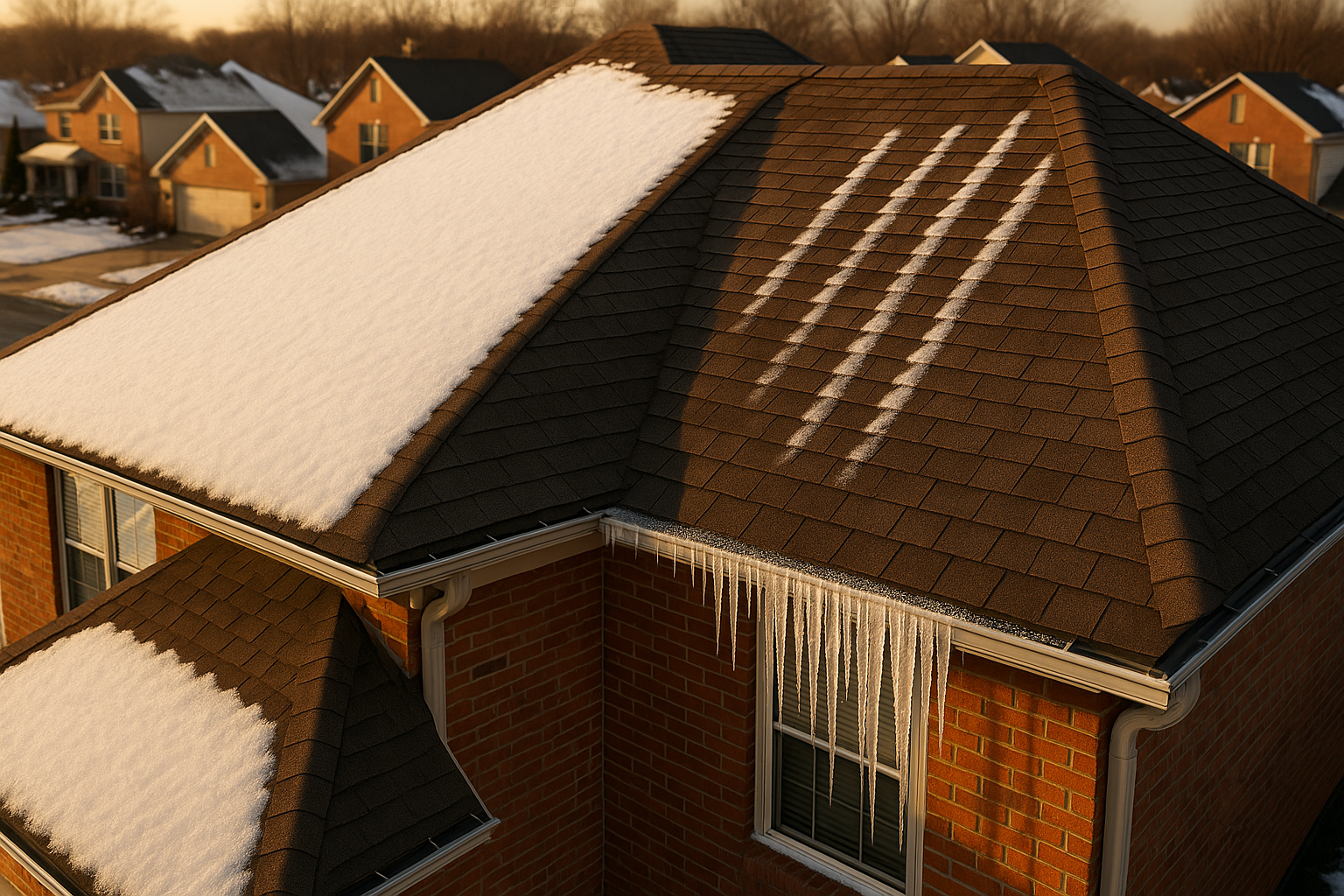
And here's something a lot of people don't realize: if your attic insulation or ventilation is poor, you'll get ice dams in winter. Guards don't cause ice dams (they're a heat-loss problem), but if you have persistent ice issues, rigid metal guards are a must, and you might need heat cables in problem areas. For more on roof longevity and prep, check out our guide on how long a roof lasts in Indiana.
Installation Matters Just as Much as the Guard
Even the best guard will fail if it's installed sloppy. We've seen guards that trap water instead of shedding it, or that warp in the heat because they were screwed into the shingles. The right way: attach to the front of the gutter, not under the shingles, with hidden hangers and proper spacing. You want the guard to sit flush with the roof edge and drip edge, so water sheets smoothly in.
At RoofPros, when we come out for a free gutter guard assessment up in Westfield, we start by looking at your trees, roof pitch, valley locations, and existing gutter condition. We'll talk about what kind of debris you're dealing with seasonally, and we'll show you photos of what's happening right now. Then we give you clear options and pricing—no pressure, just a plan that fits.
If you're in the area, we serve all around: Carmel, Fishers, Noblesville, Zionsville, all the way to Greenwood, Avon, and Plainfield. Wherever you are, we can take a look and give you an honest take.
Do Guards Handle Indiana’s Weather?
Our weather is dramatic. Torrential rain one day, freeze-thaw the next. Good guards are built for this. For heavy rain, the key is having enough gutter capacity. A 6-inch gutter with a properly pitched guard can handle even our nastiest storms. We often add small diverters at roof valleys so the water doesn't jet right over the guard.
In winter, ice can sit on the guard, but a quality rigid aluminum or stainless steel guard won't buckle or warp. It actually helps by keeping debris out so that meltwater flows freely instead of pooling behind a clog and refreezing. Again, ice dams form from heat leaking into your attic, not from the guard. Fix the insulation first.
Speaking of downpours, if you've ever had storm damage, you know the drill: missing shingles, dented gutters. A solid guard system won't prevent hail damage, but it does protect against overflow erosion. And if you're facing roof storm damage, we have a detailed guide on inspections and insurance.
So, Are Gutter Guards Worth It?
For most Indiana homeowners with trees and a two-story house, yeah, they're worth it. Not because they eliminate maintenance, but because they change it from frequent, risky ladder work to occasional, easy surface cleaning. You protect your foundation, save money over time, and gain peace of mind when those fall leaves start dropping.
The catch? You need the right guard for your debris, the right gutter size for your roof, and a pro install that won't cause more harm than good. That's where we come in. If you're dead set on climbing that ladder every few months, more power to you. But if you'd rather reclaim your weekends and keep your landscape from getting washed out, let's chat.
We'll walk your property, explain what would work best, and hand you a no-nonsense quote. No high-pressure pitch, just honest advice from folks who've seen it all. To set up a time, just visit us at /#quote—we'll come out to you in Westfield, Carmel, Noblesville, or wherever you are in the metro.
Ready for a free roof assessment?
We climb the roof, photograph the damage, and give you an honest read — no pressure, no upsell.