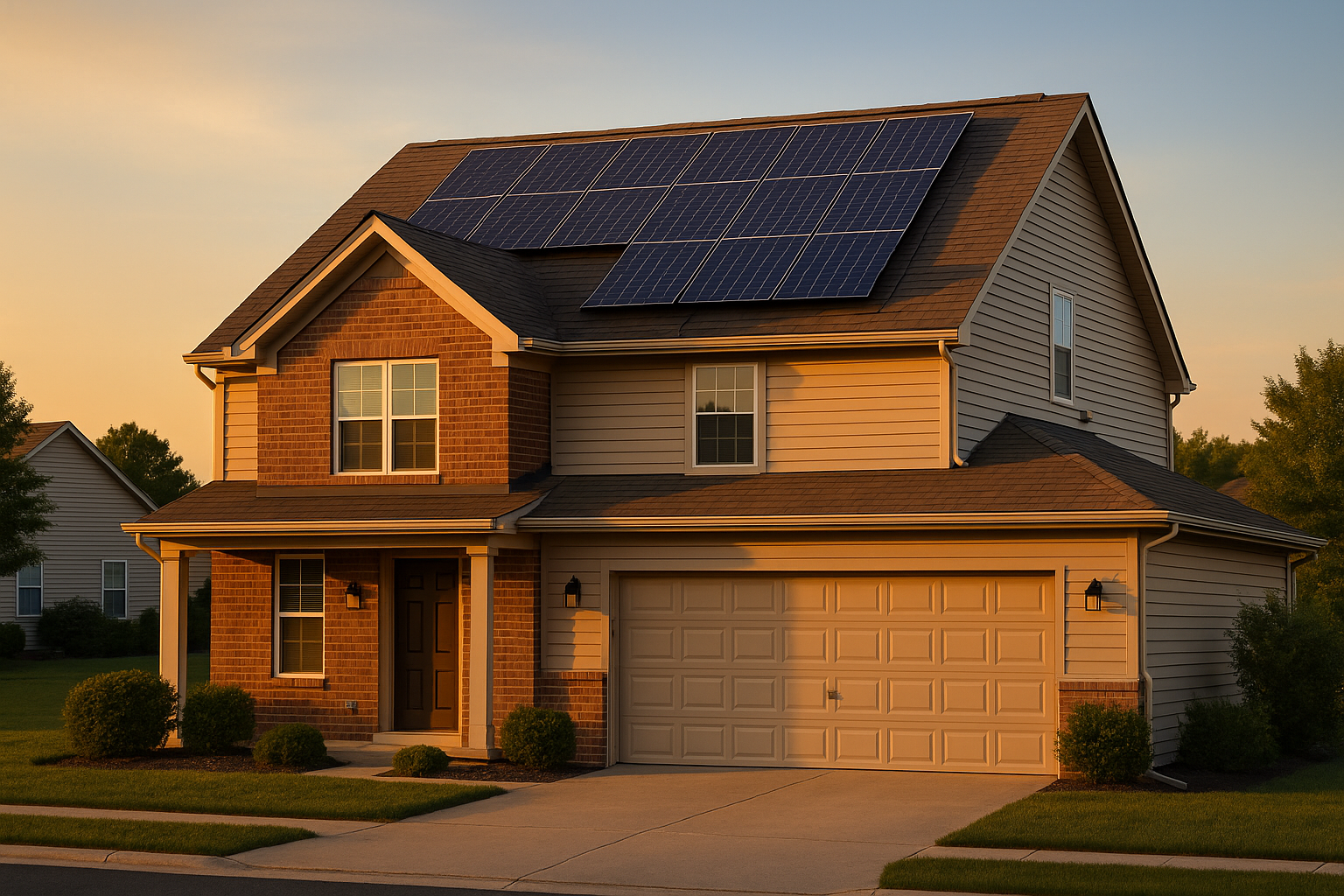
My neighbor Dave had solar panels put on his house a few years back. Looked great, bills went down, all that. Then last winter a brown stain crept across his bedroom ceiling. The roof had started leaking—right at a panel mount. Turns out, the shingles underneath were already pretty worn when the panels went up, and the extra foot traffic during install didn't help. Now Dave's staring at a $3,000 bill just to have the panels removed and reinstalled, plus a new $14,000 roof. If he'd known to replace that roof before the solar crew ever showed up, he could've skipped the rework and probably saved a couple grand.
Dave's story isn't unusual. Here in Indianapolis, we see it all the time: people want to go solar but don't think about what's under the panels. And sometimes the solar company doesn't push it because they're not roofers. So, let's talk about how to do it right.
Plan Before You Swing a Hammer
If you're thinking about solar—whether now or in a few years—give your roof a hard look first. Is it over 15 years old? Missing granules? Curling shingles? If you might need a roof replacement with solar panels in the next five years, do it before the solar goes on. Getting a new roof and then immediately covering it with panels is the dream scenario: the materials all age together, warranties line up, and you don't pay twice for labor.
The ideal? Bring a roofer who understands solar into the conversation early. RoofPros will coordinate with your solar installer so the schedule, attachment points, and weatherproofing all work together. In central Indiana, we can mostly roof from April through November, but spring storms can delay things. Plan for a two- or three-week window between the roof finishing and the solar team arriving. That gives you time to inspect everything and catch any issues before panels hide them.
Picking the Right Material for Solar
Not every roof loves solar panels the same way. Two stand up best:
- Architectural asphalt shingles: Most homes around here have them. They're affordable, and with the right underlayment and flashing, they handle solar just fine. Look for a high-quality, Class 4 impact-rated shingle if you can—hail is a thing in Indiana. Make sure your roofer knows you're adding panels; they'll need to use high-temp ice/water shield in valleys and eaves.
- Standing seam metal: If you can swing the upfront cost, this is the gold standard for solar. Panels clamp right onto the raised seams—no roof penetrations at all. That means zero chance of leaks from mounts. It also lasts longer than shingles, so you're less likely to need another roof under those panels. We've got a whole post comparing standing seam and corrugated metal if you're curious.
Asphalt is fine—most solar-ready roof replacements we do here are with architectural shingles—but if your budget allows, standing seam is worth a conversation.
Make Sure Your Roof Can Take the Load
Solar panels aren't crazy heavy, but they do add about 3–5 pounds per square foot. Most truss-framed roofs in Indy can handle that, but older homes—think Broad Ripple bungalows or Meridian-Kessler four-squares—sometimes have undersized framing or soft decking. A structural check before any work starts is cheap insurance. Your roofer will look at the decking condition, rafter spacing, and any signs of sagging. If decking needs replaced (and a lot of mid-century homes do), that's the moment to do it. We wrote about that here.
Snow adds seasonal weight too. Indiana code requires roofs to support at least 20 pounds per square foot of live load, but with panels, you want some buffer—especially on north-facing slopes where snow can sit. A quick call with a structural engineer (which your roofer should arrange) clears up any worries.
Keep the Water Out: Flashing, Underlayment, and Leaks
The part that scares people most about solar is leaks. And honestly, if the penetrations aren't sealed right, water gets in. But a roof built for solar is all about defense.
For asphalt shingle roofs, we use a peel-and-stick ice/water shield under the whole area where panels will go—not just at the eaves. That way, every screw hole gets a secondary seal. The standoffs that hold the rails need to be anchored into rafters, not just decking, and each one gets a metal flashing tucked under the shingle above. It's tedious work, but it's the only way to handle freeze–thaw cycles here. Water dribbles in, freezes, expands, and next spring you've got a mess. Good flashing stops it.
Metal roofs don't need those penetrations, which is why they're so clean for solar. Either way, the underlayment has to be rated for the higher temperatures that come with panels—dark panels can heat the roof surface way above ambient, so cheap felt underlayment can degrade early.
Don't Forget the Attic: Vents and Wires
Before panels block half your roof, you want the attic breathing well. Balanced ventilation keeps ice dams away and stops moisture from building up. If you're re-roofing anyway, now's the time to add intake vents at the soffits and make sure exhaust vents aren't getting covered by panels. And for the solar side, plan where the conduit will go. It has to run from the array into the attic or down the side of the house. A sharp roofer will work with the solar team to pick a tidy route—maybe through a gable end wall instead of across the roof. No ugly pipes snaking everywhere.
Permits, HOA, and All That Paperwork
In Indianapolis and surrounding suburbs, a roof replacement typically needs a permit, and solar adds another layer. Your roofer should pull the roofing permit, and the solar installer handles the electrical and interconnection permits. But if you're in a neighborhood with an HOA—say in Fishers or Zionsville—you might need approval for panel placement. Some HOAs want to see renderings and spec sheets. RoofPros can provide the documentation about materials and colors to help with that. We've written about HOA approval and the permit process before, so flip through those if you're in that boat.
What if You Already Have Panels?
If your roof is failing under existing solar panels, don't panic. Removal and reinstallation is a thing, but it takes coordination. The solar crew disconnects and removes the panels and racking. We replace the roof, often adding better underlayment and flashing at the mount points. Then the solar goes back on. It adds maybe $2,000–$4,000 to the overall project, depending on the system size. That's why doing it all upfront saves money.
The Money Question: Cost and Timeline
So, what's this going to cost? A straight roof replacement in Indy runs about $10,000–$15,000 for an average house. Making it solar-ready—upgraded underlayment, extra flashing, maybe some decking repair—adds maybe $500–$1,500. That's cheap compared to a second tear-off down the road. Timeline stretches a few days extra if decking needs work, but usually you're looking at a week total for the roof. Add a week or two buffer before solar install.
If you're already talking to solar companies, bring RoofPros in for a roof assessment. We'll give you a written scope and price that lines up with your solar plan. That way you know the full picture.
Ready to get started? Come see us for a solar-ready roof assessment and quote. We'll walk your roof, check the structure, and lay out a plan that keeps your home dry and your panels happy for decades. Don't end up like Dave—let's do it once, do it right.
Ready for a free roof assessment?
We climb the roof, photograph the damage, and give you an honest read — no pressure, no upsell.