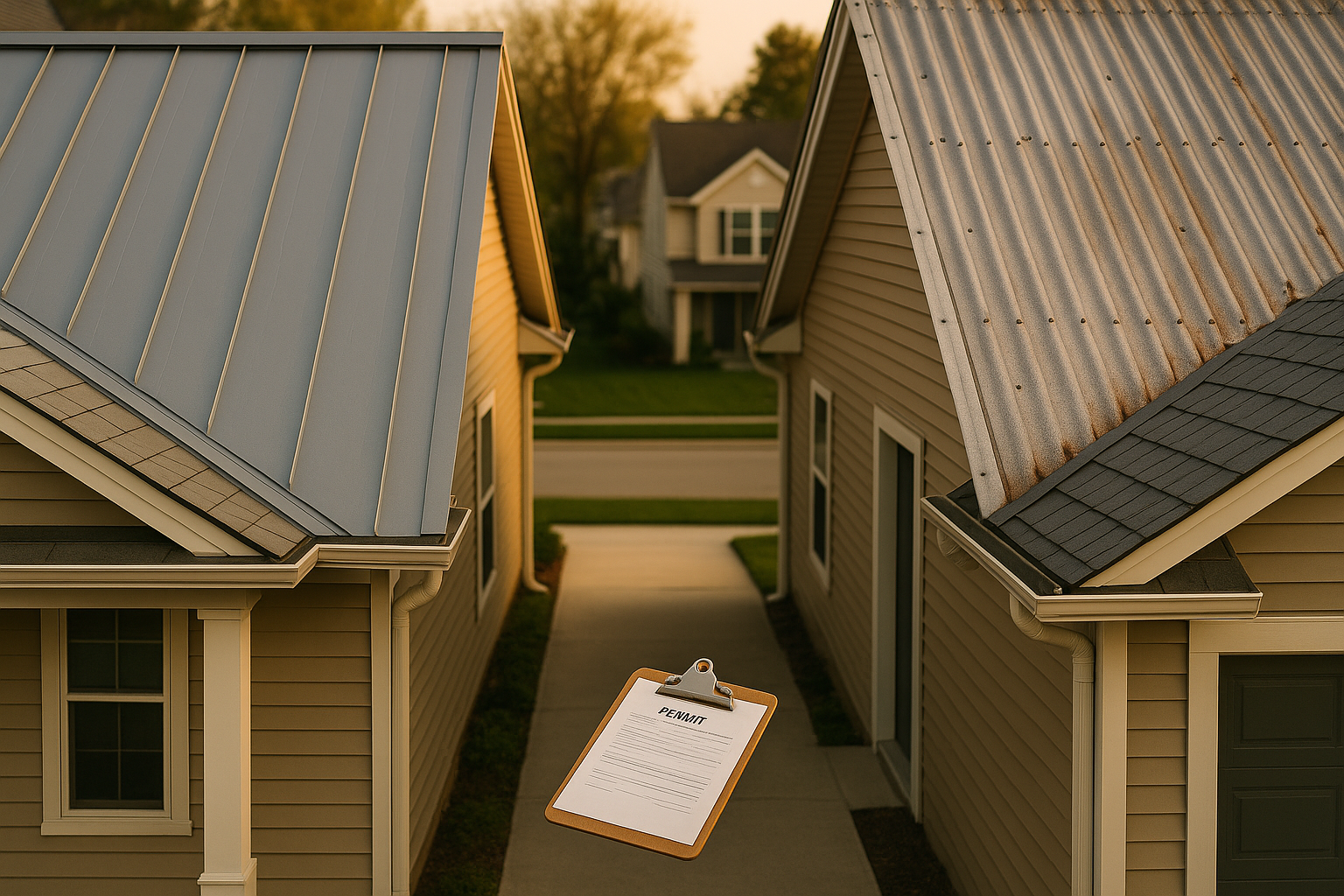
You know that moment when you realize you’re in over your head? I had one of those a few years ago, standing in a friend’s backyard in Fishers, staring up at his garage. A corrugated metal roof had been put on maybe five or six years back. From the ground, I could already see screws backing out, little rust drips staining the panels. He sighed and said, “I thought metal was supposed to be maintenance-free.” His neighbor’s house, on the other hand, had a standing seam metal roof that still looked crisp—no visible fasteners, no rust trails. That side‑by‑side view taught me more than any brochure ever could. If you’re trying to decide between standing seam vs corrugated metal roofing for your Indianapolis home, I’ll walk you through what actually matters, without the sales fluff.
The Basics: Fasteners and Profile
The biggest difference between these two is how they’re attached. Standing seam panels use hidden clips and fasteners that get completely covered by the raised ribs. You never see a screw head. That’s why you’ll hear it called a concealed fastener metal roofing system. The panels lock together—some snap, some get mechanically seamed—and the whole assembly can slide a little as temperatures change.
Corrugated metal, on the other hand, uses good old‑fashioned screws with rubber washers, driven right through the panel. Every screw is a potential leak point eventually. That’s exposed fastener metal roofing. Around here, where we can have a 40‑degree temperature swing in a day, panels expand and contract like crazy. Those screw holes wallow out, the washers crack, and then you’re up on a ladder tightening things down. Or worse, you’re finding water stains in the attic.
Which Handles Indiana Weather Better?
Let’s be honest—Indianapolis weather doesn’t play nice. We get freeze‑thaw cycles that work screws loose, spring downpours that blow rain sideways, and that one ice storm every couple winters that wrecks gutters. Standing seam earns its keep in this climate. Because all the fasteners are hidden under the rib, there’s path for water to get in unless the panel itself is damaged. Mechanically seamed panels, especially, can handle lower roof slopes—down to 1:12 if detailed right with an upgraded underlayment. Corrugated panels really want a steeper pitch, usually 3:12 or more, to shed water fast.
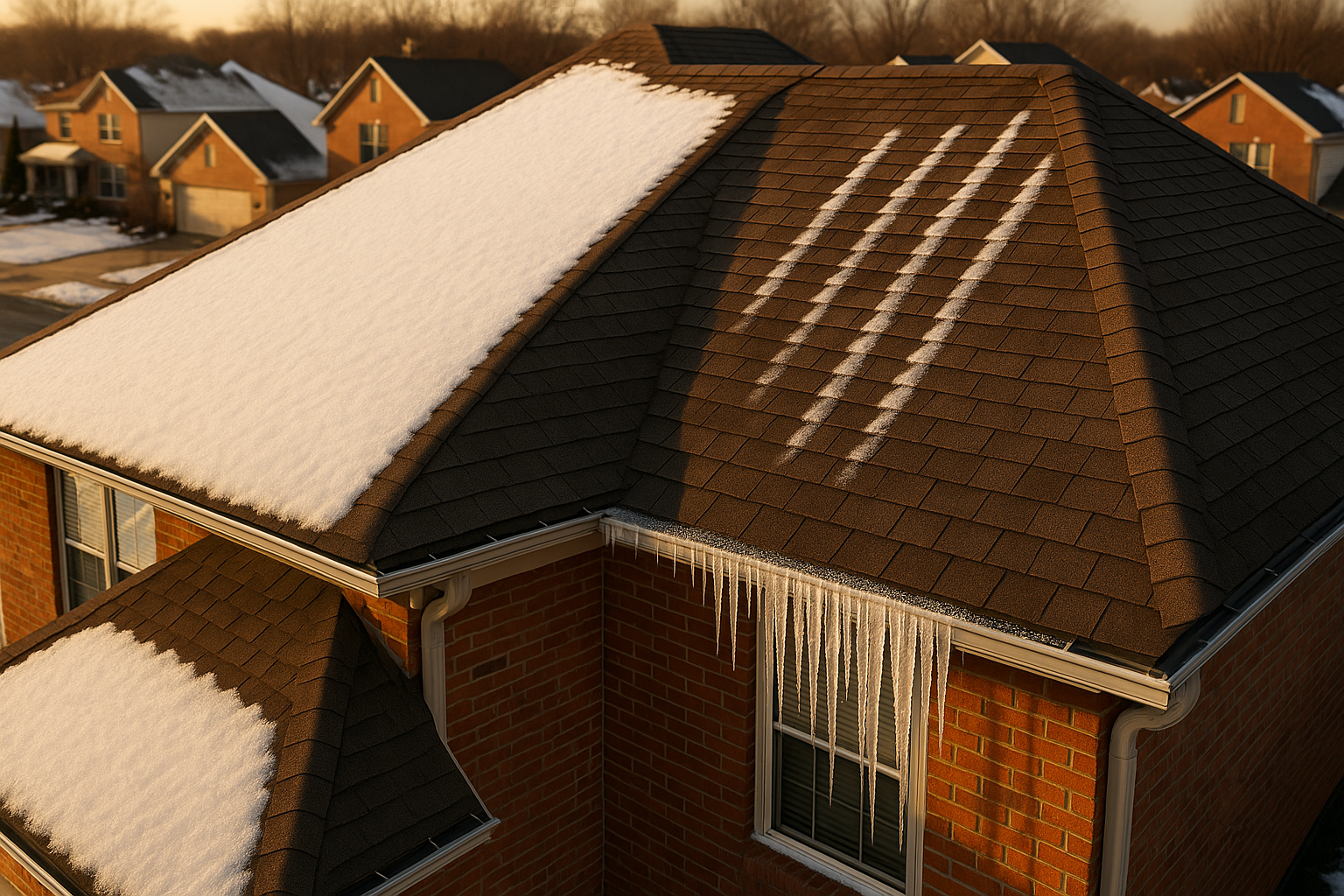
Another thing: wind. When a thunderstorm rolls through Carmel or Zionsville and you hear those 60‑mph gusts, you want a roof that’s buttoned down. Standing seam panels, with their continuous seams and clip attachment, resist uplift better than a matrix of screws. And if you’re in a neighborhood with mature trees—think Meridian‑Kessler or Irvington—you also need to think about valleys and debris. Snow and ice slide right off metal, so you almost have to install snow guards for metal roofs over doorways and walkways, and lay down ice and water shield at eaves and in valleys. Standing seam systems work beautifully with those details. Corrugated? Not impossible, but the ribs and exposed fasteners complicate flashing and make snow retention a little clunkier.
Lifespan and Maintenance: What You’ll Actually Do
Here’s the part that surprises most homeowners. Standing seam metal roofs, when you use a good coating like Kynar 500 paint finish on a Galvalume substrate (that’s aluminum‑zinc, not plain galvanized), can easily go 40‑50 years with minimal fuss. The concealed clip system lets the metal move without stressing fasteners, so you’re not going to need a ladder every spring.
Corrugated, by design, asks more of you. You’ll want to check the screws every couple years. Some will need retightening. Every 10‑15 years, you might be replacing gaskets. In a city like Greenwood or Plainfield, where subdivisions can have strict appearance standards, those little maintenance walks become a chore. I’ve talked to a guy in Avon who loved the price of his corrugated barn roof until he was out there with a socket wrench on a Saturday, sweating through his shirt. He said, “Money saved, time given back.”
Curb Appeal and Where Each Fits
Drive through any Indianapolis neighborhood with Craftsman bungalows or mid‑century ranches, and you’ll see how well a standing seam metal roof blends right in. It’s clean, modern (or classic, depending on the home), and comes in colors that don’t scream “warehouse.” Corrugated panels have a more industrial, agricultural look. They’re fantastic for a detached garage in Westfield, a pole barn in Noblesville, or even a backyard studio—places where a utilitarian vibe works.
Keep in mind, a lot of our local homeowners’ associations have design guidelines. Some will only allow standing seam profiles; a few might ban metal altogether. Before you get your heart set, read our look at roof replacement HOA approval in Indiana. And you’ll likely need a permit for a full re‑roof, especially if any decking gets replaced. The rules in Marion County versus Hamilton County can trip you up, so take a minute to understand Indianapolis roofing permit requirements.
What About Noise, Hail, and Lightning?
Let me bust a few myths right now. A properly installed metal roof over solid decking and good underlayment is not louder than asphalt in the rain. If anything, standing seam, with its tighter profile, tends to be quieter than corrugated because it doesn’t have that “drum” effect. As for hail—and yep, we get it—you want thicker gauge panels (24‑ or 22‑gauge) and an impact‑rated assembly. Class 4 impact resistant systems can really take a beating. Standing seam has an edge here, too: if dents happen, they rarely affect weathertightness because the fasteners are hidden. On a corrugated roof, a big hail dent right at a screw can break the seal and start a leak.
Lightning? No, metal doesn’t attract it, and your Wi‑Fi won’t care either. And oil canning, that wavy distortion you sometimes see? It’s cosmetic, not structural, and a good crew (who knows clip spacing and proper panel handling) can minimize it.
Cost and Value: Where Your Money Goes
I won’t dance around it—standing seam costs more upfront. Figure roughly 1.5 to 2.5 times the price of a corrugated install, depending on gauge, coating, and complexity. But over the 30+ years you’re in the house, the reduced maintenance and lower leak risk often pay back. Plus, standing seam tends to add more resale appeal in neighborhoods like Fishers or Zionsville, where buyers expect a polished look. Corrugated is a solid budget play for a workshop or a rental property. If you’re putting it on your primary home, just go in with eyes open: you’ll trade tomorrow’s time for today’s dollars.
Can You Install Metal Over Shingles?
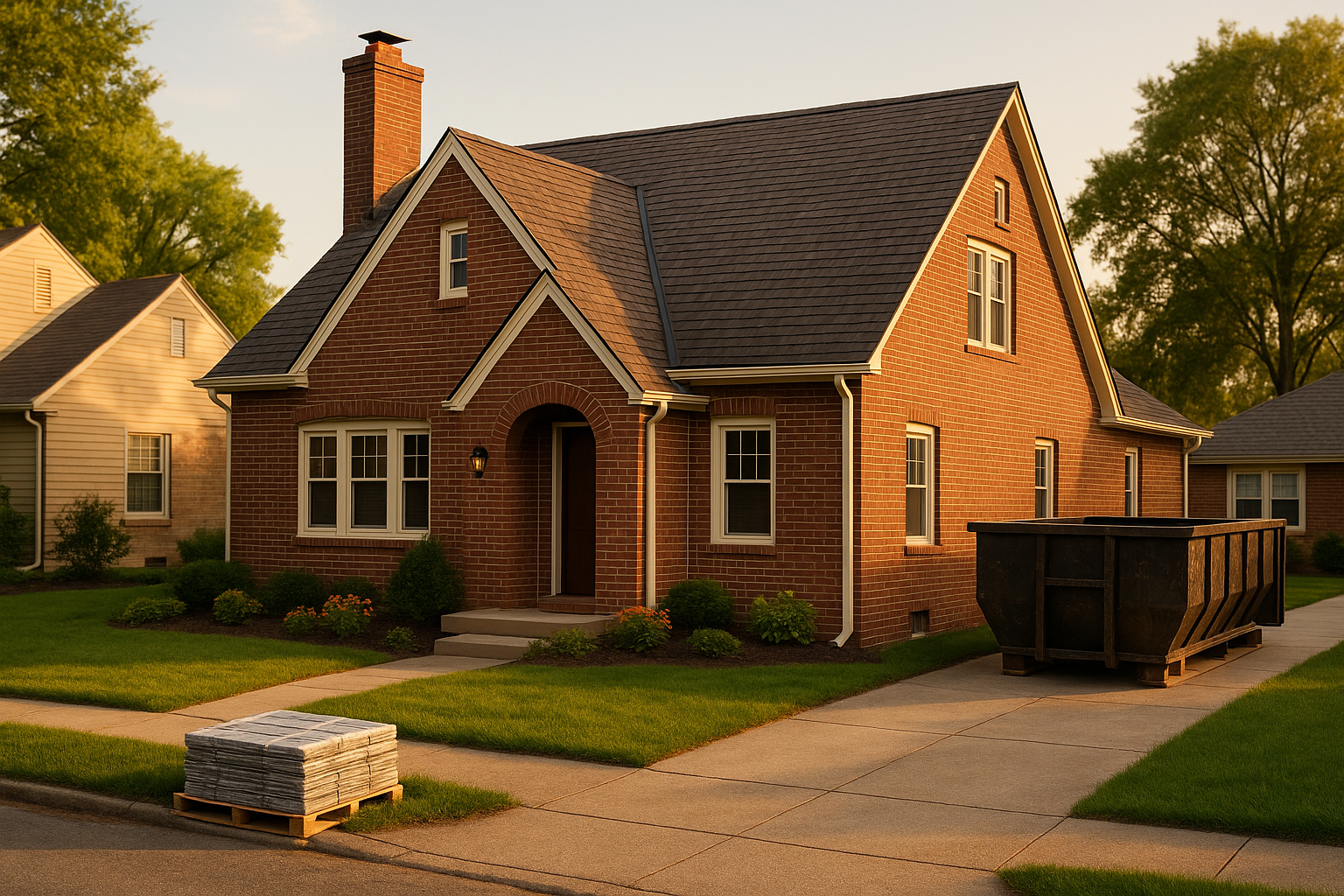
Sometimes, yes—and it can save on tear‑off costs. But we only recommend it if the existing roof has a single layer, the decking is sound, and the roof slope works. With standing seam, you can often install furring strips over shingles to create an air gap, then attach the panels. With corrugated, you run the risk of trapping moisture because of all those penetrations. And if your underlayment is old, you’re just asking for trouble. When we’re out on a planning visit, we’ll check the decking condition and tell you honestly if a decking replacement makes more sense.
Our Take: Which One for Your Home?
After hearing dozens of stories like my buddy’s, here’s where we land. For a primary residence in Indianapolis, Carmel, or anywhere with a sloped roof that you want to last a couple generations, we almost always steer you toward standing seam. The hidden fasteners, the cleaner look, the way it handles our wild temperature swings—it just fits. Corrugated is great when budget is tight and it’s a secondary structure: a detached garage, a pole barn, maybe a covered patio. But if you don’t love the idea of retightening screws every few years, pass on it for the house.
All the performance in the world, though, depends on who’s installing it. A sloppy standing seam job—bad clip spacing, poor seaming, hacked‑up flashing—can leak just as badly as any corrugated roof. That’s why we focus on a planning‑first approach. We’ll measure your pitch, talk through snow guard placement and gutter integration (don’t forget gutter cleaning frequency when you’ve got falling ice), and give you a line‑item quote so you know exactly what you’re paying for.
If you’re still on the fence, let’s just look at your actual roof together. Grab a time that works for you to get a quote and start the planning process. No pressure, no fancy pitch—just real talk about what your home actually needs.
Ready for a free roof assessment?
We climb the roof, photograph the damage, and give you an honest read — no pressure, no upsell.