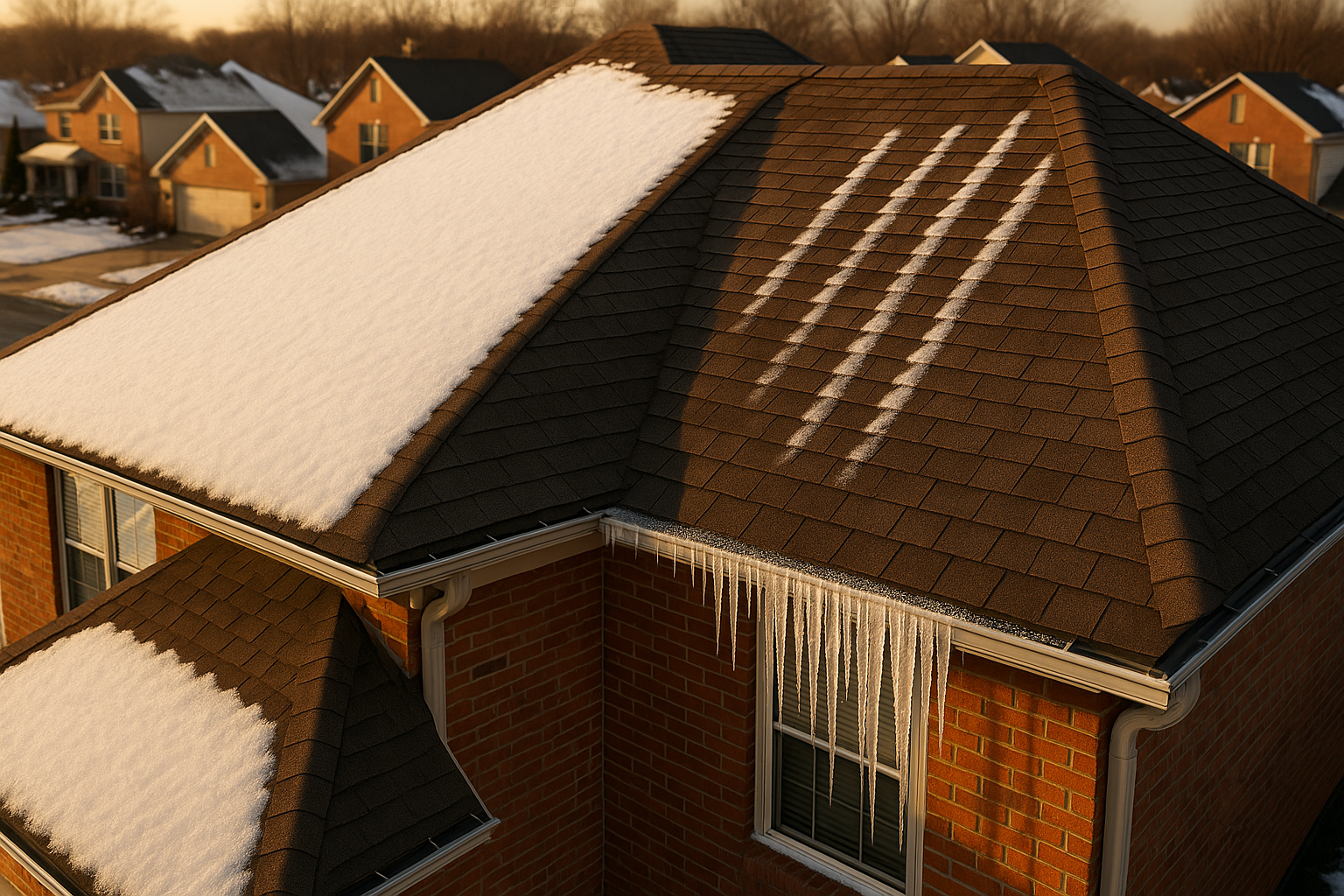
If you’ve noticed icicles, ceiling stains after a thaw, or stubborn ice at the eaves, you’re not alone. Ice dams are common around Indianapolis thanks to freeze–thaw cycles, shaded eaves, and older attics that leak heat. This guide explains why they happen, the right order to fix them, and how RoofPros builds a clear, step-by-step plan that balances energy performance, roof longevity, and winter safety—without the upsells.
Why ice dams happen in Indianapolis
Indianapolis winters swing above and below freezing, often in the same day. That’s the perfect recipe for meltwater to refreeze at cold eaves. Contributing local factors include:
- Midwest freeze–thaw cycles and overnight hard freezes after daytime thaws
- Mature trees on north- and east-facing elevations that keep eaves shaded and colder
- Long overhangs and low-slope eaves on many 1970s–2000s ranch and two-story homes
- Older Indy neighborhoods (Broad Ripple, Meridian-Kessler, Irvington) with knee walls, dormers, and complex rooflines that complicate ventilation
What you see outside is ice; what creates it is a warm roof surface from indoor heat escaping into the attic. Meltwater runs down to the colder eave and refreezes, building a dam that backs water under shingles.
Root causes—and how to diagnose them
Common drivers we find during a roof and attic inspection in Indianapolis:
- Heat loss into the attic from air leaks around can lights, bath fans, top plates, chimneys, and the attic hatch
- Insufficient or uneven attic insulation (many older homes are below current code levels)
- Unbalanced or blocked ventilation—intake at soffits and exhaust at ridge vents out of sync or obstructed by insulation
- Clogged or undersized gutters and downspouts that trap meltwater at the edge
- Long, cold overhangs and shaded north-facing eaves that stay below freezing even on sunny days
Prevention order of operations (do this in sequence)
1) Air sealing attic penetrations and top plates: lock down the heat leaks first. 2) Add/upgrade attic insulation to the right R-value for our climate. 3) Balance ventilation—soffit (intake) and ridge (exhaust)—only after sealing. Adding vents without sealing first can make heat loss and condensation worse. 4) Tune gutters and downspouts to move water efficiently; helpful but not a substitute for steps 1–3. 5) Consider targeted heat cables at difficult eaves/valleys as a supplement—not a cure.
Attic best practices that actually prevent ice dams
Addressing the attic pays off in fewer ice issues, better comfort, and lower bills.
- Air sealing attic (Indiana-appropriate): Seal top plates, electrical/low-voltage penetrations, bath fan housings, and around chimneys with appropriate fire-rated materials. Weatherstrip and insulate the attic hatch.
- IC-rated can light covers: Create airtight boxes over recessed lights or replace with sealed IC-rated fixtures to prevent heat plumes.
- Bath fan venting to exterior: Duct bath and kitchen fans outdoors, not into the attic. Moist air plus cold roof decks equals frost and winter condensation in the attic.
- Attic baffles (rafter vents): Install baffles to keep soffit intakes clear and prevent insulation from blocking airflow.
- Attic insulation Indianapolis: In our climate zone, many homes benefit from R-49 to R-60 total attic insulation. The exact target depends on roof geometry, existing levels, and venting strategy.
The result: A colder roof deck (good in winter), less meltwater at the eaves, and a drier attic.
Critical roof details during a re-roof
If you’re approaching a roof replacement—or spot repairs on ice-prone edges—correct detailing is essential in central Indiana:
- Ice and water shield at eaves/valleys: Use a high-quality, cold-climate membrane at least 24 inches inside the warm wall line (more on low-slope or complex roofs). Extend in valleys and around penetrations.
- Drip edge installation: Continuous, corrosion-resistant metal installed under underlayment at rakes and over the membrane at eaves to direct water into the gutter.
- Sealed decking at penetrations: Flash and seal plumbing stacks, skylights, and vents to prevent wind-driven meltwater intrusion.
- Cold-climate roof underlayment: Durable synthetic underlayment rated for winter conditions and manufacturer specs.
- Balanced roof ventilation Indianapolis: Pair continuous soffit intake with ridge exhaust; avoid mixing too many vent types that can short-circuit airflow.
In historic districts using slate, tile, or specialty shingles, eave detailing is even more important; we match materials and techniques to the home’s requirements while following manufacturer cold-climate guidance.
Gutters, heat cables, and safe snow management
Gutters matter—but they don’t solve heat loss. Use them to move water away cleanly once you’ve reduced melt at the source.
- Gutter maintenance winter Indianapolis: Keep gutters and outlets clear; verify slope; upsize downspouts or add outlets where capacity is marginal. Guards reduce debris but don’t prevent ice dams by themselves. For more on gutter function, see our article on why gutters matter for roof longevity: /blog/why-gutters-matter-roof-longevity/.
- Heat cables vs insulation: Cables can create channels in problem areas (eaves, valleys, along gutters/downspouts). They’re supplemental—most effective after air sealing and insulation improvements reduce overall icing. Install per manufacturer spacing, on dedicated circuits, and avoid areas with combustible debris.
- Roof rake safety: From the ground, use a roof rake to pull 3–4 feet of snow off the eaves after storms. Never chip at shingles or climb a snowy roof. If meltwater needs an emergency path, use calcium chloride in socks—not rock salt—and protect plantings.
Signs of ice-dam damage—and when to act
Watch for:
- Ceiling stains after thaws, especially on exterior-wall ceilings or along window heads
- Peeling paint near exterior walls or wavy drywall seams
- Wet attic sheathing, frosted nails, or damp insulation (condensation in attic winter conditions)
- Distorted, pulled, or ice-laden gutters and downspouts
Can you address issues in winter? Many air-sealing and insulation upgrades can be completed year-round. Roof work depends on temperatures, safety, and product requirements—some repairs are feasible in the cold; full replacements may be better scheduled during suitable weather. To understand replacement timing, see: /blog/best-time-of-year-to-replace-roof-indiana/.
On ROI: Air sealing plus insulation typically lowers heat loss, reduces icing, and improves comfort. The exact payback varies with your home’s starting point and energy rates, but reduced cycles of freeze–thaw stress also support long-term roof performance.
Insurance for ice dam water damage Indiana: Policies often cover resulting interior water damage, but not always the cause. Document issues promptly and check your policy or speak with your agent.
The RoofPros plan-first process
We specialize in solving the whole problem—the attic, the roof edge, and the water path—so fixes are durable and cleanly executed.
- Local inspection of roof and attic: Visual and thermal scanning (as conditions allow) to spot air leaks, insulation gaps, and vent blockages.
- Clear scope with options: A written plan with material specs and phased options (good/better/best) so you can align scope with priorities and budget.
- Premium materials for Midwest winters: Ice and water shield at eaves/valleys, proper drip edge, balanced soffit and ridge vents, and cold-climate underlayments.
- Clean, scheduled install: Dust control, careful attic work, and tidy exterior staging. RoofPros pulls required permits in Marion County and surrounding jurisdictions and follows manufacturer cold-climate detailing.
Want a straightforward path to prevent ice dams? Get a Free Deck Consultation. Or simply request your winter roof and attic assessment here: /#quote. You can also learn more about soffit and fascia repairs that support balanced intake at: /blog/soffit-fascia-repair-homeowner-guide/. If you prefer to start from the beginning, visit our home page: / .
FAQs: Indianapolis ice dams, answered
What causes ice dams on Indianapolis homes and how are they different from normal icicles?
Ice dams form when attic heat warms the upper roof, snow melts, and water refreezes at colder eaves. Icicles alone may just indicate dripping water; ice dams trap water behind a ridge of ice, which can back up under shingles and leak inside.
Do gutter guards prevent ice dams or just reduce clogs?
Guards reduce debris and help water exit the roof edge, but they don’t stop heat-driven melt at the source. They’re helpful after air sealing, insulation, and balanced ventilation are in place.
What attic insulation levels are typically recommended for Indianapolis homes?
Many homes benefit from R-49 to R-60 total attic insulation, paired with thorough air sealing and unobstructed soffit intake. The right target depends on existing levels and roof geometry.
Are heat cables safe and effective, and where should they be installed?
When installed per manufacturer guidance, heat cables can open melt channels at problem eaves, valleys, and inside gutters/downspouts. They’re a supplement, not a substitute for air sealing and insulation.
Is it safe to remove ice dams yourself, and what’s the best method?
Stay on the ground. Use a roof rake to remove a few feet of snow at the eaves. Don’t chip ice. If an emergency channel is needed, use calcium chloride in fabric socks. For heavy ice or active leaks, call for professional removal and assessment.
Will homeowners insurance cover interior water damage from ice dams?
Often policies cover resulting interior water damage, but coverage and deductibles vary. Document the damage, mitigate further leakage, and contact your insurer.
Can you add ice and water shield without replacing the whole roof?
Limited eave or valley retrofits are sometimes possible by carefully lifting shingles, but the most durable approach is installing continuous membrane during a full re-roof so coverage extends properly inside the warm wall line.
Do ridge vents work when snow covers the roof?
Yes, well-designed ridge vents are built to resist snow infiltration and allow vapor to escape. The key is balanced intake at soffits; without intake, ridge vents can be ineffective.
How long does an attic air-sealing and insulation upgrade usually take?
Most projects take one to two days, depending on access, air-sealing complexity, and square footage.
What’s the best immediate step if I see water stains after a thaw?
Contain water with a bucket, protect furnishings, and use a roof rake to clear snow from the eaves. Avoid climbing the roof. Call for a roof inspection Indianapolis homeowners can rely on to identify the source and prioritize fixes.
Ready to prevent ice dams the right way?
RoofPros brings a specialist, planning-first approach to Indianapolis homes: clear diagnostics, quality materials, and craftsmanship that respects your home and schedule. Request your assessment now at /#quote, and we’ll provide a concise plan to prevent ice dams—this winter and beyond.
Ready for a free roof assessment?
We climb the roof, photograph the damage, and give you an honest read — no pressure, no upsell.