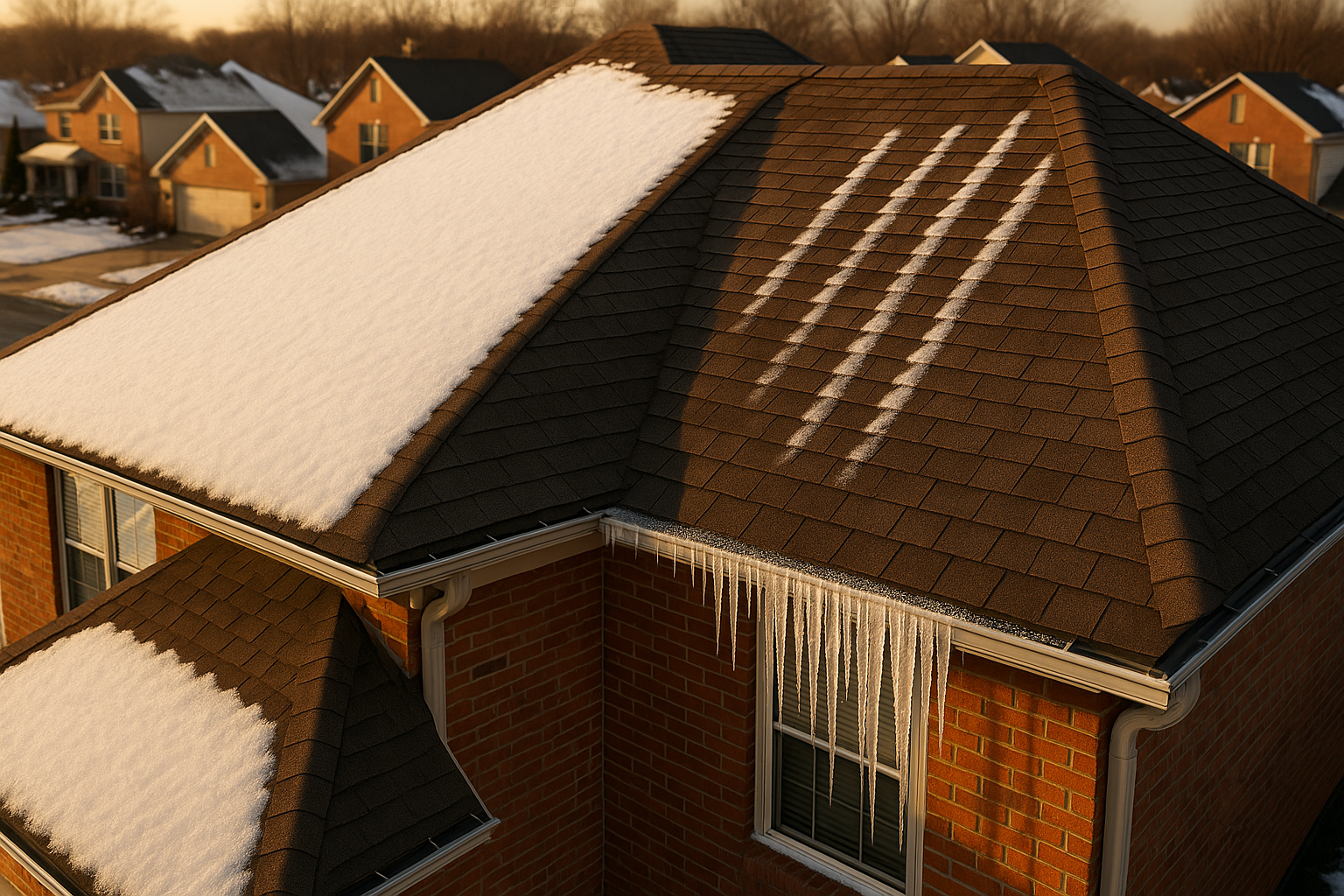
Indianapolis weather doesn’t ask permission. Hail in spring, 50–60 mph wind bursts in summer, and freeze–thaw swings in winter all push a roof to its limits. This checklist shows you how to scan your roof safely, what to document after storms, and which red flags merit a professional visit. Keep it handy for spring and fall—and any time severe weather rolls through.
When to inspect in Indianapolis
- Seasonal rhythm: Do a full visual check each spring and fall. These windows bracket our storm season and the freeze–thaw cycle that can shift flashing and open up small leaks.
- After storms: Inspect immediately after hail, strong winds, or ice events. In open‑exposure neighborhoods around the I‑465 corridor, ridge caps and edge shingles take the brunt of wind. In tree‑lined areas like Broad Ripple, Meridian‑Kessler, and Irvington, expect leaf buildup that quickly clogs gutters.
- After winter warm‑ups: Watch for ice‑dam clues along eaves and exterior walls when temperature swings create melt–refreeze conditions.
For deeper storm context and repair steps, see our local primer: Indianapolis storm damage roofing guide.
Safety first: inspect without risk
- Start from the ground with binoculars. You can spot most issues without climbing.
- If you use a ladder, have a spotter, set it on firm, level ground, and maintain three points of contact.
- Never step on steep, wet, icy, or visibly damaged roofs. Call a pro for rooftop and attic access.
- Wear eye protection and gloves when clearing debris or checking gutters.
The step‑by‑step roof inspection checklist
1) Ground‑level shingle scan
- Look for missing, lifted, curled, or creased shingles—especially on south‑ and west‑facing slopes that see stronger sun and wind.
- Note uneven lines or sagging that can indicate soft or failing roof decking.
- On newer subdivisions with open exposure, pay extra attention to the leading edges and ridge line for wind displacement.
2) Granule loss and gutters
- Check gutters and downspouts for excess shingle granules. Heavy shed right after hail is a red flag—even if you don’t see obvious shingle breaks.
- Inspect splash blocks and the ground below downspouts for fresh piles of granules after rain.
- Confirm downspouts discharge 4–6 feet from the foundation—especially important with our clay and loam soils during heavy rain.
3) Flashing and roof penetrations
- Step and counter‑flashing (at walls/valleys), chimney flashing, pipe boots, skylights, and satellite mounts: look for gaps, rust, cracked boots, or dried sealant.
- Many Indy homes have brick chimneys—check mortar joints and counter‑flashing lines for separations that invite leaks.
4) Ridges and hips
- Ensure ridge caps are straight, intact, and not cracked or displaced by wind. A shifted cap can admit wind‑driven rain.
5) Vents and ventilation
- Confirm box, turtle, or ridge vents are unobstructed and free of cracks. Damaged ridge vents or brittle plastic vents can allow water entry and weaken airflow.
- Inconsistent ventilation shortens roof life; note any blocked soffit vents or signs of overheating on south‑facing slopes.
6) Eaves, soffit, fascia, and drip edge
- Look for staining, peeling paint, soft wood, or pest activity along the eaves.
- Verify a continuous metal drip edge is present; missing sections allow wind‑driven rain to reach the decking.
7) Gutters and drainage details
- Confirm gutters are clean, properly pitched (no standing water), and securely fastened.
- Leaf guards help in mature‑tree neighborhoods; still check outlets and miters for blockage.
- Repeated gutter overflows during moderate rain signal a capacity or pitch issue that can affect the roof and fascia.
8) Algae, moss, and debris
- North‑facing slopes commonly show black algae streaks in our humid summers. Note if streaking is accelerating year over year.
- Moss and leaf buildup trap moisture and accelerate shingle wear—mark any areas where debris collects in valleys or behind dormers.
9) Attic check (for pros or experienced homeowners)
- Look for daylight through the roof deck, water stains, damp insulation, or musty odors.
- Rusty nail tips can point to condensation from poor ventilation.
- Past winter staining along the eaves suggests ice‑dam activity and heat loss.
10) Storm‑specific cues to photograph
- Hail: soft bruises, circular granule displacement, or fractures on shingles; ping dents on metal vents, gutters, and drip edge. If you’re unsure, start with our quick guide on what to do after a hail storm in Indiana.
- Wind: creased or flipped shingle tabs, missing ridge caps, and lifted shingles near the edges.
- Impact: branches can crack shingles or bend flashing—check valleys and the leeward side of chimneys.
11) Document everything
- Take wide photos for context and close‑ups for detail—both dated.
- Note slope (front/rear, north/south), location (valley, ridge, eave), and severity.
- Save receipts or logs for maintenance steps like gutter cleaning; these help with insurance and future planning. For filing questions, see our homeowner’s insurance roof damage guide.
Red flags that merit a professional inspection
- Widespread missing or creased shingles after a storm
- Recurring attic moisture, musty odor, or visible daylight at the deck
- Soft or spongy decking when gently probed from the eave
- Chimney flashing gaps or deteriorated mortar joints
- Repeated gutter overflows or fascia staining during normal rain
- Any active leak, even if small
It’s common to think, “I don’t see a leak, so I’m fine.” In reality, small flashing shifts and granular loss often precede interior leaks by months. A professional can validate your findings, access the roof and attic safely, and create a prioritized plan.
Maintenance quick wins for Indy homes
- Clear leaves from valleys and gutters at least twice a year—more often under large maples and oaks.
- Trim overhanging branches to reduce abrasion and impact risk.
- Add or extend downspouts to discharge 4–6 feet from the foundation.
- Reseat and seal minor penetrations before winter.
- Consider algae‑resistant shingles or zinc/copper strips on persistent north‑facing streaks.
- Improve ventilation where soffits are blocked or attic heat is excessive; better airflow helps with ice dam prevention in Indiana winters.
Planning ahead: repair vs. replacement
Indianapolis weather cycles can shorten the practical life of asphalt roofs. Spot repairs are appropriate for isolated wind damage or a single failed boot; widespread hail bruising, aging shingles with consistent granule loss, or systemic ventilation issues often point toward replacement. If you’re weighing options, our guide on roof repair vs. replacement explains costs, timing, and trade‑offs.
On older homes with multiple shingle layers, a tear‑off allows us to evaluate the deck, correct ventilation, and install a continuous drip edge—key steps that improve long‑term performance. Permitting may apply for full replacements in Marion County and surrounding areas; plan the schedule with those lead times in mind.
Indianapolis roof inspection FAQs
What should an inspection include here?
Shingle condition, granule loss, flashing at all transitions and penetrations, ridge/hip integrity, ventilation, eaves/fascia/drip edge, gutters and drainage, attic moisture/venting, and storm‑specific cues.
How often should I inspect?
Twice a year (spring and fall) and after any hail, strong wind, or ice event.
Can I spot hail damage from the ground?
Often, yes—look for uniform granule displacement and dents on metal accessories. Subtle bruising may still need a professional confirmation.
Is it safe to walk the roof?
We don’t recommend it. Steep, wet, or aged shingles are unsafe. Inspect from the ground; call a pro for rooftop and attic access.
Leak vs. condensation in the attic?
Brown water stains near fasteners point to leaks; evenly rusty nail tips and musty insulation often indicate condensation from poor ventilation.
How do I document for insurance?
Capture dated wide shots, close‑ups, and notes per slope and location. Then review filing tips in our homeowner’s insurance roof damage guide.
Best time of year for a pro inspection?
Spring establishes a baseline after winter; fall confirms readiness before freeze–thaw and ice‑dam season.
Why RoofPros: planning‑first, photo‑backed, local
We pair a careful on‑roof and attic evaluation with clear photos and a scope you can understand. You’ll see what we see—no pressure, just a practical plan tailored to Indianapolis homes and weather. If storm damage is in question, we’ll help you separate cosmetic marks from functional failures and outline next steps.
Ready for clarity? Use our quote form to schedule your inspection and receive a photo report with prioritized recommendations. Prefer to plan multiple projects together? Get a Free Deck Consultation—add it to your request, and we’ll coordinate schedules. Start here: Request your inspection.
Ready for a free roof assessment?
We climb the roof, photograph the damage, and give you an honest read — no pressure, no upsell.