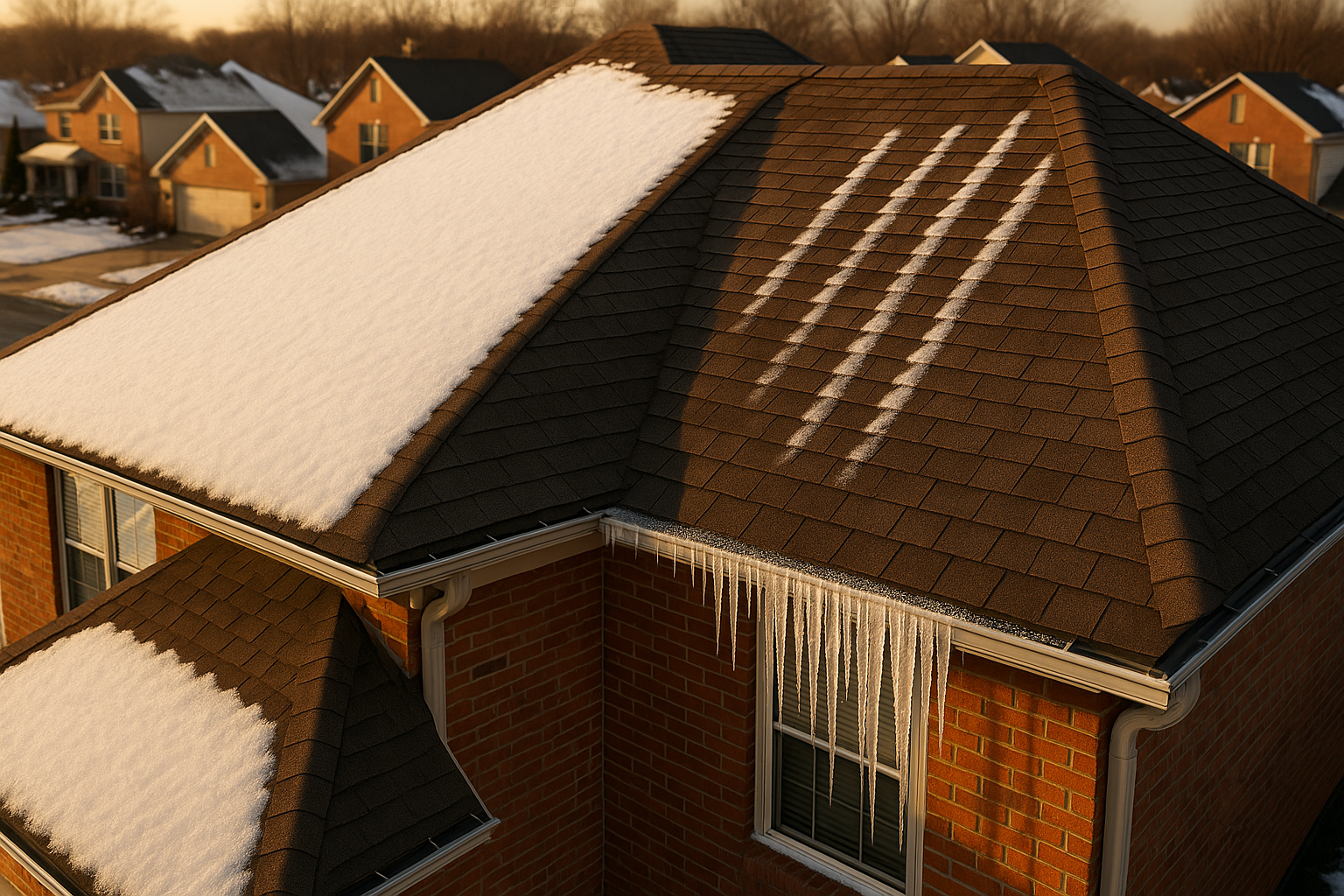
Last February, my buddy in Brownsburg texted me a photo of his living room ceiling—a dark, damp stain spreading like a coffee spill. He'd noticed a few drips during the last snow, but now it was a whole mess. I grabbed my ladder and found the culprit: a thick ridge of ice along his north-facing eaves, forcing meltwater right under the shingles. Classic winter roof damage Indiana homeowners know all too well.
How Indiana Winters Attack Your Roof
Indiana winters aren't just cold—they're sneaky. You get a heavy snow, then a sunny afternoon thaw, then a hard freeze overnight. That freeze-thaw cycle does a number on asphalt shingles. Water gets into tiny cracks, freezes and expands, making those cracks bigger. After a few winters, you start seeing shingle granules in the gutters, curled tabs, or even missing shingles after a windy day. That's exactly how winter roof damage in Indiana piles up, one weather swing at a time.
And speaking of wind, we get some gusty northwest winds that like to lift shingle tabs—especially on the rake edges or along the ridge. If the sealant isn't fully bonded (which happens more in cold weather), those tabs can crease or tear right off. I've seen roofs with a perfect row of shingles suddenly look like a gap-toothed smile after one storm.
Then there's the heavy, wet snow that piles up. A foot of sodden snow can put serious stress on your roof decking, especially if there's any rot from a past leak. I recall a house over in Avon where the owner kept hearing weird creaking sounds after a big snow. Turned out, the decking was spongy in spots and the snow load was just too much. We had to jack it up and replace decking before we could even talk shingles.
Spotting Winter Roof Damage After Snow and Ice
So what do you look for? After a snow or ice event, walk around your house (carefully) and check for:
- Water stains on ceilings or walls, especially along exterior walls. That often means meltwater is sneaking in from an ice dam.
- Damp insulation in the attic. If you poke your head up there and it feels wet or you see frost on the underside of the decking, you've got a moisture problem.
- Shingle granules washing into the gutters. A little is normal, but piles of granules mean your shingles are losing their protective layer.
- Lifted or creased shingles. If you can see tabs that are no longer lying flat, they're vulnerable to wind and water.
- Rusted or separated flashing around chimneys and where the roof meets a wall. This is a top spot for winter leaks—once the metal pulls away, water has a direct path in.
- Sagging gutters packed with ice. That extra weight can pull gutters right off the fascia, and then you've got all that meltwater spilling down your siding.
I remember a neighbor in Brownsburg who had these big, beautiful icicles hanging from his gutters. He thought they looked festive. But icicles often mean an ice dam is blocking proper drainage, and water is backing up under the shingles. Sure enough, his ceiling showed a stain by spring.
Repair vs. Replace: What's the Smarter Move?
This is the big question, and honestly, it depends. If your roof is 10-15 years old and this is the first sign of trouble, a targeted repair might get you through a few more winters. But if you're seeing multiple past patches, widespread shingle failure, soft decking, or chronic ice-dam leaks year after year, a full replacement might actually be the safer, long-term fix. You'll sleep better knowing the whole system is solid.
I've had folks tell me, "I'll just patch it again and wait till spring." But here's the thing: the freeze-thaw cycles don't stop, and every time water gets in, it rots a little more decking and soaks a little more insulation. By spring, you might be looking at a bigger—and more expensive—mess. Sometimes, replacing now with the right cold-weather techniques is cheaper than dealing with a collapsed ceiling later.
Can You Really Replace a Roof in Winter? (Spoiler: Yes)
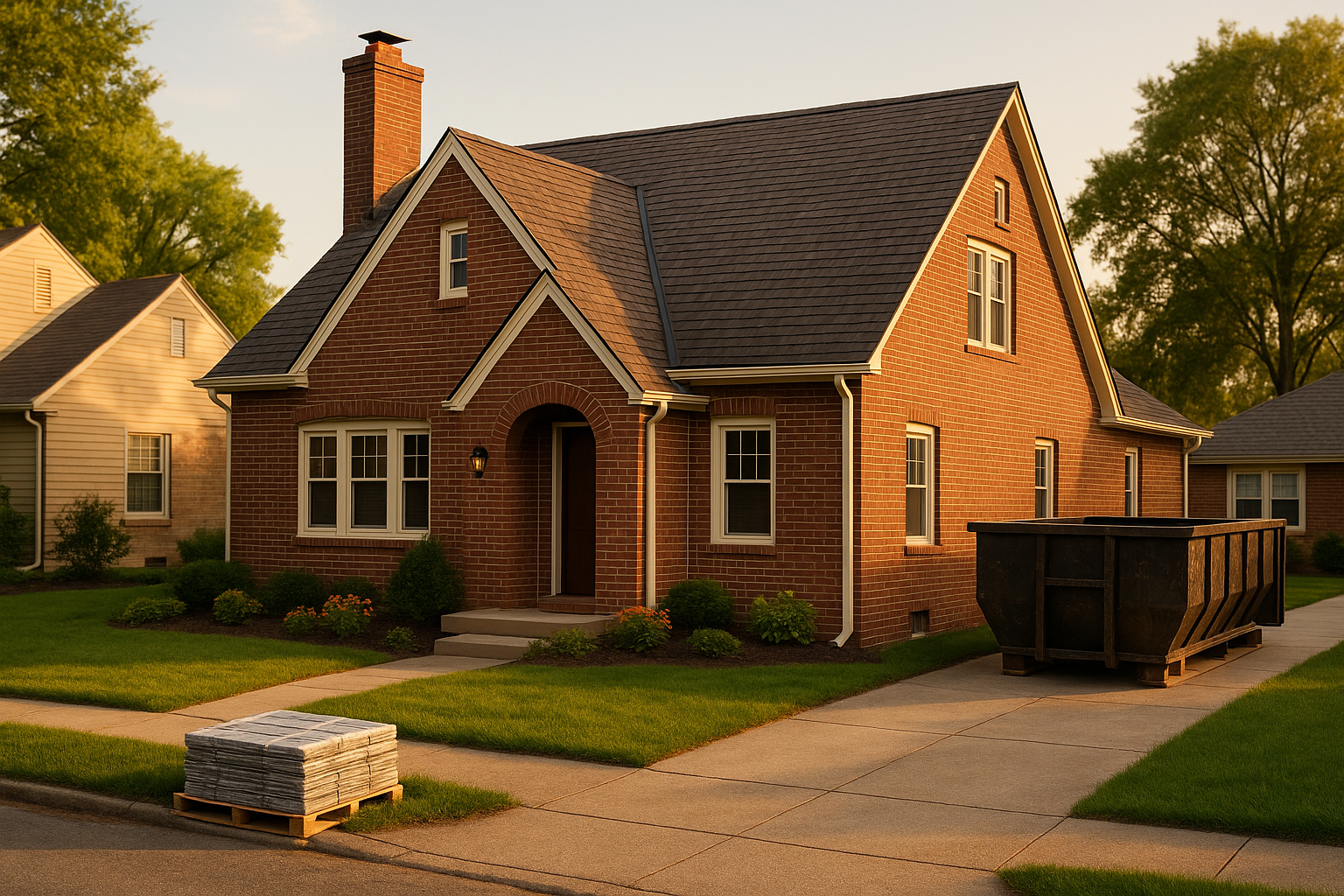
A lot of people think roofing is a fair-weather job, but we do winter replacements all the time in Brownsburg. You just need the right plan. We watch the weather for a window of dry, relatively mild days (above 20°F, ideally). The crew stages materials so they stay dry, protects the exposed decking with tarps if any flurries pop up, and we always do a same-day dry-in—meaning the underlayment and shingles go on quickly so your home isn't exposed overnight.
Cold-weather shingle installation does require extra care. Manufacturers have temperature guidelines—most say you can install down to about 40°F, but we often push that a bit lower with special procedures. For instance, if it's too cold for the adhesive strips to activate naturally, we hand-seal the shingles with a dab of roofing cement. And we make sure nails are driven straight and deep enough (not overdriven through the shingle). Then, when the sun warms things up, the shingles get a chance to fully bond. I've had more than one homeowner ask, "Will they blow off later?" Not if they're installed right. We've done dozens of winter roofs and they've held up through crazy March winds.
Key Materials for a Roof That Handles Indiana Winters
Not all materials are equal. For our crazy climate, we lean toward architectural asphalt shingles with high wind ratings. They've got more heft and a better seal against uplift. Underneath, we use a synthetic underlayment that's tough and doesn't wrinkle like felt—it handles moisture way better. And in the eaves, valleys, and around any penetrations (like skylights, chimneys), we put down ice and water shield. That stuff is sticky-backed and seals around the nails, so if water ever gets past the shingles, it hits a waterproof membrane instead of bare wood.
I always tell folks, if you're going to invest in a roof, make sure the contractor specs corrosion-resistant fasteners, proper ridge and soffit vents, and enough attic insulation to keep the roof deck cold. Which brings me to...
Ventilation and Insulation: Your First Defense Against Ice Dams
Ice dams form when warm attic air heats the roof deck and melts the snow from underneath. Water runs down to the cold eaves, refreezes, and forms a dam. More meltwater gets trapped behind it, and eventually it pushes under the shingles. The fix? Keep the whole roof deck cold. That means balancing soffit intake vents with ridge exhaust vents so outside air flows evenly under the roof. And you've got to air seal any ceiling bypasses—gaps around light fixtures, attic hatches, ductwork—that let warm indoor air leak into the attic. We've done a roof ventilation and insulation upgrade for many homes in Brownsburg's older subdivisions, and it makes a dramatic difference.
Flashings, Gutters, and Other Winter Weak Points
Flashings are the metal transitions where the roof meets a wall, chimney, or dormer. They're often the first to fail in winter because they expand and contract at different rates than the surrounding materials. Chimney flashing, in particular, is prone to leaks when ice and snow pile up. We always replace old step and counter flashing with new material, and we add a kickout flashing at roof-to-wall intersections to direct water away from the siding.
Gutters are another weak link. If they're clogged with leaves and then freeze up, they can't drain. The ice builds and pushes back into the roof edge. I've seen gutters sagging under the weight, pulling the fascia board right off. Clean gutters with proper pitch and strong hangers can take some of the load. And if you're tired of cleaning them, gutter guards designed for snow can help keep debris out so water flows freely.
Insurance and Documentation: Don't Miss Out
One question we hear a lot: "Will my insurance cover this?" It depends. Wind damage that lifts shingles or knocks a tree onto the roof is usually covered. Ice dam damage can be a gray area—often it's considered a maintenance issue unless sudden, like a heavy ice load causing a collapse. The key is good documentation. When we do a storm damage roof inspection, we take tons of photos, moisture readings, and detailed notes. That helps if you decide to file a claim. We're not insurance experts, but we can point you in the right direction and give you the evidence you need.
Why a Local Brownsburg Crew Matters
Brownsburg has its own quirks. A lot of our neighborhoods have similar roof slopes, mature trees, and specific HOA rules. Being a local crew, we know which side of the house tends to get the worst wind (northwest, usually). We know that quick freeze-thaw cycles are the norm, not the exception. And we've worked with the town's permitting office enough to keep projects moving. Plus, we're not going to disappear to another state if something goes wrong. We've got neighbors here—I live in Brownsburg myself. So when we talk about avoiding storm chaser scams, it's personal.
Get a Winter Roof Inspection (Before Spring Thaws Make Things Worse)
If you've noticed any of the signs I talked about—stains, missing shingles, ice dams—don't wait. The freeze-thaw cycle keeps chipping away, and a small leak now can become a big problem by March. We offer a no-pressure winter roof inspection. We'll walk you through our findings, explain whether a repair or replacement makes sense, and if a replacement is the call, we'll lay out a clear scope with cold-weather details and a timeline that works with the weather.
Just head over to our quote request page or give us a call. We'll answer all those questions you've got—like "Will the shingles seal?", "How do you protect my landscaping in the snow?", "What's the cost difference?"—straight up, with no salesy stuff. Because honestly, the best thing is getting your roof solid before the next heavy snow hits.
Ready for a free roof assessment?
We climb the roof, photograph the damage, and give you an honest read — no pressure, no upsell.