It’s a cold February morning in Carmel, and you’re staring at a damp spot on the ceiling that’s been spreading since the last big storm. You know you need a new roof, but you keep putting it off — and honestly, who can blame you? Every contractor has a different opinion, and now your neighbor just got a sharp-looking standing seam metal roof while your HOA president gives you the side-eye every time you mention metal. I’ve heard this exact story from dozens of folks across Hamilton County. So let’s cut through the noise and talk about what actually works for an Indiana home.
The Quick-and-Dirty Comparison
Asphalt shingles are the familiar choice. They’re on most roofs around here. They cost less upfront, every HOA accepts them, and if you get high-quality architectural shingles, they can look really polished. But in our climate, they last about 15 to 25 years, and they’re more likely to get beat up by hail, freeze-thaw cycles, and moss if your house has heavy tree cover.
Metal roofing — mostly standing seam around Carmel — costs more. Like, a lot more. But it can go 40 to 60+ years, handles hail and wind better, sheds snow like a sled, and can even help with summer cooling if you pick the right color. And that myth about rain sounding like a drum solo on a metal roof? Mostly just that — a myth — as long as you’ve got solid decking underneath.
If you’re planning to stay put for decades, metal might earn its keep over two or three asphalt replacements. If you’re selling in a few years, asphalt could still be the safer resale bet — though a well-done metal roof is turning heads with the modern farmhouse trend around Westfield and Zionsville.
Money Talk: Upfront vs. Lifetime Cost
Let’s be real. “Metal roof” often makes people picture a number with a comma. And yep, a standing seam system might run two to three times the price of a premium architectural asphalt job. But here’s the thing: with asphalt, you’ll probably replace it again in 20 years — maybe sooner if a nasty hailstorm rolls through like it did in Fishers a few years back. Over 40 years, you could pay for asphalt twice (plus tear-off and inflation) while that metal roof is still going strong. That’s the hidden value.
For a typical ranch-style home in Carmel, architectural asphalt replacement could run $8K–$14K. A metal roof of the same size? $20K–$35K+, depending on gauge, finish, and custom work. RoofPros gives clear, line-by-line quotes so you can see the differences. They’ll also walk you through warranties: many metal finishes carry 30+ year coverage, while asphalt warranties become prorated pretty quickly and usually don’t cover labor. If you want more on asphalt costs, check out our cost guide. For a deeper dive into the two materials, we have a dedicated comparison.
Weathering Indiana’s Four-Season Mood Swings
Our weather is basically a reality show — unpredictable. Spring storms bring wind gusts that can peel up shingles. Summers are hot and sticky. Fall drops leaves in your gutters. And winter’s freeze-thaw cycles are hard on asphalt: water sneaks under granules, freezes, and pops them off, leaving your roof looking bare over time. Metal doesn’t really care. It expands and contracts, but a good standing seam system with clips handles that movement without losing material.
Hail and Wind
Metal really shines in hail. If you go with a Class 4 impact-rated panel, it’s tested to take hailstones up to two inches without denting. Meanwhile, I’ve seen entire asphalt roofs in Avon and Brownsburg get totaled by a single hailstorm. Wind? Standing seam metal, when installed right, laughs at 140-mph gusts. Asphalt can start flapping if the seal strips are worn or the install was iffy.
Snow and Ice
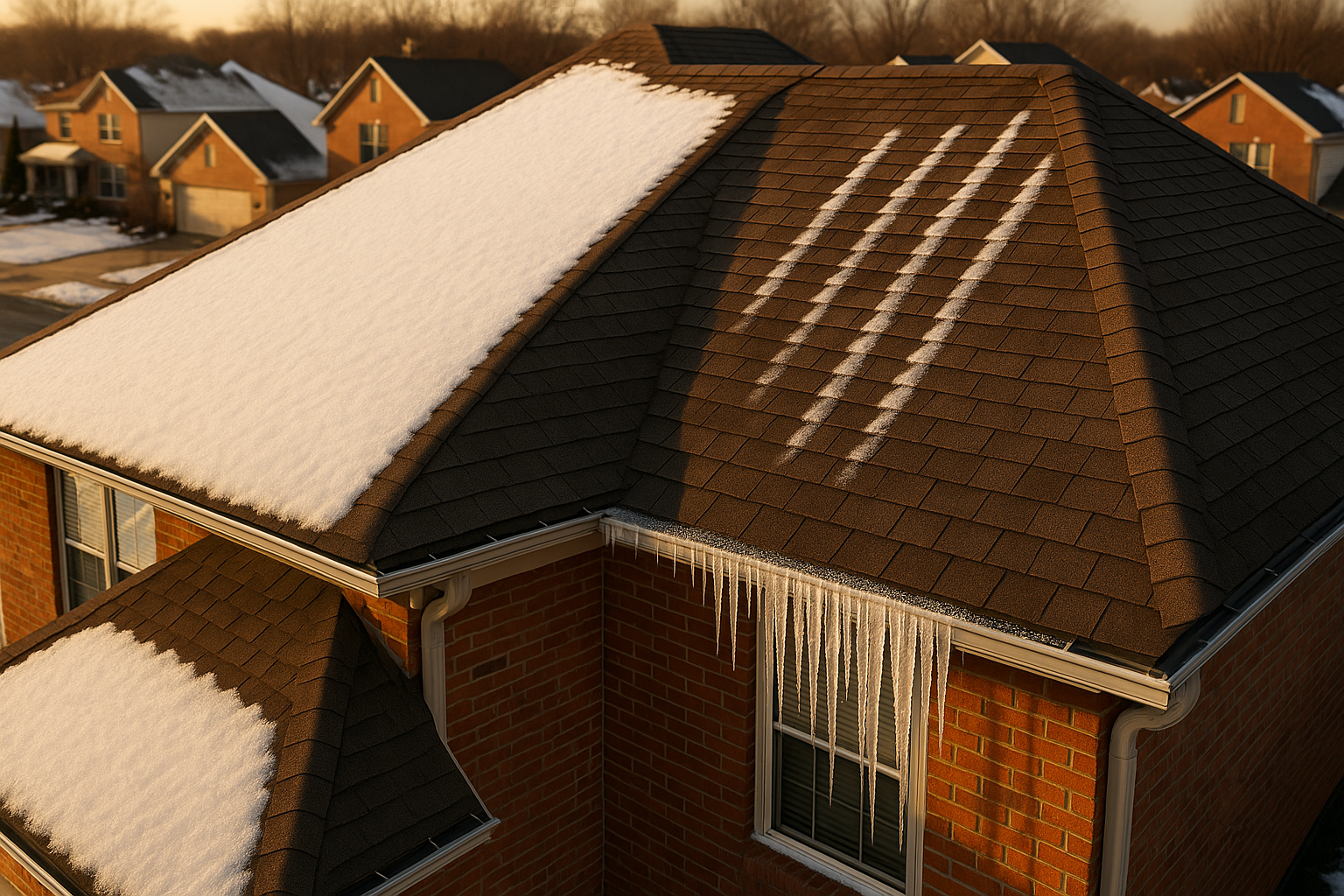
Here’s a real concern: metal sheds snow fast — great for preventing ice dams, not so great if it dumps a load on your walkway. That’s where snow guards come in. RoofPros adds these little brackets above entryways and decks to break up the slide. On asphalt, good attic ventilation and a solid ice-and-water shield at the eaves keep ice dams in check, but you have to stay on top of it. For a full rundown on timing your project, see the best time of year to replace a roof in Indiana.
Moss and Algae
In tree-heavy neighborhoods — think parts of Carmel and Greenwood — north-facing slopes can turn green. Metal doesn’t hold moisture, so moss can’t grab hold. Asphalt might need zinc strips or occasional cleaning. One less chore, especially if you’d rather not lean a ladder against your house every fall.
Noise, Lightning, and Rust: Busting the Myths
These rumors just won’t die.
- Noise during rain: I’ve been in an attic during a downpour on a metal roof that had solid decking and underlayment. Sure, you hear the rain, but it’s not much louder than asphalt. If you have an open-rafter ceiling, you’ll notice more, but on a standard home it’s a non-issue.
- Lightning: Metal doesn’t attract lightning. If it did, every church steeple in Indiana would be fried. Lightning hits the tallest thing around, metal or not.
- Rust: Modern metal roofing uses coated steel — often a zinc-aluminum alloy and baked-on paint. It doesn’t rust. I’ve seen 30-year-old metal roofs in Carmel still looking crisp.
- Dents from hail: With Class 4 rating, it takes a freak storm to dent quality metal. Cheaper, thinner panels might, but a good 24-gauge standing seam holds up.
Looks, HOAs, and Curb Appeal
Carmel isn’t a one-style town. You have classic brick colonials, mid-century ranches, and those crisp modern farmhouses popping up in Westfield and Zionsville. Asphalt shingles come in a range of colors and two main textures — 3-tab (basic) and architectural/dimensional (thicker, like slate). They’re the go-to for a traditional look. Metal, especially standing seam, offers a cleaner, more contemporary profile that pops against dark trim. Light bronze, matte gray, or even a colonial red can fool the eye into thinking tile. And about those HOAs? RoofPros has dealt with plenty of Carmel boards. They’ll bring samples and spec sheets to help you get approval. One trick: if your HOA is skittish about standing seam, ask about metal shingles that mimic traditional ones — sometimes that gets a nod.
Color matters for energy too. Light or reflective “cool roof” finishes can drop your attic temp noticeably in July. Darker asphalt roofs absorb more heat, which is nice in winter but punishing in summer. For south- and west-facing slopes, a lighter metal or a cool asphalt option can make a difference.
Maintenance and Repairs: What You’re Really Signing Up For
Asphalt needs checkups. After a storm, you’ll find granules in the gutters. Over time, flashing can pull loose, and shingles crack. Repair is usually simple — a roofer swaps a few — but matching the weathered color can be hit or miss. (I’ve seen patches that look like a bad hair dye job.)
Metal is basically maintenance-free for decades. If you have a standing seam roof with concealed fasteners, just keep the gutters clean and make sure no tree limbs are rubbing. If a panel does get damaged, you can replace a section, but the repair might cost more because it requires a metal-savvy crew. Not every roofer knows metal well, so you want a contractor that does both systems regularly — like RoofPros. If you’re not sure whether to repair or replace, check out signs you need a new roof, and if your asphalt has lived its life, see our Indianapolis replacement.
Which Roof Fits Your Carmel Home?
If you’re the “set it and forget it” type and you plan to stay put for 20+ years, metal might become your best friend. The upfront sting fades when you’re not writing another check in 2035. If you’re more budget-conscious now, or if your HOA won’t budge, a top-notch architectural asphalt roof is still a great move — just pick a contractor who gets ventilation and ice/water details right. A bad install ruins either roof.
Too many folks rush into a decision after a storm. Take your time. Get quotes that break down the line items so you can compare apples to apples. RoofPros does a planning-first sit-down where they measure, talk colors, check your attic, and hand you a side-by-side asphalt-vs-metal proposal with real numbers and timelines. No gimmicks, no pressure — just a local team that’s been tackling Indiana roofs for years.
Ready to see what your roof could look like? Request your on-site assessment and written quote. Or if you’re still kicking the tires, swing by our Carmel roofing guide for more neighborhood-specific insights.
Ready for a free roof assessment?
We climb the roof, photograph the damage, and give you an honest read — no pressure, no upsell.